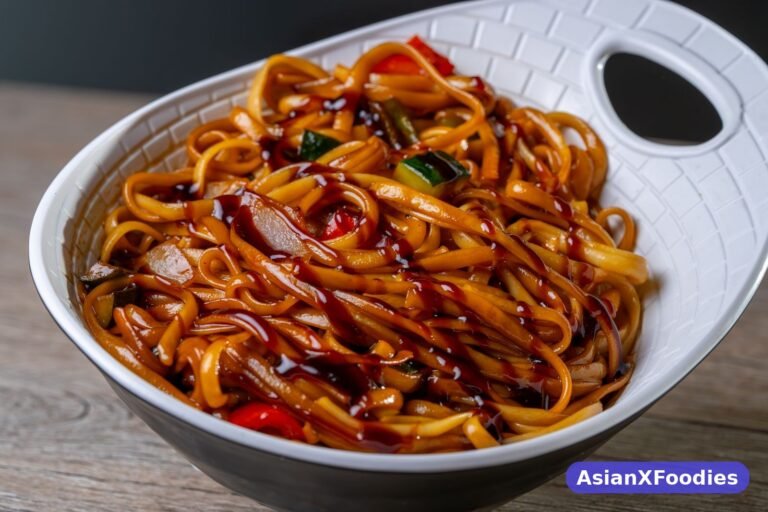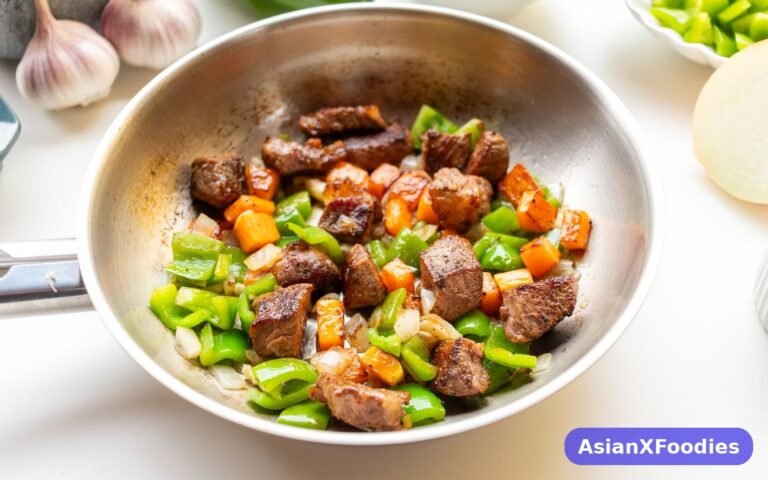
One-Pan Singapore Noodles with Chicken and Shrimp
There is a funny thing about Singapore noodles: they are not really from Singapore. The dish is a Cantonese invention, a hawker-stall favourite that travelled the world and picked up a name that stuck, and the first time someone told me that, I laughed, because I had been ordering it for years without ever wondering where it came from. What I knew was simpler. I knew the smell of it, warm curry powder hitting a hot pan, and I knew the colour, that golden yellow that makes the whole plate look like sunshine, and I knew that whenever I ordered it, the noodles were gone before I had really started eating. It was always the dish I finished first.
I started making it at home because the takeaway version had a habit of arriving either too greasy or too dry, and I wanted the version I remembered from a small restaurant near my old office, where the noodles came out of the wok in a big steaming tangle, the shrimp still pink and plump, and the whole thing had a gentle warmth rather than a shout of spice. It took me a few tries to get it right, and most of those tries taught me something. The first time, I soaked the vermicelli for too long and it turned to mush in the pan. The second time, I was too shy with the curry powder and it tasted like plain noodles with a vague yellow tint. The third time, I crowded the pan and everything steamed instead of frying, and the chicken came out pale and sad. The fourth time, it worked, and it has worked every time since, because the rules turned out to be simple, and once you know them, the dish practically makes itself.
The rules are these: soak the noodles just until they bend, no longer. Get the pan properly hot before anything goes in. Cook the chicken and shrimp first, take them out, and put them back at the end so they stay juicy. And mix the curry powder with the sauce before it touches the pan, so it coats everything evenly instead of clumping in one sad yellow patch. That is really all there is to it. The rest is chopping, tossing, and tasting, and the whole thing is on the table in about thirty minutes, with one pan to wash at the end.
What I love most about this version is that it uses both chicken and shrimp, which sounds generous and is, but it is also practical. The chicken makes it filling enough for dinner, the shrimp makes it feel like a treat, and together they mean everyone at the table finds something they like. The vegetables stay crisp, the egg threads itself through the noodles in golden ribbons, and the curry powder gives everything a warm, fragrant glow without making it hot. It is the kind of dinner that makes a Tuesday feel like a small celebration, and the leftovers, if you have any, are genuinely good the next day, which is more than I can say for most noodle dishes.
This is a one-pan recipe in the truest sense. The noodles soak in a bowl while you chop, the sauce mixes in a small jug, and everything else happens in one large pan or wok, in the same order, every time. There is no juggling of pots, no second pan for the egg, no colander full of noodles waiting to clump together. It is a calm, orderly way to cook, and when the noodles hit the pan and the curry hits the noodles and the whole kitchen smells like a hawker stall, you will understand why this dish has travelled so far from where it started.
Why You’ll Love This Recipe
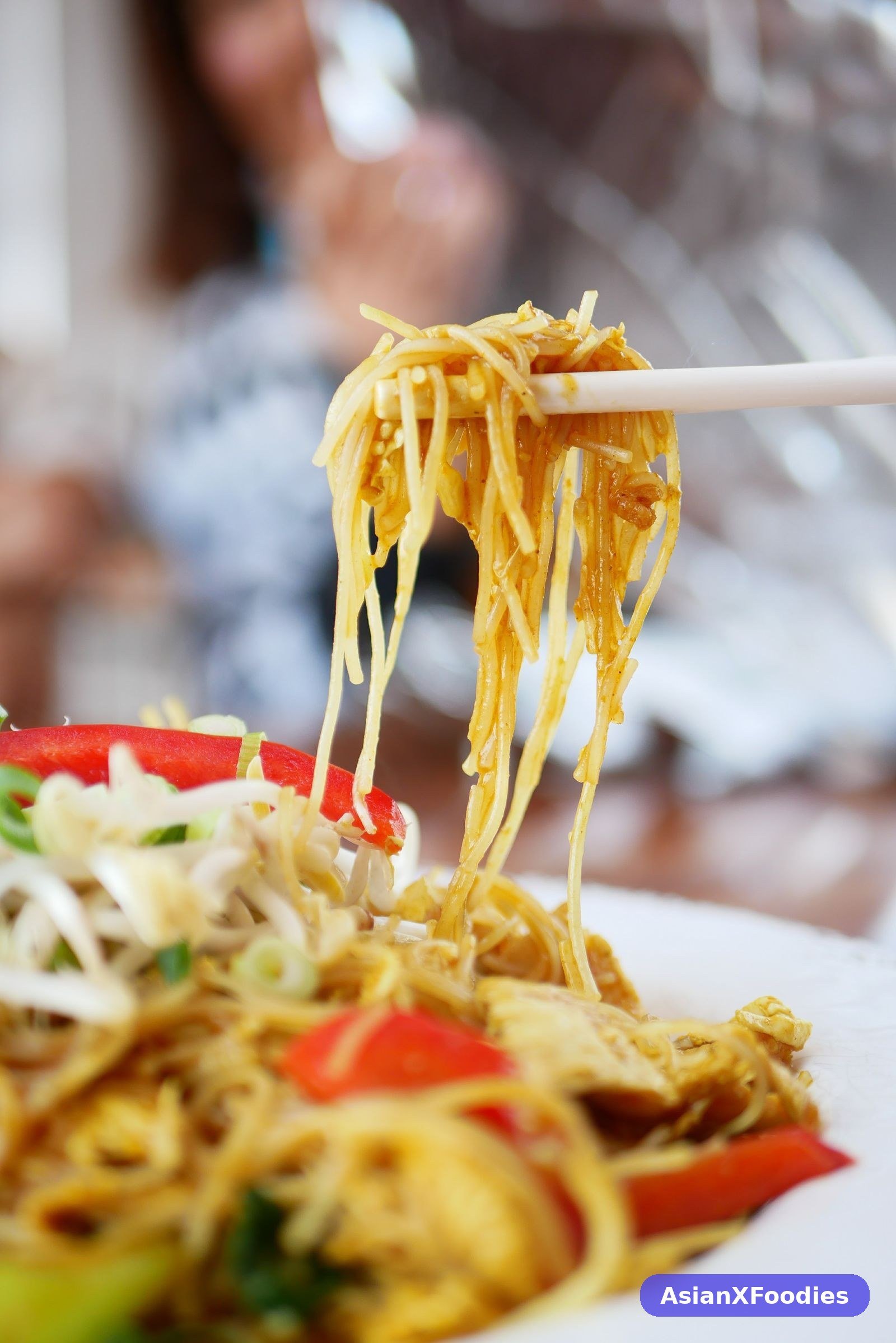
You will love this recipe because it tastes like the Singapore noodles from a good takeaway, golden, fragrant, and full of interesting bites, but it cooks in one pan, in thirty minutes, with ingredients from a regular supermarket. There is no special equipment, no wok station, no long list of hard-to-find ingredients. It is a weeknight dinner that tastes like a treat, and that is a combination I never get tired of.
It is also a one-pan meal, and that matters more than it sounds. One pan means less washing up, less mess, and a calmer kitchen. The chicken, the shrimp, the egg, the vegetables, and the noodles all cook in the same pan, and the flavours build on each other as they go. The curry powder blooms in the hot oil, the sauce soaks into the noodles, and the egg coats everything in thin golden threads. It is a dish that comes together in the pan, and you can see it happening, which is satisfying in a way that a complicated recipe never is.
The flavour is warm rather than hot, which makes it a crowd-pleaser. Curry powder gives it a gentle, fragrant heat, the kind that warms the back of your throat without making your eyes water, and the soy sauce and sesame oil underneath give it a savoury depth. The shrimp add sweetness, the chicken adds substance, and the bean sprouts and peppers add crunch, so every bite is slightly different. It is the sort of dish that keeps you eating without quite knowing why, and the plate is usually empty before anyone has thought to ask for seconds.
It is flexible, too. If you do not eat shrimp, use more chicken, or add tofu, or just more vegetables, and the recipe works just as well. If you want it spicier, add a chopped chilli or a pinch of chilli flakes. If you want it milder, use a little less curry powder. The method stays the same, only the details change, and the noodles are happy with all of them. I have made this with pork instead of chicken, with prawns instead of shrimp, and once, when the fridge was nearly empty, with just egg and vegetables, and every version was eaten happily. That is the mark of a good recipe, it bends without breaking.
Finally, it is a recipe that makes you feel like a good cook. When you put a pan of golden noodles on the table, with the shrimp and chicken scattered through it and the spring onions on top, it looks impressive, and it smells wonderful, and people lean in. It is a dish that feels like an occasion, even on a weeknight. And because it only takes thirty minutes, you can make it on a weeknight, and that is the best kind of recipe, the one that makes an ordinary night feel a little bit special.
Ingredients You’ll Need
- 200g thin rice vermicelli noodles
- 300g boneless chicken thighs, sliced into thin strips
- 200g large raw shrimp, peeled and deveined
- 2 tablespoons curry powder, mild or medium
- 3 tablespoons light soy sauce
- 1 tablespoon Shaoxing wine or dry sherry
- 1 teaspoon sugar
- 1 teaspoon sesame oil
- 2 tablespoons neutral oil, such as sunflower or vegetable oil
- 2 large eggs, beaten
- 1 small onion, thinly sliced
- 1 red bell pepper, thinly sliced
- 1 carrot, cut into thin matchsticks
- 3 garlic cloves, finely chopped
- 1 teaspoon fresh ginger, finely grated
- 150g bean sprouts
- 4 spring onions, cut into 3cm pieces
- 1 fresh red chilli, finely sliced (optional)
- Salt and white pepper, to taste
- Extra spring onions and chilli flakes, to serve
A word on the noodles, because they are the part people worry about most. Thin rice vermicelli is what you want, the kind sold in small bundles in the Asian aisle, and you soak them in warm water until they are pliable but still firm, which takes about five minutes. They should bend easily, but they should still feel a little underdone when you bite one, because they will finish cooking in the pan. If you soak them until they are soft, they will go mushy in the pan, and mushy Singapore noodles are a sad thing. I set a timer for five minutes, and I check them at four, because vermicelli varies, and it is better to under-soak than to over-soak.
Curry powder is the soul of this dish, and it is worth using a good one. I use a mild or medium Madras-style curry powder, which gives the noodles their golden colour and warm, fragrant flavour. If you only have a hot curry powder, use a little less, and taste before you add more. Some curry powders are saltier than others, so taste the sauce before it goes in the pan, and hold back on the soy sauce if your powder is already salty. The colour should be a rich, even gold, not pale and not orange, and the smell should be warm and inviting, not sharp.
For the chicken, I use boneless thighs, because they stay juicy and they forgive you if you cook them a minute too long. Chicken breast works too, but it dries out faster, so if you use breast, slice it thin and cook it quickly, and take it out of the pan the moment it is no longer pink. The shrimp should be large and raw, because they stay plump and juicy, and they cook in about two minutes. If you only have cooked shrimp, add them at the very end, just to warm through, for one minute, so they do not go rubbery.
The vegetables are simple, and that is the point. Onion, red pepper, carrot, bean sprouts, and spring onions are all you need, and they should stay crisp. The pepper and carrot go in early, so they soften slightly, and the bean sprouts and spring onions go in last, so they stay fresh and crunchy. If you have a handful of peas or some shredded cabbage, they will fit in happily, but do not add too much, or the pan will be crowded and the noodles will steam instead of fry.
How to Make One-Pan Singapore Noodles with Chicken and Shrimp
Start by soaking the noodles. Put them in a large bowl, cover them with warm water, not boiling, just warm from the tap, and leave them for four to five minutes, until they are pliable but still firm. They should bend without breaking, and when you bite one, it should still feel a little underdone in the middle. Drain them well, and set them aside. While they soak, mix the sauce, because you want it ready before you start cooking. Put the curry powder, soy sauce, Shaoxing wine, sugar, and sesame oil in a small bowl, and stir until the curry powder has dissolved into a smooth, golden paste. Taste it, it should be warm, savoury, and a little sweet, and if it leans too far in one direction, adjust it now.

Prepare everything else while the noodles soak. Slice the chicken into thin strips, peel and devein the shrimp if they are not already done, chop the garlic and ginger, slice the onion, pepper, and carrot, and put the bean sprouts and spring onions in separate little bowls beside the stove. This is the mise en place, the French term for having everything ready, and it is what makes Singapore noodles easy instead of stressful. Once the pan is hot, you will be adding things quickly, and you do not want to be chopping a carrot while the garlic burns. I lay everything out in a row, like a little production line, and it makes the cooking feel calm.
Now heat the pan. Put a large pan or wok over high heat, add a tablespoon of oil, and wait until it is properly hot, until a drop of water sizzles and evaporates on contact. Add the chicken in a single layer, and leave it alone for two minutes, so it browns properly. Stir it, cook for another minute until it is just cooked through, and take it out of the pan. Add the shrimp to the same pan, cook for one to two minutes until they turn pink and curl into a C shape, and take them out too. If they curl into a tight O, they are overcooked, and they will be rubbery, so watch them closely.
Scramble the egg next. Add a little more oil to the pan, pour in the beaten eggs, and stir them gently with a spatula until they are just set in soft ribbons, about a minute. Take the egg out and set it aside with the chicken and shrimp. This step takes almost no time, and it is worth doing separately, because if you cook the egg with the noodles, it disappears into them, and you lose those lovely golden threads that make the dish look so good.
Now build the dish. Add the last of the oil to the pan, and cook the onion, pepper, and carrot for two minutes, until they are just starting to soften. Add the garlic and ginger, and cook for thirty seconds, until they smell wonderful. Add the drained noodles and the sauce, and toss everything together with tongs, lifting and turning, for two to three minutes, until the noodles are evenly golden and hot all the way through. This is the moment the dish comes alive, and you will see the colour change as the curry coats every strand.
Finally, add the chicken, shrimp, and egg back to the pan, along with the bean sprouts and spring onions. Toss everything together for one more minute, until the bean sprouts are just warmed through and the spring onions are bright green. Taste, and add a pinch of salt or white pepper if it needs it. Serve straight from the pan, in the middle of the table, with extra spring onions and chilli flakes on the side, and let everyone help themselves. If you like this kind of one-pan noodle dinner, my one-pan pad thai with shrimp and peanuts uses the same quick-toss method with a tangy tamarind sauce, and the one-pan drunken noodles with chicken and basil are the spicier cousin, with wide rice noodles and a good handful of fresh basil.
Tips for the Best Singapore Noodles
The first tip is the one I learned the hard way: do not over-soak the noodles. Vermicelli goes from pliable to mushy in about a minute, and once it is mushy, there is no saving it. Check them early, drain them the moment they bend, and remember that they will finish cooking in the pan. If you are nervous, soak them for one minute less than you think, because the hot pan will do the rest.
The second tip is about heat. The pan needs to be properly hot, and the ingredients need space. If you crowd the pan, everything steams, the chicken goes pale, and the noodles go soft instead of lightly fried. Cook in batches if you have to, especially the chicken and shrimp, and do not be afraid of high heat. A hot pan is what gives the noodles their slightly smoky, wok-kissed flavour, and a lukewarm pan is what gives you a sad, steamy pile.
The third tip is to mix the curry powder into the sauce before it goes in the pan. If you sprinkle dry curry powder over the noodles, it clumps, and you end up with yellow patches and pale patches. Mixed into the soy sauce and wine, it spreads evenly, and every strand turns the same beautiful gold. It is a small step, and it takes ten seconds, and it makes the difference between a dish that looks professional and one that looks patchy.
The fourth tip is to take the chicken and shrimp out of the pan and put them back at the end. It feels like extra work, and it is, but it is the reason the chicken stays juicy and the shrimp stay plump. If you leave them in the pan while the noodles cook, they will overcook, and overcooked shrimp are a tragedy that no amount of sauce can fix. Two minutes of patience at the start saves the whole dish.
Finally, taste before you serve. Curry powders vary, soy sauces vary, and the only way to know if the seasoning is right is to taste a forkful. If it is too salty, add a squeeze of lime. If it is too flat, add a little more soy sauce. If it is too mild, add a pinch of chilli flakes. The recipe is a guide, and your taste buds are the final judge, and they are usually right.
What to Serve with Singapore Noodles
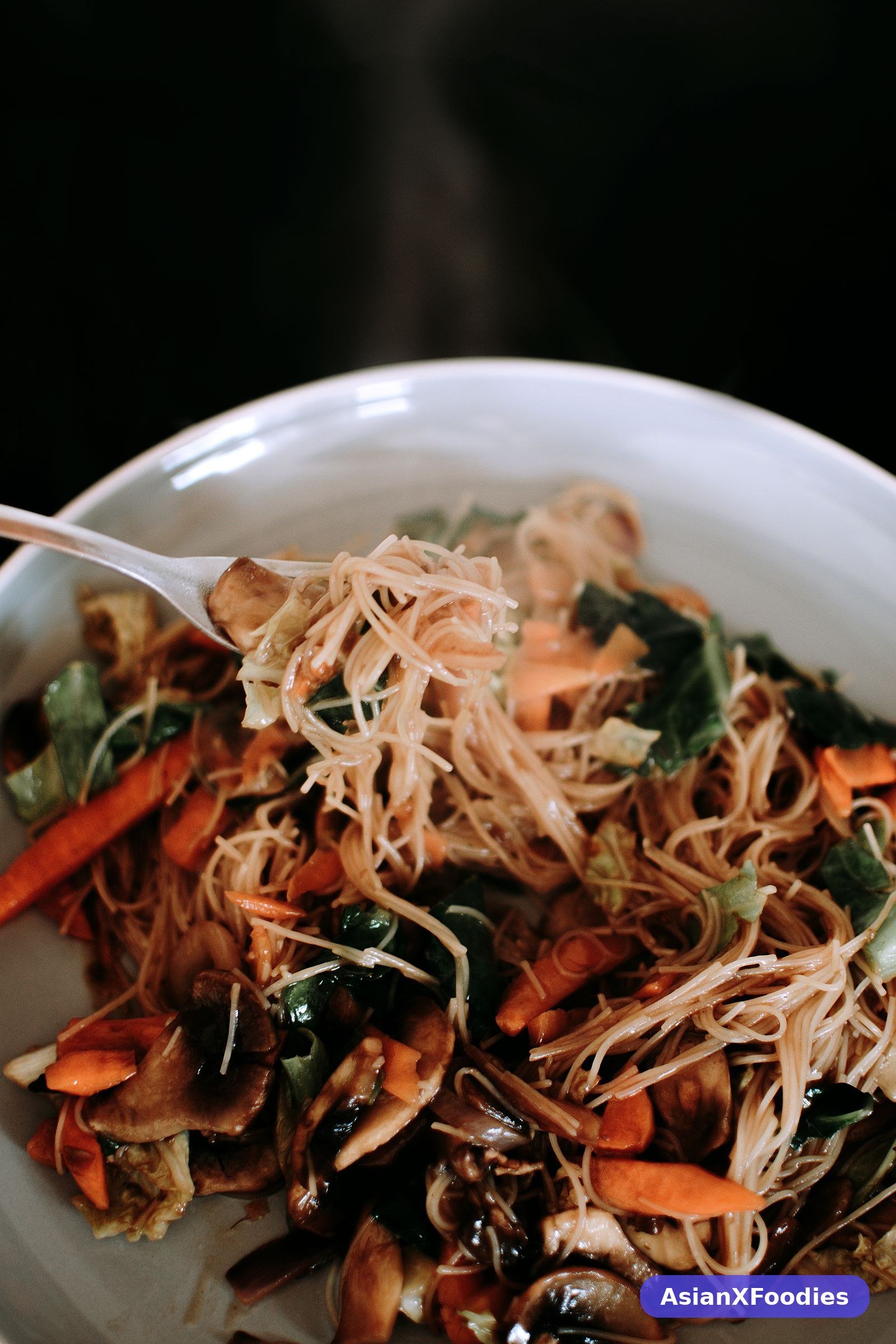
Singapore noodles are a complete meal on their own, and I usually serve them straight from the pan, with nothing more than a few lime wedges and some extra chilli flakes on the side. The lime is worth having, because a squeeze over the top brightens the whole dish and cuts through the richness of the curry, and the chilli flakes are for the people at the table who like a little more heat. A simple cucumber salad on the side is lovely too, cool and crunchy against the warm noodles, and it takes two minutes to make.
If you are feeding a crowd, or you want to make it a bigger spread, a bowl of hot and sour soup to start is a natural partner, and some crispy spring rolls on the side turn it into a feast. I have also served it with a simple stir-fried bok choy, which adds a fresh green note, and with a cold beer, which is the honest truth about what goes best with curry-spiced noodles on a Friday night. If you want another one-pan idea for the same kind of evening, my easy Chinese garlic noodles with vegetables are quicker and milder, and the one-pan beef bulgogi with peppers and onions brings a sweet, savoury Korean flavour to the same one-pan idea.
How to Store and Reheat Leftovers
Leftovers keep well in the fridge for up to two days, in a sealed container, and they reheat better than most noodle dishes, because the vermicelli holds its shape. To reheat, put the noodles in a pan over medium heat with a splash of water, and toss them for two to three minutes until they are hot all the way through. The water loosens the noodles and stops them from drying out, and a fresh squeeze of lime and a few spring onions on top will make them taste almost as good as the first time.
I do not recommend freezing this dish, because the bean sprouts go soft and the shrimp turn rubbery, and it is not worth it for a meal that takes thirty minutes to make fresh. If you do have a lot left over, the noodles are very good cold the next day, eaten straight from the fridge, like a noodle salad, with a little extra soy sauce and sesame oil stirred through. It is not the same as the hot version, but it is a very good lunch, and I have eaten it standing at the kitchen counter more than once.
Frequently Asked Questions
Are Singapore noodles actually from Singapore?
Not really, and that is part of the charm. Singapore noodles are a Cantonese dish, created in Hong Kong, and the name probably came from the way the dish was served in Singapore-style restaurants abroad. The history of Singapore noodles on Wikipedia explains the Cantonese roots and how the dish spread through hawker stalls and takeaways around the world. Whatever the name, the dish itself is a classic: curry-spiced rice vermicelli, tossed with meat, shrimp, egg, and vegetables, and it is loved far beyond the city it is named after.
Can I make Singapore noodles without shrimp?
Yes, and it works very well. Use more chicken, or add firm tofu, cut into small cubes and fried until golden, or just add more vegetables. The method stays exactly the same, and the curry sauce is happy with all of them. If you are making it for someone with a shellfish allergy, leave the shrimp out entirely and add an extra egg, which keeps the dish rich and satisfying. The noodles, the curry, and the vegetables are the heart of the dish, and they do not need the shrimp to be good.
Why did my noodles go mushy?
Almost always because they were soaked for too long, or because the pan was not hot enough. Vermicelli needs only four to five minutes in warm water, and it should still feel a little firm when you drain it, because it finishes cooking in the pan. If the pan is not hot, the noodles steam instead of frying, and they go soft and clumpy. Next time, check the noodles a minute early, drain them well, and make sure the pan is properly hot before the noodles go in. For a detailed look at the technique, The Woks of Life’s Singapore noodles recipe is a good reference, and it explains the soaking and tossing steps clearly.
Can I use a different type of noodle?
You can, but thin rice vermicelli is the traditional choice, and it is the one that gives the dish its light, springy texture. If you cannot find vermicelli, thin rice noodles will work, though they are a little softer. Egg noodles will give you a different dish, closer to a chow mein, and it will still be tasty, but it will not be Singapore noodles. Whatever noodle you use, soak or cook it until it is just underdone, because it will finish in the pan, and that is the rule that matters most.
How spicy are Singapore noodles?
Not very, which is why they are such a crowd-pleaser. The heat comes from the curry powder, and a mild or medium curry powder gives a warm, fragrant glow rather than a burn. If you like it hotter, add a chopped fresh chilli with the vegetables, or a pinch of chilli flakes at the end. If you are cooking for children, use a mild curry powder and leave the chilli out entirely, and the dish will still be full of flavour. The spice is easy to control, and you can adjust it to your table without changing anything else about the recipe.