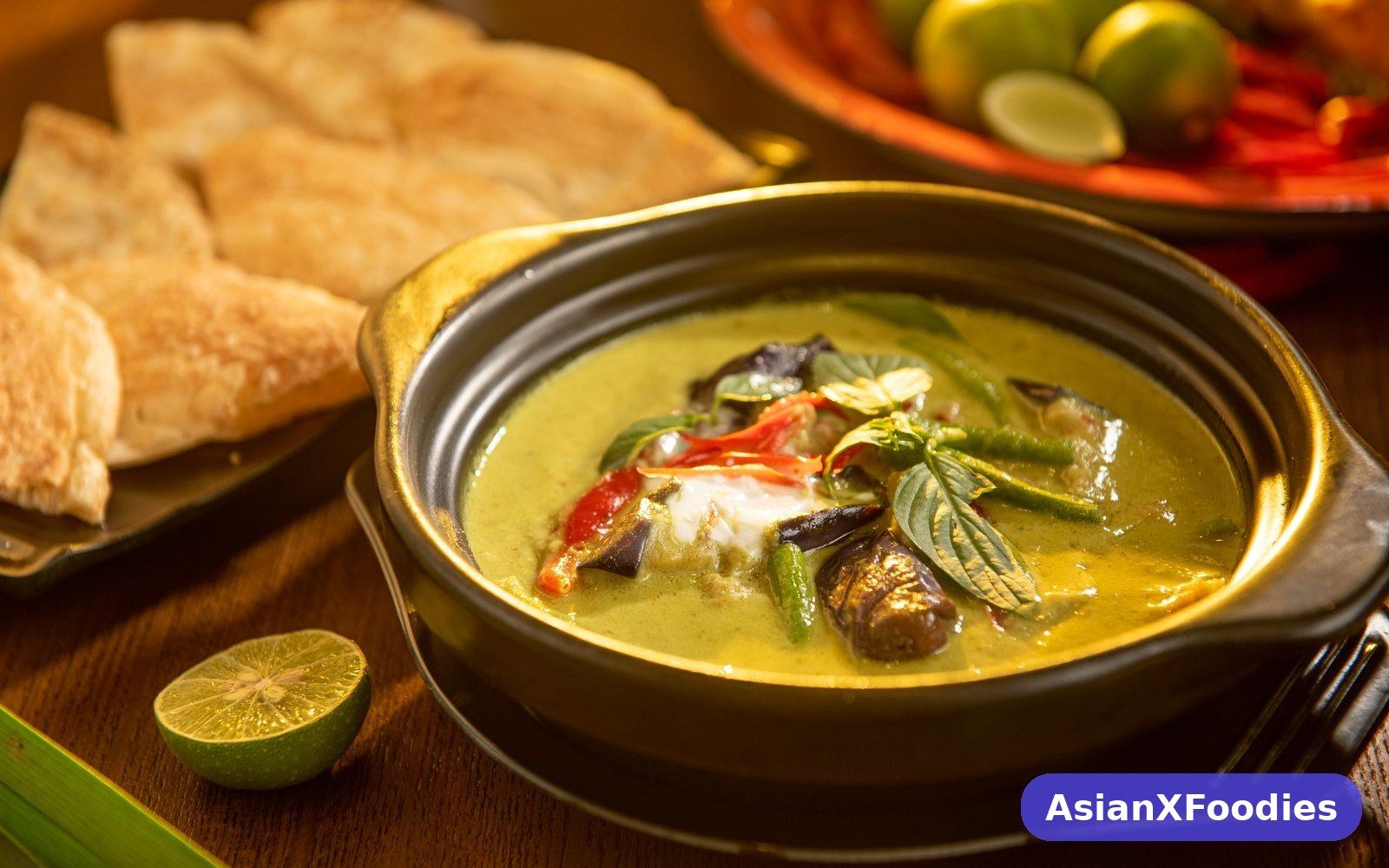
One-Pan Thai Green Curry with Vegetables
The first time I cooked a Thai green curry at home, I was convinced I would get it wrong. I had eaten it in restaurants for years, that pale green sauce with the perfume of lemongrass and basil, and it always seemed like something that belonged to a proper Thai kitchen, not to mine, with its chipped pans and its one wobbly burner. I bought a jar of green curry paste because making paste from scratch felt like a step too far, and I stood in the aisle for far too long trying to choose between three nearly identical jars. In the end I picked the one with the shortest ingredient list, went home, opened a tin of coconut milk, and held my breath. Twenty-five minutes later I was sitting at the table with a bowl of curry that smelled exactly like the restaurant version, and I remember laughing out loud, because it had been that easy all along.
That is the thing about this dish. It looks and tastes impressive, but it is really just a matter of frying a spoonful of paste in coconut cream, pouring in the rest of the milk, and letting the vegetables simmer until they are tender. There is no long list of steps, no fussy technique, and no need for a wok if you do not own one. A deep frying pan or a wide saucepan does the job perfectly, and everything cooks in that one pan, which means the washing up is a single pan, a chopping board, and a wooden spoon. On a busy evening that matters almost as much as the flavour, and the flavour here is something special. It is creamy without being heavy, spicy without being fierce, and fragrant in a way that fills the whole house and makes everyone drift towards the kitchen asking when dinner will be ready.
I make this version with vegetables as the star, because I wanted a curry that felt light and fresh rather than rich, and because a pan full of bright green beans, courgette, peppers, and aubergine looks so beautiful that you want to eat it before you have even tasted it. The vegetables keep their colour and a little bit of bite if you time them right, and they soak up the coconut sauce without going soggy. I have served this to friends who eat meat at every meal, and they have gone back for seconds without once asking where the chicken was, which tells you everything you need to know. It is also the curry I make when someone in the house is feeling under the weather, because there is something deeply comforting about a warm, fragrant bowl of coconut curry with rice, and it is gentle enough to eat when you do not have much of an appetite. If you do want a chicken version for another night, my simple Thai chicken curry without coconut milk is a lighter, tangier take that uses the same kind of quick pan cooking.
Why You’ll Love This Recipe
You will love this recipe because it gives you a proper Thai takeaway flavour in about thirty minutes, with one pan and ingredients you can buy in any supermarket. There is no need to make your own curry paste, though I will tell you how if you fancy it, and no need for galangal or kaffir lime leaves, though they are lovely if you can find them. A good jar of paste, a tin of full-fat coconut milk, and a pile of fresh vegetables are enough, and the result tastes far better than the sum of its parts. I have cooked this after a long day at work, with the shopping still in bags on the counter, and had dinner on the table before I had really woken up properly. That is the kind of recipe that earns its place in a weekly rotation.
The balance of flavours is what makes it so satisfying. Green curry paste brings heat and fragrance, coconut milk brings creaminess and a gentle sweetness, fish sauce brings salt and depth, and a squeeze of lime at the end brings everything into focus. It is a little bit of kitchen magic, watching those four things come together into a sauce that tastes complex and layered, when all you did was stir them into a pan. The vegetables add their own sweetness too, especially the peppers and the sweetcorn if you use it, and the basil stirred in at the end gives the whole dish a fresh, almost peppery lift that makes it taste like it was cooked in a Thai kitchen rather than a British one. I always make a little extra sauce, because there is nothing sadder than a bowl of rice with not quite enough curry to go around, and this sauce is far too good to ration.
It is also wonderfully flexible, which is why I cook it so often. You can use whatever vegetables are in the fridge, add tofu or chickpeas if you want protein, or throw in some leftover chicken at the end. You can make it mild for children by using less paste and a little more coconut milk, or make it fiery by adding fresh chillies. It is naturally gluten-free if your paste and fish sauce are, and it is easy to make vegan by swapping the fish sauce for soy sauce and checking the paste. I have made this for vegans, for spice lovers, for picky eaters, and for my mother, who is suspicious of anything green, and every single one of them has asked for the recipe. That is a rare thing, and it is why this curry has become one of my most cooked dishes.
Ingredients You’ll Need
- 2 tablespoons vegetable oil
- 3 tablespoons Thai green curry paste
- 1 can (400 ml) full-fat coconut milk, unshaken
- 1 tablespoon fish sauce, plus more to taste
- 1 teaspoon palm sugar or brown sugar
- 1 small aubergine, cut into bite-size cubes
- 1 red pepper, deseeded and sliced
- 1 courgette, halved lengthways and sliced into half-moons
- 150 g green beans, trimmed and halved
- 100 g mushrooms, sliced
- 100 g baby sweetcorn, halved lengthways
- 1 tablespoon grated fresh ginger
- 2 cloves garlic, finely sliced
- 1 lime, juiced, plus extra wedges to serve
- 1 large handful Thai basil leaves (or regular basil)
- 1 fresh green chilli, sliced (optional)
- Steamed jasmine rice, to serve
A quick note on the coconut milk, because it is the ingredient that makes or breaks this curry. Buy full-fat coconut milk in a tin, not the thin stuff in a carton meant for cereal, and do not shake the tin before you open it. The thick cream that has risen to the top is what you fry the curry paste in, and that step, frying the paste in the cream until the oil separates and the kitchen smells incredible, is where most of the flavour comes from. If you shake the tin, you lose that thick cream, and the curry will still work, but it will not be as rich or as fragrant. I learned this the hard way, standing over a pan of pale, thin sauce wondering what had gone wrong, and it was simply that I had shaken the tin. Now I keep the tins upright in the cupboard and open them gently, and I spoon out the cream first.
The curry paste is the other thing worth choosing carefully. I have tried many brands, and the difference between a good paste and a mediocre one is enormous. Look for a paste with a short ingredient list that starts with green chillies, lemongrass, and galangal, and avoid the ones that are mostly oil and salt. If you can find a Thai brand in an Asian supermarket, buy that, because it will be fresher and more fragrant than the supermarket own-brand jars. Taste the paste before you decide how much to use, because some are fiery and some are mild, and three tablespoons of one brand can be twice as hot as three tablespoons of another. Start with two tablespoons if you are unsure, taste the sauce, and add more. You can always add heat, but you cannot take it away, and a curry that is too hot for the people eating it is a sad thing.
How to Make One-Pan Thai Green Curry with Vegetables
Begin by getting everything ready, because once the pan is hot this curry moves fast and you will not want to be slicing a courgette with one hand while the paste burns with the other. Cut the aubergine, pepper, courgette, beans, mushrooms, and sweetcorn, and put them in separate little piles or one big bowl if you are feeling relaxed about it, because the order they go into the pan matters, but only roughly. Open the coconut milk without shaking it, and spoon the thick cream off the top into a small bowl, leaving the thinner milk underneath in the tin. Grate the ginger, slice the garlic, and have the fish sauce, sugar, and lime within reach. Put the rice on now, because it takes longer than the curry, and there is nothing worse than a perfect curry waiting for rice that is still hard in the middle.
Heat the oil in a large, deep frying pan or a wide saucepan over medium heat, and when it is warm, spoon in the thick coconut cream you saved, about three or four tablespoons of it. Let it warm up and start to bubble gently, and then add the green curry paste, stirring it into the cream until it loosens and turns fragrant. This is my favourite moment in the whole recipe, because the kitchen suddenly smells like a Thai restaurant, all lemongrass and chilli and warm spice, and I always pause for a second just to enjoy it. Cook the paste in the cream for two minutes, stirring constantly, until the oil starts to separate around the edges and the paste has darkened a shade. This frying step is not optional, because raw curry paste tastes harsh and flat, and frying it in the cream is what turns it into something deep and rounded. If you have ever made a curry that tasted a little raw or sharp, this is almost certainly the step that was rushed.
Now pour in the rest of the coconut milk, the thin milk from the tin, and stir until the sauce is smooth and pale green. Add the fish sauce, the sugar, the ginger, and the garlic, and let the sauce come to a gentle simmer, not a rolling boil, because coconut milk can split if it boils too hard. Taste it at this stage, and adjust it before the vegetables go in, because it is much easier to fix the seasoning now than later. It should taste salty, a little sweet, and fragrant, with a warmth at the back of your throat. If it tastes flat, it probably needs more fish sauce. If it tastes too salty, a little more sugar will round it out. If it tastes rich and heavy, it needs lime, so squeeze in half a lime and taste again. This is the point where you make the curry yours, and I always take a minute here, because a sauce that is balanced now will be beautiful when the vegetables are done.
Add the aubergine first, because it takes the longest to cook and it soaks up the sauce like a sponge, and let it simmer for three minutes. Then add the green beans and the sweetcorn, and cook for another three minutes, and then the peppers, courgette, and mushrooms, which need only four or five minutes more. You want the vegetables tender but still bright and with a little bite, not soft and grey, so keep the lid off and check them often. I test a piece of aubergine with a fork, and when it gives easily but still holds its shape, the curry is ready. Stir in the basil leaves and the lime juice, and let the basil wilt for just a few seconds, because it loses its fragrance if it cooks. If you want a deeper understanding of how the flavours should balance, BBC Good Food’s Thai green curry recipe is a wonderful reference, and I still check it when I am teaching someone this dish. Serve the curry straight from the pan, over jasmine rice, with lime wedges and extra basil on the table.
Tips for the Best Thai Green Curry
The most important tip is to fry the paste properly, and I cannot say this enough times. Two minutes of frying in coconut cream, stirring all the time, until the oil separates and the paste smells incredible, will transform your curry. If you skip this step and just stir the paste into cold coconut milk, the curry will taste thin and a bit raw, and you will wonder why it does not taste like the restaurant version. I set a timer for this step now, because it is so easy to get impatient and move on after thirty seconds, and those extra ninety seconds make all the difference. Keep the heat at medium, not high, because the paste can burn, and burnt paste tastes bitter and there is no fixing it. If it does burn, throw it away and start again, because a fresh start is faster than trying to rescue a bitter sauce.
The second tip is about the vegetables, and it is to add them in stages rather than all at once. I know it is tempting to tip the whole bowl in and be done with it, but vegetables cook at different speeds, and a curry where the aubergine is still hard and the courgette has dissolved into mush is a disappointing thing. Aubergine and beans first, then the peppers and courgette, then the mushrooms and basil last, and each one will be at its best. It only takes an extra few minutes of attention, and the difference is a curry that looks as good as it tastes, with every vegetable holding its colour and shape. If you are in a real hurry, you can add them all together and cook for six minutes, and it will still be a good dinner, but the staged version is worth the effort when you have the time.
The third tip is to season at the end with lime and fish sauce, not just at the beginning. Coconut milk is rich, and it needs acid and salt to lift it, and those flavours fade a little as the curry simmers. So taste the finished curry, and add a squeeze of lime, a dash more fish sauce, or a pinch of sugar until it tastes bright and balanced. I do this with the pan off the heat, because I can think more clearly when I am not also watching the vegetables cook, and I taste with a spoonful of sauce and a piece of vegetable together, because that is how it will be eaten. BBC Good Food’s green chicken and vegetable curry uses the same finish, and it taught me that a curry is never really done until you have tasted it twice, once before the vegetables go in and once after.
Variations to Try
The easiest variation is to add protein, and this curry welcomes it. Cubes of firm tofu, added with the aubergine so they have time to soak up the sauce, are wonderful, especially if you pan-fry them first until they are golden and crisp on the outside. Chickpeas, drained and rinsed, are another easy addition, and they make the curry heartier without any extra cooking. If you eat meat, leftover roast chicken stirred in at the end, or raw chicken thigh pieces simmered in the sauce for ten minutes, both work beautifully, and the chicken version is a classic for a reason. Prawns are lovely too, added in the last three minutes so they stay tender, and they turn the curry into something that feels a little bit special.
You can also change the vegetables to suit the season or the contents of your fridge, and I do this almost every time I cook it. In winter I use butternut squash and sweet potato, cut small so they cook through, and the curry turns sweet and comforting. In spring I add asparagus and peas, which stay bright green and need only a couple of minutes. Broccoli works well, cut into small florets, and so does cauliflower, though it needs a little longer. If you like heat, add a sliced fresh chilli with the vegetables, or stir in a spoonful of chilli oil at the end. For a red curry version, simply swap the green paste for red paste, and you have a completely different dinner with the same method. And if you love the flavours here and want another vegetable dish for the week, my stir-fried bok choy with garlic and ginger is a quick, fresh side that goes beautifully with this curry.
Serving Ideas
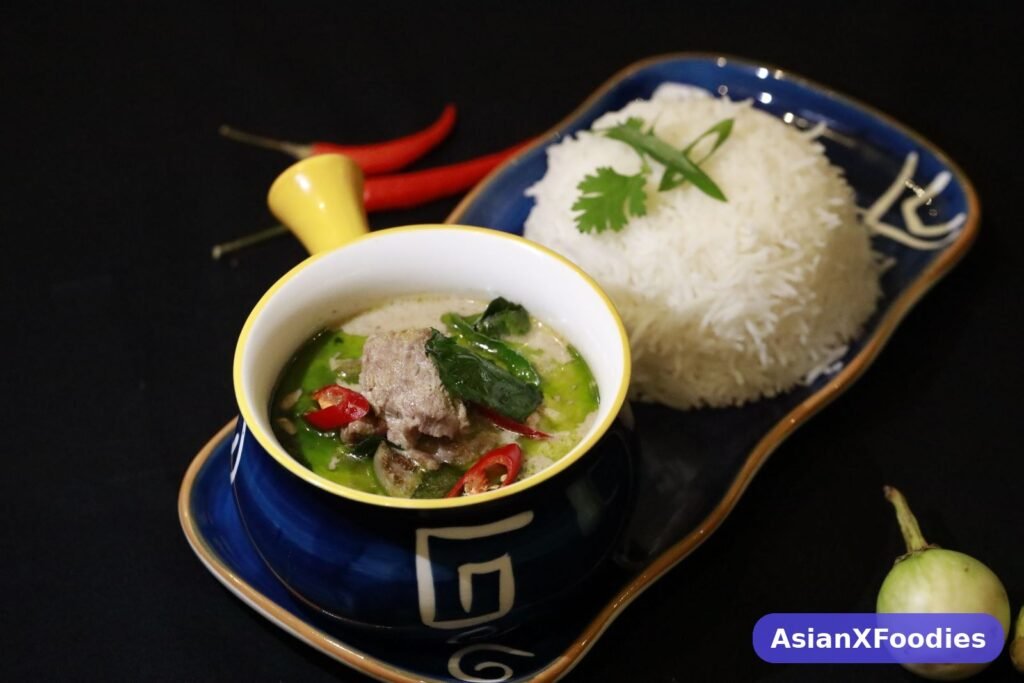
The classic way to serve this is over steamed jasmine rice, and I would not change it. The rice soaks up the sauce, and a bowl of rice with curry spooned over it, a lime wedge on the side, and a few extra basil leaves is a complete meal. I like to serve it family-style, with the pan in the middle of the table and a big bowl of rice, so everyone can take as much sauce as they want, because there is always someone who wants extra sauce and someone who wants extra vegetables, and this way everyone is happy. A small bowl of sliced cucumber with rice vinegar on the side is a lovely, cooling contrast, and a few prawn crackers, if you have them, add a crunch that children love.
For a lighter meal, serve the curry with brown rice or with cauliflower rice, which soaks up the sauce surprisingly well, or spoon it over rice noodles for a change. I have also served it as part of a bigger Thai-inspired spread, with spring rolls, a cucumber salad, and a second curry, and it holds its own beautifully. If you are cooking for one, this recipe makes a generous two portions, and the second portion is a wonderful lunch the next day, so do not halve it just because you are alone. For a comforting soup-like meal on a cold evening, my homemade Chinese chicken soup with noodles is the other dish I turn to, and the two of them together would make a lovely weekend of cooking.
On the side, keep things simple and fresh. A Thai cucumber salad, made with sliced cucumber, rice vinegar, sugar, and a few chilli flakes, takes five minutes and cuts through the richness of the coconut milk perfectly. A green papaya salad is wonderful if you can find green papaya, and a simple mango salad, with ripe mango, lime, and mint, is a beautiful partner in summer. For drinks, iced jasmine tea is perfect, and a cold lager or a crisp white wine works well too. Avoid anything too sweet, because the curry already has sweetness from the coconut and the sugar, and you want something clean and refreshing alongside it.
Storage and Reheating
This curry keeps well in the fridge for up to three days, and the flavours actually deepen overnight, so it is a wonderful make-ahead dish. Let it cool to room temperature, then store it in an airtight container, and keep the rice separate. The vegetables will soften a little on reheating, which is fine, but the basil will darken, so I always add fresh basil when I serve the leftovers. To reheat, warm it gently in a saucepan over medium-low heat, stirring often, until it is steaming hot all the way through. Do not let it boil hard, because the coconut milk can split, and a split sauce, while still edible, looks less appealing and tastes a little grainy. A splash of water or coconut milk will loosen it if it has thickened too much in the fridge.
You can freeze this curry, though I would freeze it without the basil and add fresh basil when you serve it. Portion it into containers, leave a little room at the top for expansion, and freeze for up to two months. Defrost it overnight in the fridge, and reheat it gently as above. The aubergine will be softer after freezing, but the flavour will still be lovely, and it is a useful freezer meal for a night when you do not want to cook. I would not freeze the rice with the curry, because rice freezes better on its own. If you love this kind of make-ahead cooking, my easy Thai basil chicken without fish sauce also reheats beautifully, and it is another quick Thai dinner that fits into a busy week.
Frequently Asked Questions
Can I make Thai green curry without coconut milk?
You can, but it will be a different dish. Coconut milk is what gives green curry its creamy texture and gentle sweetness, and without it the sauce will be thinner and sharper. If you cannot have coconut, use a light cream or a cashew cream, and add a little extra sugar to balance the heat. My Thai chicken curry without coconut milk uses a different, tangier base, and it is a good option if coconut is not for you. For this vegetable version, though, I would try to keep the coconut milk if you can, because it is the heart of the dish.
How spicy is Thai green curry?
It depends entirely on the paste, and pastes vary a lot. Most jarred green curry pastes are medium-hot, with a warmth that builds but does not overwhelm, and the coconut milk softens the heat considerably. If you are cooking for children or for people who do not like spice, use two tablespoons of paste instead of three, and add a little extra coconut milk. If you like it hot, add a sliced fresh chilli or a spoonful of chilli oil. Taste the paste before you cook, because a tiny taste on the tip of a spoon will tell you more than the label will.
Can I use frozen vegetables in this curry?
Yes, and they are a useful shortcut on a busy night. Frozen green beans, peas, sweetcorn, and broccoli all work well, and you can add them straight from the freezer, though they will need an extra minute or two to cook through. Avoid frozen courgette or aubergine, because they go very soft and watery. I keep a bag of frozen mixed vegetables in the freezer for exactly this kind of evening, and the curry still tastes wonderful, just a little less crisp than the fresh version.
What is the difference between Thai green curry and red curry?
The main difference is the paste, and the paste is made from different chillies. Green curry paste uses fresh green chillies, which give it a bright, herbal heat, while red curry paste uses dried red chillies, which give it a warmer, slightly sweeter heat. Green curry is usually a little fresher and more fragrant, and red curry is a little richer. The method is the same for both, so once you can make one, you can make the other, and it is worth trying both to see which you prefer.
Can I make this curry vegan?
Yes, very easily. Use a vegan green curry paste, because some pastes contain shrimp paste, and swap the fish sauce for soy sauce or tamari. The coconut milk is already vegan, and the vegetables are the star, so the dish does not lose anything. Add tofu or chickpeas for protein, and serve it with rice, and you have a completely vegan meal that everyone at the table will enjoy. Check the label on your paste, because that is the one ingredient that can catch you out.
Why did my coconut milk split?
Coconut milk splits when it boils too hard or is heated for too long, and the oil separates from the solids. It is still safe to eat, but the sauce looks grainy and less appealing. To prevent it, keep the curry at a gentle simmer, never a rolling boil, and do not cook it for longer than you need to. If it does split, try whisking in a splash of cold coconut milk off the heat, which sometimes brings it back together. Using full-fat coconut milk, rather than light, also helps, because it is more stable.