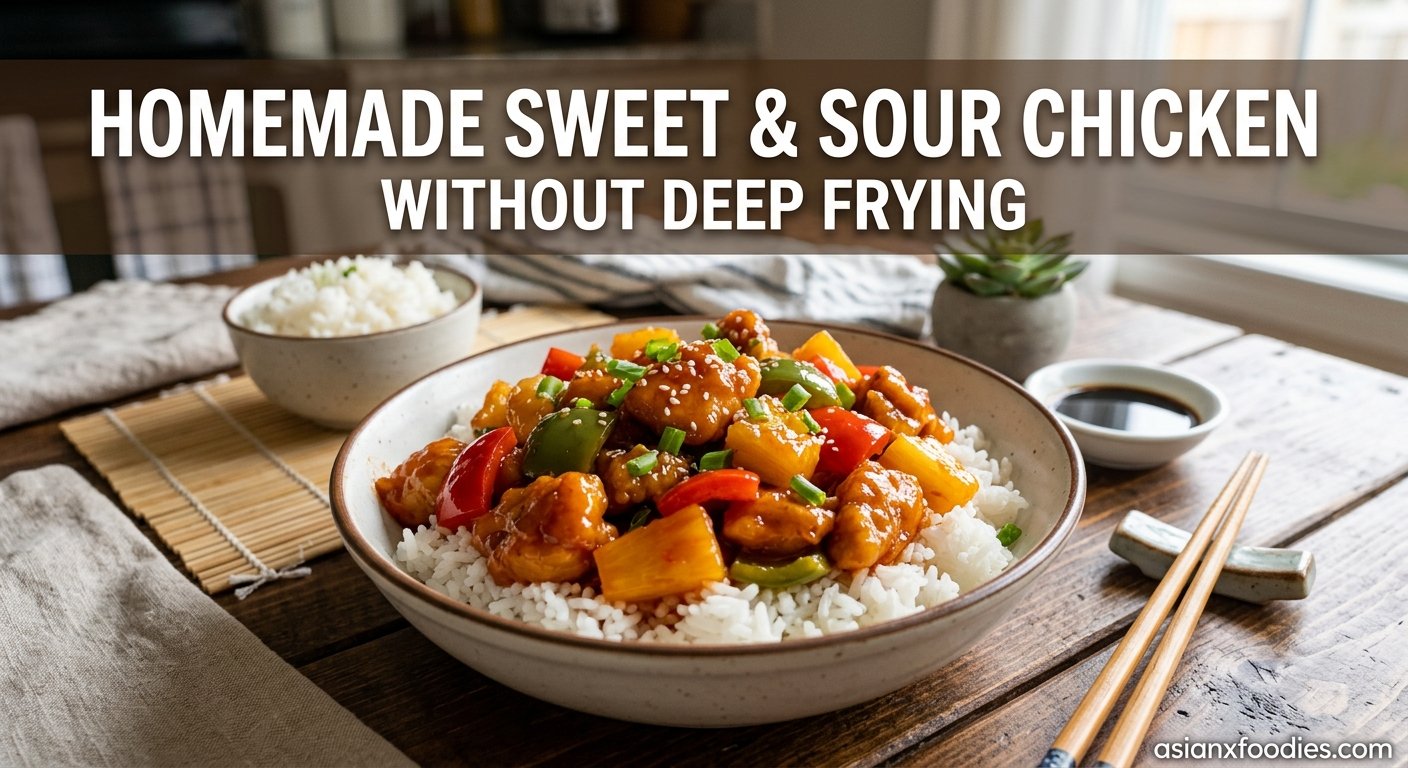
Homemade Sweet and Sour Chicken Without Deep Frying – Easy, Crispy, and Delicious
Introduction
If you love Chinese takeout but want something healthier, more affordable, and easy to prepare at home, this homemade sweet and sour chicken without deep frying is a recipe worth trying. It has everything you would expect from your favorite restaurant-style dish: tender chicken, a deliciously sticky sweet and sour sauce, colorful vegetables, and plenty of flavor. The best part is that you do not need a deep fryer or a large amount of oil to make it.
Traditional sweet and sour chicken is often deep-fried until golden and crispy before being tossed in a thick, flavorful sauce. While delicious, deep frying can be messy, time-consuming, and less suitable for everyday cooking. This easy homemade version uses a skillet and a small amount of oil to cook the chicken, giving you a satisfying golden exterior while keeping the preparation simple.
Whether you are preparing a quick weeknight dinner, cooking for your family, or looking for a healthier alternative to takeout, this easy sweet and sour chicken recipe is a great choice. You can serve it over steamed rice, noodles, or even cauliflower rice for a lighter meal.
In this guide, you will learn how to make sweet and sour chicken without deep frying, which ingredients work best, how to prepare the perfect sauce, and how to achieve tender chicken with delicious flavor.
What Is Homemade Sweet and Sour Chicken?
Sweet and sour chicken is a popular Chinese-American-inspired dish known for its combination of sweet, tangy, and savory flavors. It typically features bite-sized pieces of chicken coated in a flavorful sauce made with ingredients such as ketchup, vinegar, sugar, soy sauce, and sometimes pineapple juice.
The traditional restaurant version often uses battered, deep-fried chicken. However, homemade sweet and sour chicken without deep frying offers a simpler approach that does not require battering or submerging the chicken in hot oil.
Instead, the chicken is lightly coated with cornstarch and pan-seared in a skillet until golden. It is then combined with colorful vegetables and tossed in a homemade sweet and sour sauce.
The result is a delicious meal with juicy chicken, a glossy sauce, and a wonderful balance of flavors. Although it may not have exactly the same crunchy coating as deep-fried chicken, it delivers plenty of texture and taste with much less oil and cleanup.
Why You Will Love This Sweet and Sour Chicken Recipe
There are several reasons why this homemade sweet and sour chicken without deep frying deserves a place in your regular dinner rotation.
- No deep frying required: You only need a skillet and a little cooking oil to prepare the chicken.
- Easy to make: The recipe uses simple ingredients that are easy to find in most grocery stores.
- Quick weeknight dinner: You can prepare the ingredients in advance and have dinner ready in approximately 30 minutes.
- Delicious homemade sauce: The sweet, tangy, and savory sauce tastes wonderful without requiring complicated ingredients.
- Family-friendly: The mild, balanced flavors make this recipe enjoyable for adults and children.
- Customizable: You can add your favorite vegetables, adjust the sweetness, or include a little chili for extra heat.
- Perfect for meal preparation: The chicken and sauce can be prepared ahead of time, making busy evenings easier.
Another great reason to make this recipe at home is that you can control the ingredients. You can adjust the amount of sugar, choose your preferred vegetables, and use only as much oil as you need.
Ingredients for Homemade Sweet and Sour Chicken Without Deep Frying
You do not need a long list of complicated ingredients to make this easy homemade sweet and sour chicken. Most of the ingredients are everyday kitchen staples.
For the Chicken
- 1 pound boneless, skinless chicken breast or chicken thighs
- 3 tablespoons cornstarch
- 2 tablespoons vegetable oil
- 1/2 teaspoon salt
- 1/2 teaspoon black pepper
- 1/2 teaspoon garlic powder
For the Sweet and Sour Sauce
- 1/3 cup ketchup
- 1/4 cup rice vinegar or apple cider vinegar
- 1/4 cup brown sugar
- 2 tablespoons soy sauce
- 1/3 cup water
- 1 tablespoon cornstarch
- 1 tablespoon pineapple juice (optional)
- 1/2 teaspoon freshly grated ginger (optional)
For the Vegetables
- 1 medium red bell pepper, chopped
- 1 medium green bell pepper, chopped
- 1 small onion, cut into chunks
- 1/2 cup pineapple chunks (optional)
- 2 cloves garlic, minced
- 1 tablespoon vegetable oil
You can easily adjust these ingredients according to your preferences. For example, chicken thighs are a great option if you prefer extra juicy meat, while chicken breast works well if you want a leaner meal.
Fresh pineapple adds a pleasant sweetness and a little acidity. However, you can leave it out if you prefer a more traditional sauce or do not have any available.
Kitchen Equipment You Will Need
One of the best things about this recipe is that you do not need any special cooking equipment.
You will need:
- A large nonstick or stainless-steel skillet
- A sharp knife
- A cutting board
- A mixing bowl
- A small bowl for the sauce
- A whisk or spoon
- Measuring cups and spoons
- A spatula or wooden spoon
A wide skillet is particularly useful because it allows the chicken to cook in a single layer. If your skillet is small, cook the chicken in batches to prevent overcrowding.
How to Make Homemade Sweet and Sour Chicken Without Deep Frying
Making homemade sweet and sour chicken without deep frying is simple when you follow a few basic steps. Preparing the ingredients before turning on the stove will make the entire cooking process easier.
Step 1: Prepare the Chicken
Start by trimming any excess fat from the chicken. Cut it into small, evenly sized bite-sized pieces, approximately 1 inch in size.
Try to keep the pieces similar in size so they cook evenly. Place the chicken in a mixing bowl and season it with salt, black pepper, and garlic powder.
Add the cornstarch and toss everything together until the chicken pieces are lightly coated. The cornstarch creates a thin outer layer that helps the chicken develop a golden surface when pan-seared.
Avoid adding too much cornstarch, as a heavy coating can become gummy rather than lightly crisp.
Step 2: Prepare the Sweet and Sour Sauce
In a small bowl, combine the ketchup, rice vinegar, brown sugar, soy sauce, water, and optional pineapple juice.
Add the grated ginger if you enjoy a little extra flavor. Whisk the ingredients together until the sugar is mostly dissolved.
In a separate small bowl, mix one tablespoon of cornstarch with a little cold water to create a smooth slurry. This will help thicken the sauce later without creating lumps.
Taste the sauce before cooking and adjust it according to your preferences. Add a little more vinegar if you enjoy a tangier flavor or a small amount of sugar if you prefer it sweeter.
Step 3: Cook the Chicken in a Skillet
Place a large skillet over medium-high heat and add two tablespoons of vegetable oil. Allow the oil to heat until it shimmers but does not smoke.
Carefully add the coated chicken pieces in a single layer. Leave a little space between the pieces to allow moisture to escape and help the chicken brown properly.
Cook the chicken for approximately 3–4 minutes on the first side, then turn the pieces and continue cooking for another 3–5 minutes, depending on their size and thickness.
The chicken should become lightly golden on the outside and fully cooked in the center. Check that the thickest pieces reach an internal temperature of 165°F (74°C) using a food thermometer.
If you are cooking a larger quantity, work in batches rather than overcrowding the skillet. Transfer the cooked chicken to a clean plate while you prepare the vegetables.
Step 4: Cook the Vegetables
Using the same skillet, add one tablespoon of oil if needed. Add the chopped onion and bell peppers.
Cook the vegetables for approximately 3–4 minutes, stirring occasionally. They should become slightly tender while still retaining some crispness.
Add the minced garlic and cook for another 30 seconds until fragrant. Be careful not to burn the garlic, as it can develop a bitter taste.
If you are using pineapple chunks, add them at this stage and stir gently to combine.
Cooking the vegetables briefly helps preserve their texture, color, and natural sweetness.
Step 5: Add the Sweet and Sour Sauce
Reduce the heat to medium and pour the prepared sweet and sour sauce into the skillet with the vegetables.
Bring the sauce to a gentle simmer, stirring frequently. Once it starts bubbling lightly, stir the cornstarch slurry again and gradually add it to the skillet.
Continue stirring for 1–2 minutes until the sauce becomes glossy and slightly thickened. If the sauce is too thick, add a tablespoon of water at a time until you reach your preferred consistency.
Avoid boiling the sauce too aggressively because excessive heat can cause it to thicken too much or stick to the bottom of the skillet.
Step 6: Combine the Chicken and Sauce
Return the cooked chicken to the skillet and gently toss it with the vegetables and sauce.
Allow everything to cook together for another 1–2 minutes, just long enough for the chicken to become coated in the sauce and warm through.
Make sure the chicken remains tender and avoid prolonged cooking, which can make it dry.
Once everything is evenly coated and heated, remove the skillet from the stove.
Your homemade sweet and sour chicken without deep frying is now ready to serve.
Tips for Making the Best Sweet and Sour Chicken
A few simple techniques can make a noticeable difference in the flavor and texture of your homemade sweet and sour chicken.
Cut the Chicken into Even Pieces
Uniformly sized chicken pieces cook more evenly. If some pieces are much larger than others, the smaller ones may become dry before the larger pieces are fully cooked.
Cutting the chicken into bite-sized pieces also makes it easier to coat every piece with sauce.
Do Not Overcrowd the Pan
Overcrowding is one of the most common reasons pan-fried chicken fails to brown properly. When too many pieces are placed in the skillet at once, moisture builds up and the chicken may steam instead of sear.
Cook the chicken in batches if necessary. This allows each piece to develop a better golden exterior.
Use Cornstarch for a Light Coating
Cornstarch helps create a lightly crisp surface without requiring a thick batter or deep frying.
Make sure the chicken is coated evenly but not excessively. Shake off any loose cornstarch before adding the chicken to the skillet.
Balance the Sweet and Sour Flavors
The best sweet and sour sauce has a balance of sweetness, acidity, and savory flavor.
Brown sugar provides sweetness, vinegar adds tanginess, ketchup contributes color and richness, and soy sauce brings a savory element.
Taste the sauce before adding it to the skillet and make small adjustments as needed.
Avoid Overcooking the Chicken
Chicken breast can become dry if it is cooked for too long. Cut it into even pieces, cook it over suitable heat, and use a food thermometer to confirm that it reaches 165°F (74°C).
Once the chicken is fully cooked, return it to the sauce only long enough to heat through.
What to Serve with Sweet and Sour Chicken
Homemade sweet and sour chicken is incredibly versatile and pairs well with several side dishes.
Steamed white rice: Fluffy jasmine or long-grain white rice is a classic choice. It absorbs the sweet and sour sauce and makes the meal satisfying.
Fried rice: Serve the chicken with homemade egg fried rice or vegetable fried rice for a takeout-inspired dinner.
Noodles: Stir-fried noodles or simple garlic noodles are delicious options if you want something different from rice.
Brown rice: Brown rice adds a slightly nutty flavor and provides more fiber than white rice.
Cauliflower rice: For a lighter, vegetable-focused meal, serve the chicken over cauliflower rice.
Steamed vegetables: Broccoli, carrots, snap peas, or green beans add color and freshness to the plate.
For a complete family dinner, serve the sweet and sour chicken with steamed rice and a side of stir-fried vegetables.
Variations of Homemade Sweet and Sour Chicken
One of the best things about preparing this dish at home is that you can easily customize it.
Sweet and Sour Chicken with Pineapple
For a tropical twist, add fresh or canned pineapple chunks to the skillet. Pineapple adds natural sweetness and a fruity flavor that works beautifully with the tangy sauce.
If you use canned pineapple, choose pineapple packed in juice rather than heavy syrup to make it easier to control the sweetness.
Spicy Sweet and Sour Chicken
If you enjoy spicy food, add a little red pepper flakes, chili garlic sauce, or sriracha to the sauce.
Start with a small amount and gradually increase it until the heat level suits your taste.
Sweet and Sour Chicken with Vegetables
You can add extra vegetables to make the recipe more colorful and satisfying. Broccoli, carrots, zucchini, mushrooms, and snap peas are all good options.
Cut firmer vegetables into thin pieces so they cook quickly and evenly.
Sweet and Sour Chicken Thighs
Chicken thighs are an excellent alternative to chicken breast. They contain a little more fat, which helps them remain juicy during cooking.
Cut boneless, skinless thighs into evenly sized pieces and cook them until they reach an internal temperature of 165°F (74°C).
Gluten-Free Sweet and Sour Chicken
To make this recipe gluten-free, use certified gluten-free cornstarch and replace regular soy sauce with gluten-free tamari or another suitable alternative.
Check the labels of ketchup, vinegar, and any other packaged ingredients to ensure they meet your dietary requirements.
Common Mistakes to Avoid
Even a simple recipe can be disappointing if a few basic cooking techniques are overlooked.
- Adding wet chicken directly to cornstarch: Pat the chicken dry with paper towels before coating it to help the starch adhere.
- Using too much oil: A couple of tablespoons are usually enough for pan-searing, depending on your skillet.
- Cooking on very low heat: Insufficient heat can prevent browning and cause the chicken to release excess moisture.
- Adding the sauce too early: Cook the chicken first, then add the sauce near the end to prevent the coating from becoming soggy too soon.
- Using too much vinegar: Excessive acidity can overpower the other flavors, so adjust it gradually.
- Overcooking the vegetables: Slightly crisp vegetables provide a better contrast to the tender chicken and glossy sauce.
- Making the sauce too thick: Add water a little at a time if the sauce becomes overly sticky.
Taking a little extra care with these steps can help you achieve a more flavorful and enjoyable result.
How to Store and Reheat Leftovers
If you have leftover homemade sweet and sour chicken, you can store it for another meal.
Allow the chicken to cool slightly, then transfer it to an airtight container and refrigerate it within two hours of cooking. Store it in the refrigerator for up to 3–4 days.
For longer storage, freeze the chicken and sauce in a freezer-safe airtight container for approximately 2–3 months for best quality.
To reheat refrigerated leftovers, place the chicken in a skillet over medium-low heat with a splash of water. Stir occasionally until it is steaming hot throughout.
You can also reheat individual portions in the microwave in a microwave-safe dish, stirring halfway through for even heating. Ensure leftovers reach 165°F (74°C) before serving.
If the sauce thickens during storage, add a little water while reheating to restore its consistency.
For the best texture, avoid reheating the chicken repeatedly.
Can You Make Sweet and Sour Chicken Ahead of Time?
Yes, you can prepare several parts of this recipe in advance to save time on busy days.
Cut the chicken into bite-sized pieces and store it in a covered container in the refrigerator. Chop the vegetables and keep them in a separate airtight container.
You can also mix the sweet and sour sauce ahead of time and refrigerate it in a sealed jar for up to 2–3 days.
When you are ready to cook, prepare the chicken in the skillet, sauté the vegetables, and add the sauce as directed.
For the best texture, cook the chicken shortly before serving rather than fully cooking and storing it in the sauce.
Frequently Asked Questions
Can I make sweet and sour chicken without deep frying?
Yes. You can make homemade sweet and sour chicken in a skillet using a small amount of oil. Lightly coating the chicken with cornstarch helps it develop a golden exterior without the need for deep frying.
How do I make chicken crispy without deep frying?
Pat the chicken dry, coat it lightly with cornstarch, and cook it in a hot skillet with a small amount of oil. Avoid overcrowding the pan and turn the chicken as needed to brown it evenly. It will have a lightly crisp surface, although it will not be identical to traditional deep-fried chicken.
Can I make sweet and sour chicken without cornstarch?
Yes. You can omit the cornstarch, although the chicken will have less of a crisp exterior and the sauce will be thinner. For thickening, you can use an appropriate alternative such as arrowroot starch, following its package instructions.
Is homemade sweet and sour chicken healthier than takeout?
It can be a lighter alternative because you control the amount of oil, sugar, and other ingredients. Pan-searing avoids the large amount of oil used for deep frying. However, the overall nutritional value depends on your ingredients, portion size, and serving choices.
Can I use frozen vegetables?
Yes. Frozen bell peppers or mixed stir-fry vegetables can be convenient alternatives to fresh vegetables. Thaw and drain them if necessary, and avoid adding excess water to the skillet so the sauce does not become diluted.
What type of vinegar is best for sweet and sour sauce?
Rice vinegar is a great option because it has a relatively mild acidity and a pleasant flavor. Apple cider vinegar can also work well. If using a stronger vinegar, start with a smaller amount and adjust to taste.
Why is my sweet and sour sauce too runny?
The sauce may need a little more thickening. Mix a small amount of cornstarch with cold water to make a slurry, then gradually add it to the simmering sauce while stirring. Allow it to cook briefly until it reaches your desired consistency.
Can I make this recipe without ketchup?
Yes. You can experiment with a small amount of tomato paste mixed with water, vinegar, and sugar. The flavor and color will differ slightly from a sauce made with ketchup, so adjust the seasonings to taste.
Homemade Sweet and Sour Chicken Recipe Card
Preparation Time: 15 minutes
Cooking Time: 15 minutes
Total Time: 30 minutes
Servings: 4
Course: Main Course
Cuisine: Chinese-American Inspired
Cooking Method: Pan-Searing
Difficulty: Easy
Ingredients
- 1 pound boneless chicken breast or thighs, cut into bite-sized pieces
- 3 tablespoons cornstarch, divided
- 2 tablespoons vegetable oil for chicken
- 1 tablespoon vegetable oil for vegetables
- 1/2 teaspoon salt
- 1/2 teaspoon black pepper
- 1/2 teaspoon garlic powder
- 1/3 cup ketchup
- 1/4 cup rice vinegar
- 1/4 cup brown sugar
- 2 tablespoons soy sauce
- 1/3 cup water
- 1 tablespoon pineapple juice (optional)
- 1/2 teaspoon grated ginger (optional)
- 1 red bell pepper, chopped
- 1 green bell pepper, chopped
- 1 small onion, chopped
- 2 cloves garlic, minced
- 1/2 cup pineapple chunks (optional)
Instructions
- Cut the chicken into evenly sized bite-sized pieces and pat dry.
- Season with salt, black pepper, and garlic powder. Toss with 2 tablespoons of cornstarch until lightly coated.
- Whisk together the ketchup, vinegar, brown sugar, soy sauce, water, optional pineapple juice, and ginger in a bowl.
- Mix the remaining 1 tablespoon of cornstarch with a little cold water to make a smooth slurry.
- Heat 2 tablespoons of oil in a large skillet over medium-high heat.
- Add the chicken in a single layer and cook for approximately 6–9 minutes, turning occasionally, until golden and cooked through to 165°F (74°C). Work in batches if needed.
- Transfer the chicken to a clean plate. Add another tablespoon of oil to the skillet if needed.
- Add the onion and bell peppers and cook for 3–4 minutes.
- Stir in the garlic and cook for 30 seconds. Add the pineapple chunks if using.
- Pour the sweet and sour sauce into the skillet and bring it to a gentle simmer.
- Stir the cornstarch slurry and add it gradually to the sauce, stirring until glossy and thickened.
- Return the chicken to the skillet and toss gently until everything is coated.
- Cook for another 1–2 minutes until heated through, then serve immediately with steamed rice or noodles.
Final Thoughts
This homemade sweet and sour chicken without deep frying is a simple way to enjoy a takeout-inspired favorite without the mess of a deep fryer. With tender chicken, colorful vegetables, and a delicious homemade sauce, it makes a satisfying meal for busy weeknights, family dinners, or relaxed weekends.
The recipe is easy to customize, so you can adjust the sweetness, add your favorite vegetables, or introduce a little spice whenever you want something different. Using a skillet and a small amount of oil makes the cooking process more convenient while still giving the chicken a lovely golden exterior.
Once you try this easy recipe, you may find yourself making it regularly instead of ordering takeout. Serve it with fluffy rice, noodles, or your favorite side dish, and enjoy a flavorful homemade dinner that everyone can appreciate.