
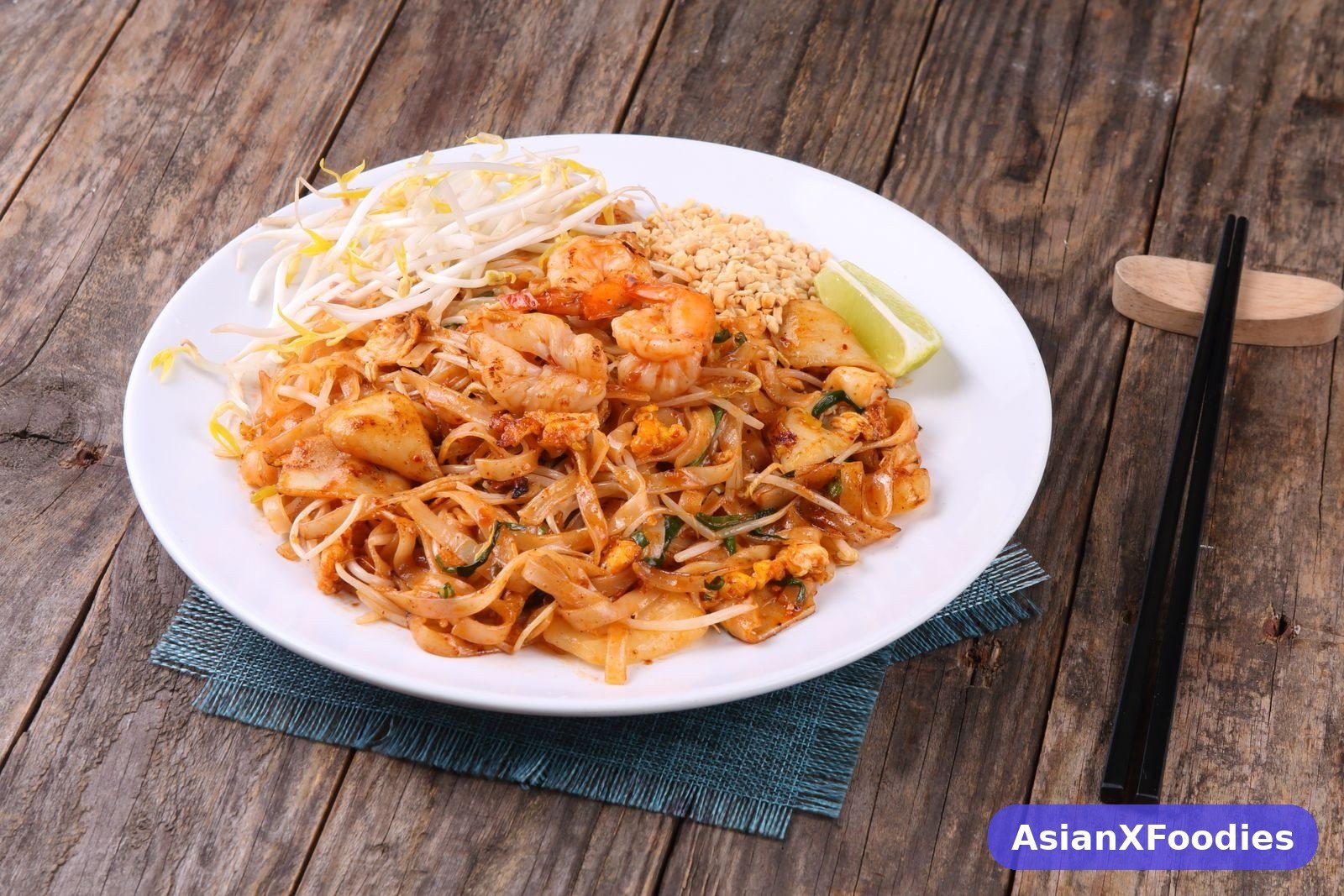
One-Pan Pad Thai with Shrimp and Peanuts
Pad thai is one of those dishes I used to save for restaurants. It seemed too clever, too balanced, too easy to get wrong. The noodles had to be just right, not mushy, not chewy, the sauce had to be sweet and sour and salty all at once, and the shrimp had to be pink and juicy, not rubbery. I ordered it every time I saw it on a menu, and I told myself it was a restaurant dish, not a home dish. Then I had it at a friend’s house, in a big pan in the middle of the table, and she had made it in half an hour, with one pan, and I realised I had been overthinking it for years.
The trick, she told me, is to have everything ready before you start cooking. Pad thai cooks fast, and once the noodles go in, there is no time to chop a spring onion or squeeze a lime. So you do all the chopping first, you mix the sauce in a little bowl, you soak the noodles, and then you cook. It is ten minutes of preparation and fifteen minutes of cooking, and most of that cooking is just tossing things in a pan. It is not hard, it is just organised, and organisation is a skill anyone can learn.
What I love about this one-pan version is how little washing up there is. One pan, one bowl for the sauce, one chopping board, and dinner is done. The noodles cook in the pan, the shrimp cooks in the pan, the egg cooks in the pan, and the sauce goes in the pan, and by the end, the pan is full of glossy, tangled noodles, pink shrimp, and crunchy peanuts, and it smells like a Thai restaurant. I serve it straight from the pan, in the middle of the table, with lime wedges and extra peanuts on the side, and everyone helps themselves. It feels generous and relaxed, and there is no fussy plating, which suits me perfectly.
The sauce is the heart of this dish, and it is worth getting right. It is tamarind for sourness, palm sugar or brown sugar for sweetness, fish sauce for saltiness, and a little lime juice for brightness. The balance is personal, and you should taste it and adjust it before it goes in the pan. If it is too sour, add a little more sugar. If it is too sweet, add a little more lime. If it tastes flat, add a little more fish sauce. The sauce should make you want to taste it again, and if it does, it is ready. I write the quantities down, but I always taste, because tamarind paste varies, and fish sauce varies, and the only way to know is to taste.
The shrimp are the star here, and they deserve a little care. I use large raw shrimp, peeled and deveined, with the tails left on if I am feeling fancy, or taken off if I am not. They cook in two minutes, and they go from grey to pink very quickly, and the moment they curl into a C shape, they are done. If they curl into a tight O, they are overcooked, and they will be rubbery. It is a small detail, but it is the difference between juicy shrimp and disappointing shrimp, and it is worth watching for. I take them out of the pan as soon as they are pink, and I put them back in at the end, so they do not overcook while the noodles finish.
Why You’ll Love This Recipe
You will love this recipe because it tastes like the pad thai from a good Thai restaurant, tangy, sweet, savoury, with juicy shrimp and crunchy peanuts, but it cooks in one pan, in thirty minutes, with ingredients you can find in a regular supermarket. There is no special equipment, no wok station, no long list of hard-to-find ingredients. It is a weeknight dinner that tastes like a treat, and that is a combination I never get tired of.
It is also a one-pan meal, and that matters more than it sounds. One pan means less washing up, less mess, and a calmer kitchen. The noodles, the shrimp, the egg, and the sauce all cook in the same pan, and the flavours build on each other as they go. The egg coats the noodles, the sauce soaks into everything, and the peanuts add crunch at the end. It is a dish that comes together in the pan, and you can see it happening, which is satisfying in a way that a complicated recipe never is.
The flavour is balanced in a way that is hard to stop eating. It is sweet, sour, salty, and a little bit spicy, all at once, and each bite is slightly different. One bite is mostly noodles and sauce, the next has a juicy shrimp, the next has a crunchy peanut, and the lime on top brightens everything. It is a dish that keeps you interested, and it is why pad thai is one of the most loved noodle dishes in the world. I have made this for people who said they did not like Thai food, and they asked for the recipe. That has happened more than once.
It is flexible, too. If you do not eat shrimp, use chicken, or tofu, or just vegetables, and the recipe works just as well. If you want it spicier, add more chilli. If you want it milder, leave the chilli out. The method stays the same, only the protein changes, and the sauce is happy with all of them. I have made this with chicken thighs, cut into strips, with firm tofu, and with just vegetables when the fridge was nearly empty, and every version was eaten happily. That is the mark of a good recipe, it bends without breaking.
Finally, it is a recipe that makes you feel like a good cook. When you put a pan of pad thai on the table, with the lime wedges and the peanuts and the spring onions, it looks impressive, and it smells wonderful, and people lean in. It is a dish that feels like an occasion, even on a Tuesday. And because it only takes thirty minutes, you can make it on a Tuesday, and that is the best kind of recipe, the one that makes an ordinary night feel a little bit special.
Ingredients You’ll Need
- 200g flat rice noodles, about 5mm wide
- 300g large raw shrimp, peeled and deveined
- 3 tablespoons tamarind paste
- 3 tablespoons brown sugar or palm sugar
- 3 tablespoons fish sauce
- 2 tablespoons lime juice, freshly squeezed
- 1 tablespoon soy sauce
- 1 teaspoon chilli flakes, or 1 fresh red chilli, finely chopped
- 3 tablespoons neutral oil, such as sunflower or vegetable oil
- 3 garlic cloves, finely chopped
- 1 small onion or 2 shallots, thinly sliced
- 2 large eggs, beaten
- 150g bean sprouts
- 4 spring onions, cut into 3cm pieces
- 60g roasted peanuts, roughly chopped
- 1 lime, cut into wedges, to serve
- Fresh coriander leaves, to serve
- Extra chilli flakes and peanuts, to serve
A word on the noodles, because they are the part people worry about most. Flat rice noodles, about five millimetres wide, are what you want, and you soak them in warm water until they are pliable but still firm, which takes about ten minutes. They should bend easily, but they should still feel a little underdone when you bite one, because they will finish cooking in the pan. If you soak them until they are soft, they will go mushy in the pan, and mushy pad thai is a sad thing. I set a timer for ten minutes, and I check them at eight, because noodles vary, and it is better to under-soak than to over-soak.
Tamarind paste is the sour heart of the sauce, and it is worth finding. Most supermarkets sell it in a small jar, in the Asian aisle, and it keeps for months in the fridge. If you cannot find it, you can use lime juice and a little rice vinegar instead, though the flavour will be brighter and less deep. Palm sugar is traditional, and it has a caramel-like flavour that is lovely, but brown sugar works well too, and it is what I use most weeks. Fish sauce is essential, it brings the salty, savoury depth that soy sauce alone cannot give, and a little goes a long way.
For the shrimp, I use large raw shrimp, because they stay juicy and they look generous in the pan. Cooked shrimp will work in a pinch, but they overcook very easily, and they can go rubbery. If you only have cooked shrimp, add them at the very end, just to warm through, for one minute. The peanuts should be roasted and unsalted, and I chop them roughly, so there are big pieces and small pieces, which gives a better crunch. If you have a peanut allergy in the house, toasted cashews are a good substitute, or just leave the nuts out and add extra bean sprouts for crunch.
How to Make One-Pan Pad Thai with Shrimp and Peanuts
Start by soaking the noodles. Put them in a large bowl, cover them with warm water, not boiling, just warm from the tap, and leave them for eight to ten minutes, until they are pliable but still firm. They should bend without breaking, and when you bite one, it should still feel a little underdone in the middle. Drain them well, and set them aside. While they soak, mix the sauce, because you want it ready before you start cooking. Put the tamarind paste, brown sugar, fish sauce, lime juice, soy sauce, and chilli flakes in a small bowl, and stir until the sugar has dissolved. Taste it, it should be sour, sweet, and salty all at once, and if it leans too far in one direction, adjust it now. A little more sugar if it is too sour, a little more lime if it is too sweet, a little more fish sauce if it tastes flat.
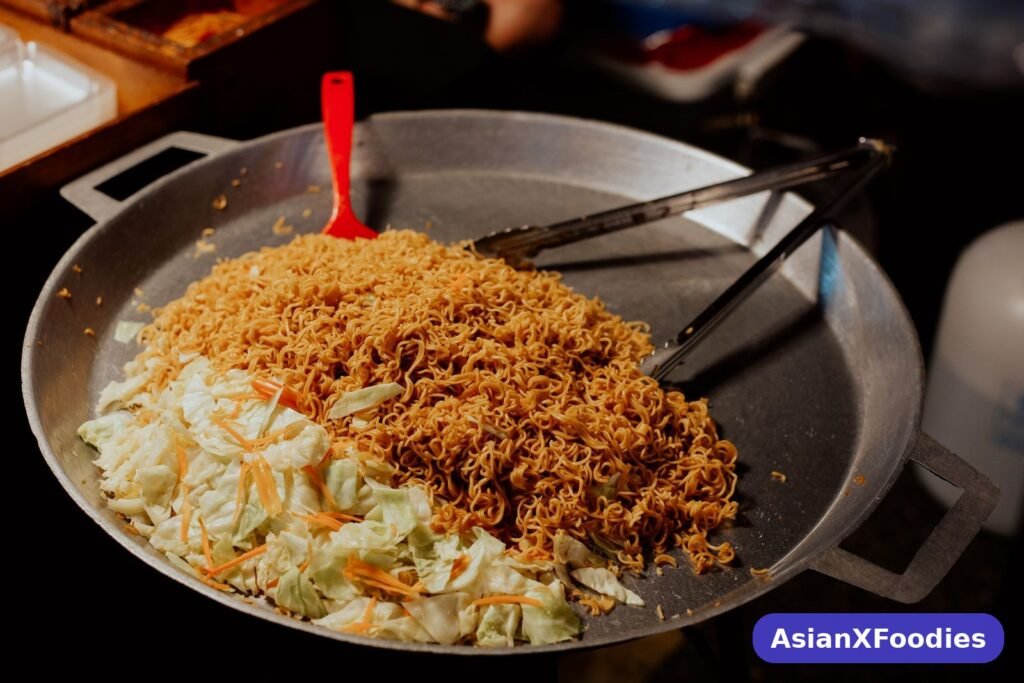
Prepare everything else while the noodles soak. Peel and devein the shrimp if they are not already done, chop the garlic, slice the onion, beat the eggs in a small bowl, and put the bean sprouts, spring onions, and peanuts in separate little bowls beside the stove. This is the mise en place, the French term for having everything ready, and it is what makes pad thai easy instead of stressful. Once the pan is hot, you will be adding things quickly, and you do not want to be chopping an onion while the garlic burns. I lay everything out in a row, like a little production line, and it makes the cooking feel calm.
Heat the oil in a large, deep pan or a wok over a medium-high heat. When the oil shimmers, add the shrimp in a single layer, and cook them for about a minute on each side, until they turn pink and curl into a C shape. Take them out of the pan and set them aside on a plate. Do not overcook them, and do not leave them in the pan while you cook the rest, because they will go rubbery. This step takes two minutes, and it is worth doing properly, because juicy shrimp are the best part of this dish.
In the same pan, add the onion and cook for two minutes, until it softens and starts to turn golden at the edges. Add the garlic and cook for thirty seconds, just until it smells fragrant, and be careful not to let it burn, because burnt garlic tastes bitter and it will flavour the whole dish. Push the onion and garlic to one side of the pan, and pour the beaten eggs into the empty side. Let them set for a few seconds, then scramble them gently with a spatula, breaking them into soft curds. This takes about a minute, and the eggs should be just set, not dry. Mix the eggs into the onion and garlic, and you have the base of the dish.
Now add the drained noodles and the sauce, and toss everything together with tongs. The noodles will look stiff at first, but as they heat up, they will soften and absorb the sauce. Add a splash of water, about three tablespoons, if the noodles look dry, and keep tossing for three to four minutes, until the noodles are tender and glossy, and the sauce has coated every strand. This is the moment when the dish comes together, and you can see it happening, the noodles turning a beautiful golden brown, the sauce clinging to them, the smell filling the kitchen. If the noodles are still a little firm, add another splash of water and cook for another minute. They should be tender but not mushy, with a slight chew.
Add the shrimp back to the pan, along with the bean sprouts and spring onions, and toss everything together for one minute, just until the sprouts are slightly softened but still crunchy, and the shrimp are hot through. The bean sprouts should stay crisp, they are not meant to cook down, they are meant to add freshness and crunch. Take the pan off the heat, and stir in half the chopped peanuts. Taste a noodle, and adjust the seasoning if you need to, a little more lime juice if it needs brightness, a little more fish sauce if it needs salt. Serve straight from the pan, or in warm bowls, topped with the remaining peanuts, fresh coriander, and lime wedges on the side.
Tips for the Best One-Pan Pad Thai
Soak the noodles, do not boil them. This is the most important tip, and it is the one that makes the difference between good pad thai and mushy pad thai. Rice noodles go from perfect to mushy very quickly, and if you boil them, they will be overcooked before they even reach the pan. Soak them in warm water until they are pliable but still firm, and let them finish cooking in the pan, where they absorb the sauce. I check them at eight minutes, and I drain them as soon as they bend easily. It is better to under-soak than to over-soak, because you can always add a splash of water in the pan, but you cannot un-mush a noodle.
Have everything ready before you start. Pad thai cooks fast, and once the pan is hot, there is no time to chop or measure. I lay everything out beside the stove, in the order I will use it, and it makes the cooking feel easy. The shrimp, the onion, the garlic, the eggs, the sauce, the noodles, the sprouts, the spring onions, the peanuts, all ready, all within reach. It takes ten minutes to prepare, and it saves you from the panic of a burning pan while you search for the fish sauce. This is a habit that will make you a better cook in general, not just for pad thai.
Do not overcook the shrimp. Shrimp cook in two minutes, and they go from perfect to rubbery in thirty seconds. Cook them first, take them out, and put them back in at the end, just to warm through. When they curl into a C shape, they are done. When they curl into a tight O, they are overcooked. It is a small thing to watch for, and it makes a big difference. If you are using chicken instead, cook it the same way, take it out, and add it back at the end, so it stays juicy.
Taste the sauce before it goes in the pan. The sauce is the flavour of the dish, and it should taste balanced before you add it to the noodles. Tamarind paste varies in sourness, fish sauce varies in saltiness, and sugar varies in sweetness, so the quantities in the recipe are a starting point, not a rule. Taste it, and adjust it until it makes you want another taste. A little more sugar if it is too sour, a little more lime if it is too sweet, a little more fish sauce if it is flat. This is the cook’s job, and it is a pleasure, not a chore.
Use a large pan. Pad thai needs space to toss, and if the pan is too small, the noodles will steam instead of frying, and they will go mushy. A large, deep frying pan or a wok is ideal, and if your pan is small, cook the noodles in two batches. It is better to take a few extra minutes than to end up with a pan of sticky, steamed noodles. The tossing is part of the cooking, it coats the noodles in sauce and it keeps them from sticking, so give them room to move.
Variations to Try
For a chicken pad thai, use 300g of chicken thigh, cut into thin strips, and cook it the same way as the shrimp, in the hot oil until golden, then take it out and add it back at the end. Chicken takes a little longer than shrimp, about three to four minutes, and it should be cooked through and golden at the edges. This is a good version if you do not eat seafood, or if chicken is what you have in the fridge. A chicken chow mein is a different noodle dish, but if you like noodles with chicken, it is a good one to know.
For a vegetarian pad thai, use firm tofu, cut into cubes and patted very dry, and cook it in the hot oil until golden on all sides, about four minutes. Take it out, and add it back at the end. Add extra vegetables, like shredded carrot, sliced mushrooms, or broccoli florets, and cook them with the onion. The sauce stays the same, though you will want to use a vegetarian fish sauce substitute, or just soy sauce, if you do not eat fish sauce. The tofu absorbs the sauce beautifully, and the dish is still satisfying and full of flavour.
For a spicier version, add a finely chopped fresh red chilli with the garlic, or increase the chilli flakes to two teaspoons. Serve it with extra chilli flakes on the side, so people can add more if they like. I do this when it is just adults at the table, and I serve it with a cold beer or an iced tea, because the heat builds gently and a cold drink is welcome. If you are cooking for children, leave the chilli out of the pan, and put it on the table for the adults to add themselves. That way everyone gets the heat they want.
For a lighter version, add more vegetables and fewer noodles. I sometimes use 150g of noodles and add a grated carrot, a handful of shredded cabbage, and extra bean sprouts, so the dish is still filling but feels lighter. The sauce and the method stay the same, and the vegetables add crunch and freshness. It is a good way to use up vegetables in the fridge, and it makes the dish feel a little healthier without losing any of the flavour. A garlic noodles recipe is another good option if you want a lighter noodle dish.
Serving Ideas
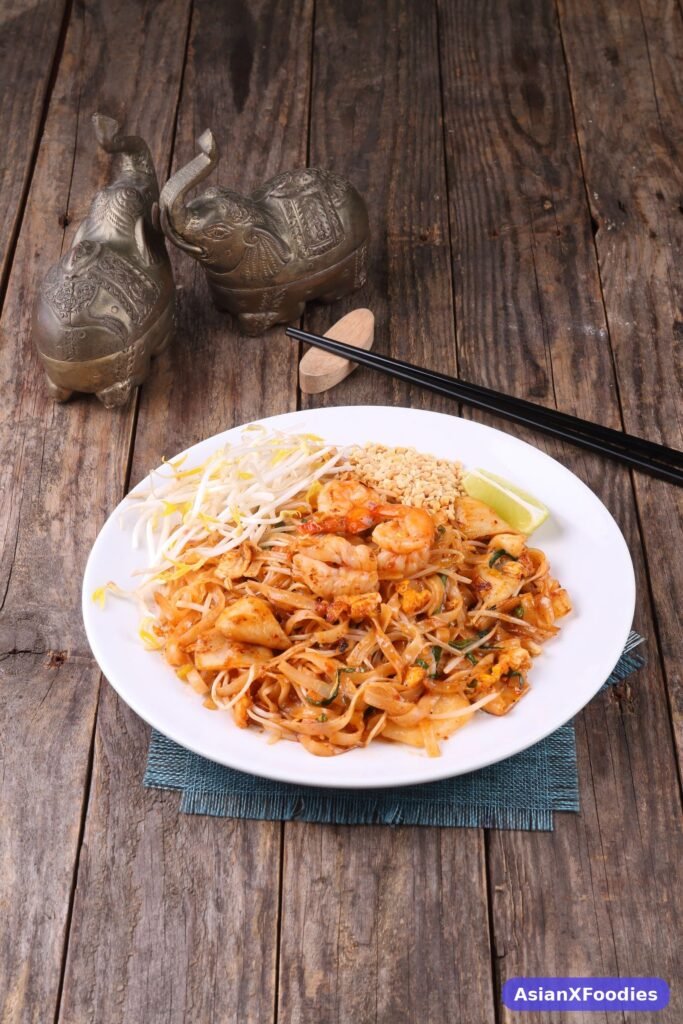
The simplest way to serve pad thai is straight from the pan, in the middle of the table, with lime wedges, extra peanuts, and chilli flakes on the side. Everyone helps themselves, and the meal feels relaxed and generous. I put a big serving spoon in the pan, and I let people take as much as they want. It is not a formal dish, it is a sharing dish, and it works best when it is served that way. A cold drink, like iced tea or a light lager, is lovely with it, because the sauce is rich and a cold drink refreshes the palate.
For a fuller meal, serve pad thai with a simple soup on the side, like a hot and sour soup, or a clear broth with vegetables. The soup adds warmth and depth, and it makes the meal feel complete. I also like to serve it with a simple cucumber salad, just sliced cucumber with rice vinegar and a pinch of sugar, which is cool and refreshing against the warm, tangy noodles. The contrast is lovely, and it is a combination I come back to often.
If you are serving pad thai for a dinner party, make it the main course, and serve a starter of spring rolls or satay beforehand. The pad thai is substantial enough to be the main, and the starter adds a sense of occasion. I have done this for friends, with a plate of spring rolls to start, and a pan of pad thai in the middle, and it felt like a proper dinner party, even though the cooking was simple. A spicy garlic noodles dish is a good second noodle option if you are feeding a crowd and want variety.
For lunch, pad thai is wonderful cold the next day, though it is best warm. I pack leftovers in a lunchbox, with a lime wedge and a little bag of peanuts, and it is still good hours later. The noodles absorb the sauce overnight, and the flavour deepens, so it is actually a very good leftover. I sometimes make a double batch on purpose, so there is enough for lunch the next day, and I have never regretted it.
Storage and Reheating
Leftover pad thai keeps in the fridge for up to three days, in an airtight container. Let it cool completely before you put the lid on, and store the lime wedges and extra peanuts separately, because the peanuts go soft in the fridge and the lime dries out. The noodles will absorb the sauce overnight, and they will be a little softer the next day, but they will still taste wonderful, and the flavour actually deepens. I think pad thai is one of those dishes that is almost better the next day, which is a rare and welcome thing.
To reheat, use a pan over a medium heat, with a splash of water, about two tablespoons, to loosen the noodles. Toss them gently for three to four minutes, until they are hot all the way through. The water helps the noodles soften again without drying out, and the pan brings back a little of the texture. The microwave works too, in short bursts, with a splash of water, but the noodles can go a little uneven, hot in some places and cold in others, so I prefer the pan. Add a squeeze of fresh lime and a scattering of fresh peanuts after reheating, to brighten it up.
I do not recommend freezing pad thai, because the noodles go soft and mushy when they thaw, and the bean sprouts go limp. It is a dish that is best eaten fresh or from the fridge, within three days. If you want to get ahead, you can mix the sauce in advance and store it in the fridge for up to a week, and you can soak the noodles just before you cook. The sauce is the part that takes time to balance, and having it ready makes the cooking much faster.
Frequently Asked Questions
Can I make pad thai without tamarind paste?
Yes, you can, though the flavour will be a little different. Tamarind gives a deep, sour flavour that is hard to replace exactly, but you can use lime juice and a little rice vinegar instead. Use three tablespoons of lime juice and one tablespoon of rice vinegar, and add a little more sugar to balance the sharpness. The result will be brighter and less earthy, but still delicious, and it is a good substitute if you cannot find tamarind. If you can find it, though, it is worth buying, because it keeps for months in the fridge and it is the key to an authentic pad thai flavour. The Kitchn’s guide to how to make pad thai is a good reference if you want to compare methods.
What noodles should I use for pad thai?
Flat rice noodles, about five millimetres wide, are the traditional choice, and they are what I use. They are sold in most supermarkets, in the Asian aisle, and they are usually labelled as pad thai noodles or rice stick noodles. Soak them in warm water until they are pliable but still firm, and let them finish cooking in the pan. Do not use wheat noodles, because they have a different texture and they will not absorb the sauce in the same way. Do not use very thin rice vermicelli either, because they go mushy very quickly. The five-millimetre flat noodles are the right width, and they hold the sauce beautifully.
Can I use frozen shrimp for this recipe?
Yes, frozen shrimp work well, as long as you defrost them properly first. Defrost them in the fridge overnight, or in a bowl of cold water for twenty minutes, changing the water once. Pat them very dry with kitchen paper before you cook them, because wet shrimp will steam instead of sear, and they will not get that lovely pink colour. Do not defrost them in the microwave, because they will start to cook and go rubbery. Once they are defrosted and dry, cook them exactly as you would fresh shrimp, for about a minute per side, until pink and curled into a C shape.
Why are my noodles mushy?
The most common reason is over-soaking the noodles, or boiling them instead of soaking them. Rice noodles go from perfect to mushy very quickly, and if you soak them until they are soft, they will fall apart in the pan. Soak them in warm water, not boiling, for eight to ten minutes, until they are pliable but still firm, and let them finish cooking in the pan. Another reason is using a pan that is too small, which steams the noodles instead of frying them. Use a large pan, toss the noodles well, and add a splash of water only if they look dry. The BBC’s pad thai recipe is a good comparison if you want to check your method.
Can I make pad thai ahead of time?
You can prepare everything ahead, but I recommend cooking it just before you serve it, because pad thai is best fresh, when the noodles are glossy and the bean sprouts are still crunchy. You can mix the sauce up to a week in advance, and store it in the fridge. You can chop the vegetables and prepare the shrimp in advance, and store them in the fridge. Then, when you are ready to eat, soak the noodles and cook the dish, which takes fifteen minutes. That is the best way to get ahead without losing the freshness that makes pad thai special. A Vietnamese lemongrass chicken is a good make-ahead main if you want something that holds well.
Is pad thai gluten-free?
Pad thai can be gluten-free, but you need to check your ingredients. Rice noodles are naturally gluten-free, and fish sauce is usually gluten-free, but soy sauce contains wheat, so use a gluten-free tamari instead of soy sauce. Check that your tamarind paste and chilli flakes are gluten-free, and that your peanuts are not roasted in a facility that handles wheat. Most of the ingredients are naturally gluten-free, and with a simple swap of tamari for soy sauce, the dish is safe for most people who cannot eat gluten. Always check the labels, because brands vary, and it is better to be sure.



2 Comments