

Vietnamese Lemongrass Chicken with Rice
The first time I smelled lemongrass cooking, I was not in Vietnam. I was in a small kitchen in London, watching a friend’s mother make dinner, and she was bruising stalks of lemongrass with the back of a knife, releasing a smell that I can only describe as lemon and grass and something green and clean all at once. She chopped it finely, mixed it with garlic and fish sauce and a little sugar, and rubbed it all over chicken thighs. Then she cooked the chicken in a pan until it was golden and caramelised at the edges, and served it with rice and a pile of fresh herbs — mint, coriander, basil — and a wedge of lime. I ate two helpings, and then I asked her to write the recipe down, which she did on the back of an envelope, in handwriting I could barely read, with measurements like “a little” and “enough”. I have been making my own version ever since, and this is the one I have settled on, with proper measurements so you do not have to guess what “a little” means.
Lemongrass chicken is the kind of dish that makes your kitchen smell wonderful before you have even started cooking properly. The lemongrass, garlic, and fish sauce marinade is fragrant in a way that is hard to describe — citrusy, savoury, slightly sweet — and it perfumes the chicken all the way through. The chicken itself cooks quickly in a hot pan, and the sugar in the marinade caramelises at the edges, giving you those dark, sticky, golden bits that are the best part of the dish. It is not a complicated recipe. It is a marinade, a pan, and rice, and the whole thing takes about thirty minutes once the chicken has marinated. But it tastes like something much more special than that, and it is the dish I make when I want dinner to feel bright and fresh rather than heavy and rich.
I serve it the way my friend’s mother did — with plain steamed rice, a pile of fresh herbs, sliced cucumber, and a wedge of lime — because the freshness is the point. The herbs are not a garnish here. They are part of the meal, and you should eat them in big handfuls, torn over the chicken and rice, along with the lime juice. The contrast between the warm, caramelised chicken and the cool, fresh herbs is what makes this dish work. I have tried serving it with noodles, with a salad, with roasted vegetables, and it is good every time, but rice and herbs is the version I come back to, because it is the version that tastes like that first evening in London.
If you have never cooked with lemongrass before, do not be nervous. It looks intimidating — a tough, woody stalk that does not look like food at all — but it is easy to use once you know how. You peel off the tough outer layers, trim the root end and the woody top, and use the pale, tender lower part, finely chopped or pounded into a paste. I will walk you through it in the recipe. And if you cannot find fresh lemongrass, there are workarounds in the variations section, though fresh is worth seeking out — it is in most supermarkets now, and it keeps well in the fridge for a week or in the freezer for months.
Why You’ll Love This Recipe
The flavour is the first reason, and it is a flavour that is hard to find in other dishes. Lemongrass is citrusy without being sour, fragrant without being floral, and it gives the chicken a brightness that cuts through the richness of the caramelised edges. Combined with garlic, fish sauce, and a little sugar, it creates a marinade that is savoury, sweet, and aromatic all at once. I have made this for people who had never tasted lemongrass before, and they have all asked what the smell was, because it fills the kitchen in the best way. It is the kind of flavour that makes you close your eyes for a second when you take the first bite.
The second reason is how quick and easy it is. The marinade takes five minutes to mix, the chicken needs thirty minutes in it, and the cooking takes about fifteen minutes. The rice cooks while the chicken marinates, and the herbs need no cooking at all — you just wash them and put them on the table. I make this on weeknights when I am tired, and I make it on weekends when friends come over, because it works in both situations. It is also a one-pan dish, which means less washing up, and less washing up is always a reason to love a recipe.
It is also a healthy, balanced meal without trying to be. The chicken is lean, the rice is plain, and the herbs and cucumber add freshness and crunch without any extra cooking. I do not think about calories when I cook, but I do think about whether a meal leaves me feeling good afterwards, and this one does — satisfied but not heavy, full but not sluggish. The fish sauce gives you saltiness and depth, the lime gives you brightness, and the herbs give you freshness, so you do not need a lot of extra fat or sugar to make it taste good. It is the kind of food I want to eat more often.
Finally, it is a recipe that teaches you something. Once you have cooked with lemongrass, you will start using it in other dishes — in soups, in stir-fries, in marinades for fish and pork. It is one of those ingredients that opens a door. I keep a few stalks in my fridge now, the way I used to keep lemons, and I reach for them whenever I want a dish to taste brighter. This recipe is a good place to start, because it is forgiving and because the lemongrass is the star, so you will really taste what it does.
Ingredients You’ll Need
- 700g boneless, skinless chicken thighs, cut into large pieces
- 3 stalks fresh lemongrass, tough outer layers removed, pale part finely chopped
- 4 cloves garlic, finely minced
- 1 small shallot, finely chopped
- 2 tablespoons fish sauce
- 1 tablespoon light soy sauce
- 1 tablespoon sugar
- 1 teaspoon ground black pepper
- 1 tablespoon vegetable oil, plus extra for cooking
- 1 teaspoon turmeric, optional, for colour
- 2 tablespoons water
- 1 tablespoon honey, for glazing
- 2 cups jasmine rice, to serve
- 1 cucumber, thinly sliced, to serve
- 1 lime, cut into wedges, to serve
- Fresh mint, coriander, and Thai basil leaves, to serve
- 2 spring onions, thinly sliced, to serve
- 1 red chilli, thinly sliced, optional, to serve
- 1 tablespoon roasted peanuts, crushed, to serve
How to Make Vietnamese Lemongrass Chicken with Rice
Start the rice first, because it needs fifteen minutes and ten minutes of resting, and the chicken will only take fifteen minutes to cook. Rinse two cups of jasmine rice until the water runs mostly clear, then cook it with two and a half cups of water, lid on, low heat, fifteen minutes, then rest for ten minutes without lifting the lid. While the rice is cooking, prepare the lemongrass. Take a stalk and peel off the tough outer layers until you reach the pale, tender inner part. Trim off the root end and the woody, dark green top, leaving about ten centimetres of the pale lower stalk. Slice it thinly, then chop it finely, or pound it in a pestle and mortar until it is a rough paste. I use a small food processor when I am in a hurry, pulsing it with the garlic and shallot until it is finely minced. The finer you chop it, the more flavour it releases, and the less likely you are to bite into a tough, woody piece. If you find a piece that is still tough, chop it again. It is worth the extra minute.

Put the chopped lemongrass in a large bowl with the garlic, shallot, fish sauce, soy sauce, sugar, black pepper, vegetable oil, turmeric if you are using it, and water. Stir it until the sugar has dissolved and the mixture smells fragrant and savoury. The turmeric is optional, but I like it because it gives the chicken a beautiful golden colour and a warm, earthy note that works well with the lemongrass. Add the chicken thighs and mix with your hands until every piece is coated in the marinade. I massage it in a little, pressing the marinade into the meat, because the lemongrass needs contact with the chicken to flavour it properly. Cover the bowl and leave it in the fridge for at least thirty minutes, or up to four hours. I would not leave it overnight, because the fish sauce is salty and the chicken can become too salty if it sits for too long. Thirty minutes is enough for a weeknight. Two hours is ideal if you have the time.
While the chicken marinates, prepare the accompaniments, because they are what make this a meal rather than just a plate of chicken. Wash the herbs and pick the leaves, slice the cucumber thinly, cut the lime into wedges, slice the spring onions, and crush the peanuts. Put everything in small bowls on the table, so people can help themselves. I like to set the table while the chicken is marinating, because it means dinner is ready the moment the chicken comes out of the pan, and because it makes the meal feel like an occasion rather than a rush. If you are making a quick cucumber salad to go with it, now is the time — sliced cucumber, a squeeze of lime, a pinch of sugar, and a little salt, left for ten minutes while the chicken cooks.
Heat a large frying pan or wok over medium-high heat and add a tablespoon of vegetable oil. When the oil is hot, lay the chicken pieces in the pan in a single layer, shaking off most of the excess marinade as you go. The marinade will burn if there is too much of it in the pan, and burnt lemongrass tastes bitter. Do not crowd the pan — cook in two batches if you need to, because crowded chicken steams instead of searing, and you want those caramelised edges. Let the chicken cook for four to five minutes on the first side without moving it. This is hard, because you want to check it, but leave it alone. The sugar in the marinade needs time to caramelise, and the chicken needs time to develop a golden crust. After four minutes, lift a piece with tongs and look at the underside. It should be deep golden, with darker caramelised spots at the edges. If it is pale, give it another minute.
Turn the chicken over and cook for another four to five minutes, until it is cooked through and golden on both sides. The chicken should be firm to the touch, and the juices should run clear when you cut into a thick piece. In the last minute of cooking, brush the chicken with the honey, or drizzle it over the pan and toss the chicken through it. The honey will glaze the chicken and give it a beautiful shine, but it burns quickly, so do this right at the end and take the pan off the heat as soon as the chicken is glazed. I have burned the honey once, and the whole pan smelled like burnt sugar for the rest of the evening, so I am careful now. Transfer the chicken to a plate and let it rest for five minutes. Resting lets the juices settle, and it makes the chicken more tender. While it rests, slice it into strips, or leave it in large pieces if you prefer — I slice it, because it looks prettier on the rice and it is easier to eat with chopsticks.
Serve the chicken over steamed rice, with the cucumber, herbs, spring onions, peanuts, and lime wedges alongside. Squeeze lime over the chicken and rice, scatter the herbs on top, and let everyone mix it together themselves. The first bite should have chicken, rice, herbs, and lime all together — that is the combination that makes this dish sing. If you like a fresh, crunchy salad with your chicken, the Vietnamese cucumber salad with peanuts and lime is the one I make with this almost every time. And if you want another quick chicken dish with a similar fresh, herby character, my easy Thai basil chicken without fish sauce is the one I reach for when I have basil to use up.
Tips for the Best Vietnamese Lemongrass Chicken
Use fresh lemongrass, not dried, and chop it very finely. Dried lemongrass does not have the same bright, citrusy flavour, and it stays tough and woody no matter how long you cook it. Fresh lemongrass is in most supermarkets now, in the herb section or near the chillies, and it keeps well — a week in the fridge, or months in the freezer. I buy a few stalks at a time, use what I need, and freeze the rest, chopped, in a small bag. Frozen lemongrass works almost as well as fresh in a marinade, because you are chopping it finely anyway.
Do not over-marinate the chicken. Thirty minutes to two hours is ideal. Longer than four hours, and the salt in the fish sauce starts to change the texture of the chicken, making it a little too firm and a little too salty. I set a timer when I put the chicken in the fridge, because I have forgotten about it before and come back to it the next morning, and the chicken was not as good. If you want to prep ahead, mix the marinade and keep it in a jar in the fridge, and add the chicken thirty minutes before you want to cook.
Cook the chicken in a hot pan, in batches, and do not move it for the first few minutes. The caramelisation is the point of this dish, and it only happens if the chicken sits still in a hot pan long enough for the sugar to brown. If you keep moving it, it will cook, but it will be pale and it will not have those dark, sticky edges that make it special. I know it is tempting to stir, especially when the pan smells so good, but trust the process and leave it alone.
Taste the marinade before you add the chicken, and adjust it to your liking. Fish sauces vary in saltiness — some are very salty, some are milder — so you may need a little more sugar if yours is very salty, or a little more fish sauce if it tastes flat. The marinade should taste bold and a little too strong on its own, because it is about to be spread over a lot of chicken. I taste it with a fingertip every time, and I adjust it every time, because no two bottles of fish sauce are quite the same.
Variations to Try
If you cannot find fresh lemongrass, you can use lemongrass paste, which is sold in tubes or jars in most supermarkets. Use about two tablespoons of paste in place of the three stalks, and mix it into the marinade the same way. It is not quite as bright as fresh, but it is much better than dried lemongrass, and it is a good option if you are in a hurry. You can also add a teaspoon of finely grated lime zest to the marinade, which gives you some of the citrus brightness that lemongrass provides.
For a spicier version, add a finely chopped red chilli to the marinade, or serve the finished dish with sliced fresh chilli and a small bowl of chilli sauce on the side. The heat works well with the sweetness of the caramelised chicken, and it is easy to adjust to your taste. My husband adds chilli to his portion at the table, because he likes it hotter than I do, and that way we are both happy. For a milder version, leave out the chilli entirely — the dish is fragrant and savoury without it, and the herbs and lime give it plenty of brightness.
You can cook the chicken on the barbecue, which is wonderful in summer. The smoke from the barbecue adds a depth that a pan cannot match, and the caramelised edges get even darker and stickier. I cook it over medium-high heat for about five minutes on each side, brushing it with honey in the last minute. It is the version I make when we eat outside, and it always gets compliments. You can also use chicken breast instead of thighs, cut into slightly larger pieces and cooked for a minute less, though thighs are juicier and more forgiving. For a vegetarian version, firm tofu or tempeh, marinated the same way and pan-fried until golden, works well, though I would press the tofu first to remove excess water.
If you want to turn this into a fuller meal, serve it with a side of easy Chinese garlic noodles with vegetables, which are garlicky and satisfying and pick up the lime and herbs in a different way. Or keep it light with just the rice, cucumber, and herbs, which is how I serve it most often. For a lettuce-wrap version, serve the sliced chicken in lettuce leaves with herbs and peanuts, like my quick Asian chicken lettuce wraps without hoisin sauce — it is a fun, hands-on way to eat it, and it works well for a casual dinner with friends.
Serving Ideas
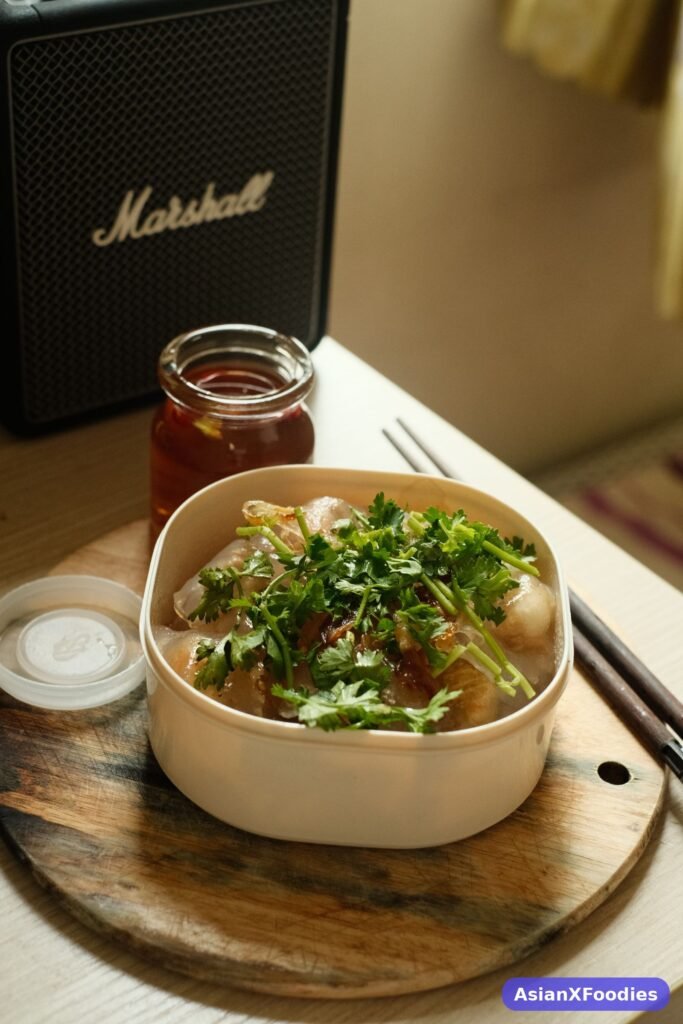
Steamed jasmine rice is the essential partner, and I serve it in bowls, with the sliced chicken laid over the top, so the juices from the chicken soak into the rice. The herbs go on top in big handfuls — mint, coriander, basil — and I mean big handfuls, not a sprinkle. The cucumber goes on the side, cool and crunchy, and the lime wedges go on the table, so everyone can squeeze as much as they like. The peanuts are scattered over the top at the last minute, so they stay crunchy. It is a beautiful plate of food — golden chicken, white rice, green herbs, red chilli, pale cucumber — and it looks as good as it tastes.
For a fuller table, I add a simple soup or a salad. A light cucumber salad, a bowl of steamed greens, or a small bowl of pickled carrots all work well. If I am feeding a crowd, I double the chicken and put out a big bowl of rice, a platter of sliced chicken, and all the accompaniments in small bowls, so people can build their own plates. It feels generous and relaxed, and it means I am not plating up for six people while the chicken gets cold. For drinks, iced green tea, cold water with lime, or a light lager all work well. I keep the drinks simple, because the food is the star.
I serve this family-style, in the middle of the table, with serving spoons and chopsticks, and I let everyone help themselves. It is a dish that invites people to linger, to take a little more rice, a few more herbs, another squeeze of lime. I have served it to friends who had never eaten Vietnamese food before, and they have all gone back for seconds. That is the best compliment a cook can get.
Storage and Reheating
Leftovers keep in the fridge for up to three days in a sealed container. The chicken will still taste good — the lemongrass flavour deepens overnight — but the caramelised edges will soften a little, which is normal. I eat the leftovers cold, sliced over rice with fresh herbs and lime, for lunch the next day, and it is almost as good as fresh. If you know you will have leftovers, keep the herbs and cucumber separate, because they wilt in the fridge if they are stored with the chicken.
To reheat, warm the chicken in a frying pan over medium heat for three to four minutes, until it is hot through. A splash of water in the pan helps to loosen the glaze and stop it from burning. A microwave works too — heat in thirty-second bursts, stirring in between — but the pan gives you better texture, and the edges crisp up again slightly. Serve it with fresh rice, fresh herbs, and a new lime wedge, so the meal feels fresh even though the chicken is from yesterday. Do not reheat it more than once.
I do not recommend freezing the cooked chicken, because the texture changes and the caramelised edges lose their character. If you need to freeze it, freeze the raw, marinated chicken in a bag for up to a month, defrost it overnight in the fridge, and cook it fresh. The marinade freezes well, and the chicken cooks just as well after defrosting. It is a useful thing to have in the freezer — a bag of marinated chicken that becomes dinner in fifteen minutes.
Frequently Asked Questions
Where can I buy fresh lemongrass and how do I prepare it?
Fresh lemongrass is in most large supermarkets, in the herb section or near the chillies and ginger, and in any Asian grocer. Look for stalks that are firm, pale at the bottom, and smell citrusy when you scratch them. To prepare it, peel off the tough outer layers, trim the root end and the woody top, and use the pale, tender lower part, about ten centimetres long. Slice it thinly and chop it finely, or pound it in a pestle and mortar. The finer you chop it, the more flavour you get. It keeps for a week in the fridge, or months in the freezer, chopped, in a small bag.
Can I make Vietnamese lemongrass chicken without fish sauce?
Fish sauce is an important part of the flavour — it gives the dish its savoury depth — but if you cannot eat it, you can use light soy sauce instead, with a squeeze of lime juice to add brightness. The flavour will be different, but still good. I would use two tablespoons of soy sauce in place of the fish sauce, and add an extra teaspoon of sugar to balance the saltiness. If you want to learn more about how fish sauce works in Vietnamese cooking, The Woks of Life has a helpful lemongrass chicken recipe that explains the marinade, and RecipeTin Eats has a Vietnamese chicken recipe that uses a similar flavour base.
Is lemongrass chicken spicy?
Not really. The marinade has black pepper and a little heat from the garlic and ginger, but it is not a spicy dish. The warmth is gentle and aromatic rather than hot. If you want heat, add a chopped red chilli to the marinade, or serve sliced fresh chilli on the side. My children eat this without chilli, and they love it, because the sweetness of the caramelised chicken and the freshness of the herbs are the flavours they notice most. The chilli is optional, and the dish is complete without it.
Can I cook the chicken on the barbecue?
Yes, and it is wonderful. Cook it over medium-high heat for about five minutes on each side, until it is golden and caramelised, brushing it with honey in the last minute. The smoke from the barbecue adds a depth that a pan cannot match. I make this version in summer, when we eat outside, and it is always a success. Just be careful with the honey — it burns quickly over direct heat, so brush it on right at the end and take the chicken off the grill as soon as it is glazed.
What herbs should I serve with lemongrass chicken?
Mint, coriander, and Thai basil are the classic choices, and they are the ones I use most often. Mint is cool and fresh, coriander is citrusy and green, and Thai basil is sweet and slightly aniseedy. If you cannot find Thai basil, regular basil works, though it is a little different. Serve the herbs in big handfuls, not as a garnish — they are meant to be eaten with the chicken and rice, torn over the top, along with lime juice. If you only have one herb, use coriander, because it is the most versatile. Fresh herbs make a real difference here, so do not skip them.
Can I make the marinade ahead of time?
Yes, you can. Mix the marinade — lemongrass, garlic, shallot, fish sauce, soy sauce, sugar, pepper, oil, and turmeric — and keep it in a jar in the fridge for up to three days. Add the chicken thirty minutes to two hours before you want to cook. This is a good way to prep ahead for a dinner party, because the cooking itself only takes fifteen minutes. Do not marinate the chicken for longer than four hours, because the fish sauce is salty and the texture will suffer. If you are short on time, thirty minutes is enough for a weeknight dinner.

2 Comments