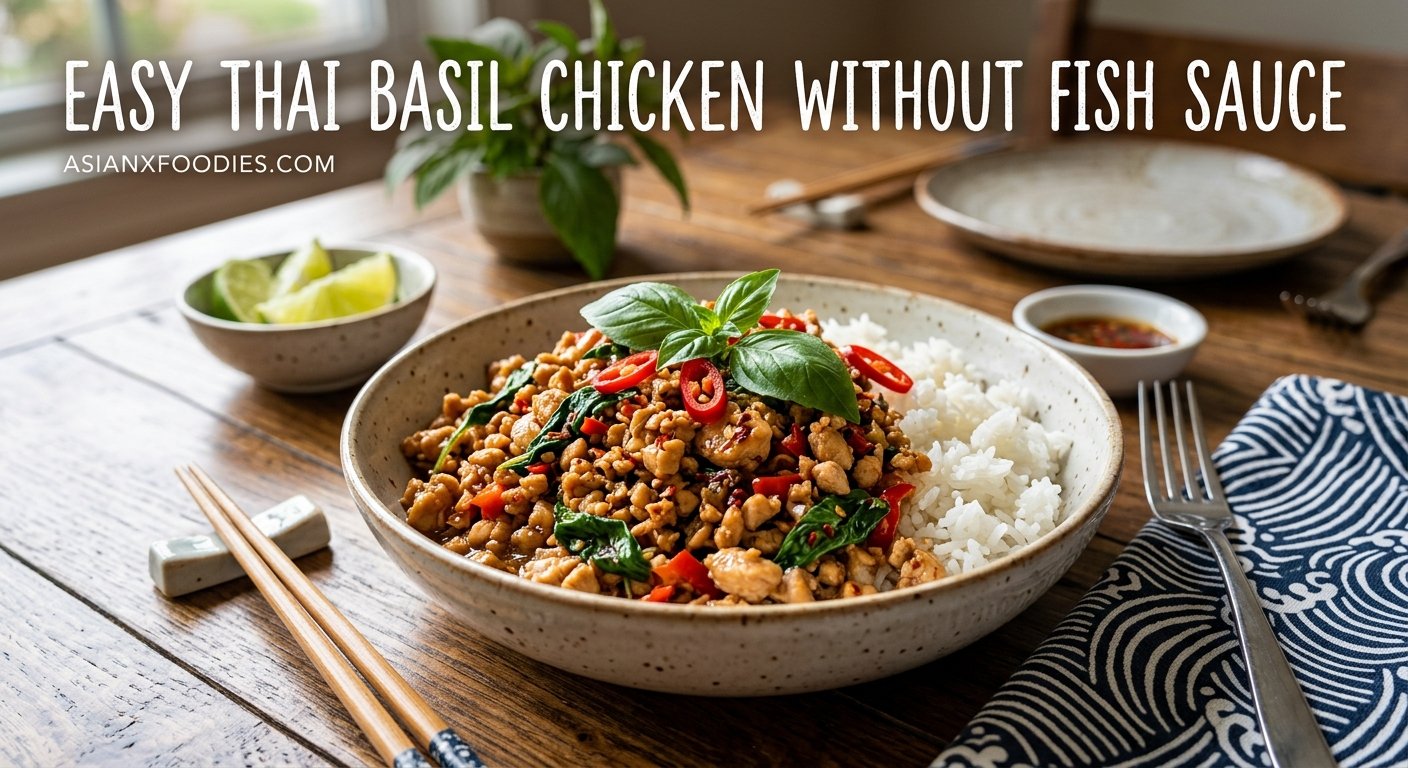
Easy Thai Basil Chicken Without Fish Sauce (Quick, Flavorful & Homemade)
If you love Thai food but don’t have fish sauce in your kitchen or simply prefer to avoid it, this easy Thai basil chicken without fish sauce is the perfect recipe to try. Made with tender chicken, fresh Thai basil, garlic, chili, and a delicious savory sauce, this homemade dish delivers the bold flavors of Thai-inspired cooking using simple, everyday ingredients.
This recipe is ideal for busy weeknights when you want something delicious without spending hours in the kitchen. It takes about 25 minutes from start to finish and requires just one skillet or wok. Instead of fish sauce, we use a combination of soy sauce, a little oyster sauce (optional), and a few pantry staples to create a rich, savory flavor.
Whether you’re a beginner or an experienced home cook, this easy Thai basil chicken is simple to prepare, easy to customize, and delicious served over warm jasmine rice. You can also adjust the spice level to suit your taste and use ingredients that are already available in your kitchen.
What Is Thai Basil Chicken?
Thai basil chicken is a popular Thai-inspired stir-fry traditionally known for its combination of ground or finely chopped chicken, aromatic garlic, fresh chilies, savory sauce, and fragrant Thai basil leaves. It is commonly served with steamed jasmine rice and sometimes topped with a crispy fried egg.
In Thailand, a well-known version of this dish is called Pad Krapow Gai. It is traditionally made with holy basil, which has a slightly peppery and distinctive flavor. Thai basil is another aromatic variety with a mild anise-like fragrance that works beautifully in this recipe.
Traditional versions often contain fish sauce, which adds saltiness and depth. However, you can make a delicious alternative without it by combining soy sauce with other flavorful ingredients.
This homemade version focuses on convenience while preserving the savory, garlicky, spicy, and herbaceous character that makes Thai basil chicken so satisfying.
Why You’ll Love This Easy Thai Basil Chicken Without Fish Sauce
There are plenty of reasons to add this recipe to your regular dinner rotation.
- No fish sauce required: This recipe uses simple alternatives to create a savory, satisfying sauce.
- Quick and easy: You can prepare the entire meal in approximately 25 minutes.
- Beginner-friendly: The cooking process involves basic chopping, mixing, and stir-frying.
- Made with simple ingredients: Most ingredients are easy to find in regular grocery stores.
- Customizable spice level: Add more chilies for heat or reduce them for a milder dish.
- Perfect for busy weeknights: It is a convenient one-pan meal that doesn’t require complicated preparation.
- Great for meal prep: The chicken can be prepared ahead of time and reheated for quick lunches or dinners.
- Full of flavor: Garlic, basil, soy sauce, and fresh chilies create a delicious combination.
Ingredients You’ll Need
The beauty of this easy Thai basil chicken without fish sauce is that it doesn’t require an extensive list of ingredients. Each ingredient contributes to the overall taste and texture.
Main Ingredients
- 1 pound ground chicken: Ground chicken cooks quickly and absorbs the sauce beautifully. You can also use finely chopped boneless chicken thighs or chicken breast.
- 1 cup fresh Thai basil leaves: Thai basil gives the dish its signature aromatic flavor. Regular sweet basil can be used if Thai basil isn’t available.
- 4 cloves garlic: Freshly minced garlic adds a strong, savory aroma.
- 2–3 fresh red or green chilies: Use Thai bird’s eye chilies for traditional-style heat or milder chilies if preferred.
- 1 small onion: Thinly sliced onion adds a little sweetness and texture.
- 1 tablespoon vegetable oil: Use a neutral cooking oil, such as canola or sunflower oil, for stir-frying.
Ingredients for the Sauce
- 2 tablespoons soy sauce: This provides the salty, umami-rich foundation of the sauce.
- 1 tablespoon oyster sauce (optional): Oyster sauce adds depth and a slightly sweet, savory flavor. Choose a vegetarian mushroom-based alternative if desired.
- 1 teaspoon dark soy sauce (optional): Adds a deeper color and a richer appearance.
- 1 teaspoon brown sugar: Balances the salty and spicy flavors.
- 2 tablespoons water: Helps loosen the sauce and distribute it evenly throughout the chicken.
- 1 teaspoon lime juice (optional): Adds a fresh, slightly tangy finish.
If you want to keep the recipe completely fish-free, check the labels of your soy sauce, oyster sauce, and any prepared sauces to ensure they contain no fish ingredients. You can omit oyster sauce or replace it with vegetarian mushroom stir-fry sauce.
Kitchen Equipment
You don’t need special equipment to make this recipe. A few basic kitchen tools are enough.
- A large skillet or wok
- A sharp knife
- A cutting board
- A small mixing bowl
- A wooden spoon or spatula
- Measuring spoons and cups
A wok is useful because its shape makes stir-frying easier, but a large nonstick or stainless-steel skillet works just as well.
How to Make Easy Thai Basil Chicken Without Fish Sauce
Follow these simple steps to prepare flavorful Thai basil chicken at home.
Step 1: Prepare the Ingredients
Start by preparing all your ingredients before turning on the stove. Mince the garlic, finely chop the chilies, and thinly slice the onion.
Wash the Thai basil leaves under cool running water and gently pat them dry with a clean kitchen towel. Remove any tough stems and set the leaves aside.
If you’re using chicken breast or thighs instead of ground chicken, cut the meat into small, evenly sized pieces. Smaller pieces cook quickly and allow the sauce to coat the chicken more evenly.
Preparing everything in advance makes the stir-frying process much easier because the chicken cooks quickly over high heat.
Step 2: Mix the Sauce
In a small bowl, combine the soy sauce, optional oyster sauce, dark soy sauce, brown sugar, water, and lime juice if using.
Stir until the sugar dissolves and all the ingredients are well combined.
Taste a tiny amount of the sauce and adjust it according to your preference. If you enjoy sweeter flavors, add a little more brown sugar. For a stronger savory taste, add a small amount of soy sauce.
Set the prepared sauce aside while you cook the chicken.
Step 3: Heat the Oil
Place a large skillet or wok over medium-high heat. Add the vegetable oil and allow it to heat until it shimmers.
Add the minced garlic and chopped chilies. Stir-fry for approximately 30 seconds, just until the garlic becomes fragrant.
Be careful not to burn the garlic, as burnt garlic can make the entire dish taste bitter. If the garlic begins to brown too quickly, reduce the heat slightly.
The combination of garlic and chilies creates the aromatic foundation of this dish.
Step 4: Cook the Chicken
Add the ground chicken to the hot skillet. Use a spatula or wooden spoon to break it into small pieces.
Cook for approximately 5–7 minutes, stirring frequently, until the chicken is no longer pink and is cooked through. Ground chicken should reach an internal temperature of 165°F (74°C).
If you’re using chopped chicken breast or thighs, cook the pieces until they are fully cooked, adjusting the cooking time to their size.
Avoid overcrowding the pan. If you’re preparing a larger batch, cook the chicken in separate portions to encourage browning instead of steaming.
Step 5: Add the Onion and Sauce
Once the chicken is cooked, add the sliced onion to the skillet. Stir-fry for another 2 minutes, until the onion begins to soften but still has a little texture.
Pour the prepared sauce over the chicken and stir thoroughly to coat every piece.
Allow the mixture to simmer for approximately 2–3 minutes. The sauce should slightly reduce and cling to the chicken without becoming too dry.
If the mixture looks too thick, add a tablespoon of water. If it appears too watery, continue cooking briefly until it reaches your preferred consistency.
Step 6: Add the Thai Basil
Reduce the heat to low and add the fresh Thai basil leaves to the skillet.
Gently stir the leaves into the hot chicken mixture. Cook for approximately 30–60 seconds, just until the basil wilts and releases its fragrance.
Avoid cooking the basil for too long because excessive heat can reduce its fresh aroma and cause the leaves to darken.
Remove the skillet from the heat as soon as the basil is wilted.
Step 7: Taste and Serve
Taste the chicken and adjust the seasoning if necessary. Add a little more soy sauce for saltiness, lime juice for brightness, or chili for additional heat.
Transfer the Thai basil chicken to a serving dish and garnish with a few fresh basil leaves if desired.
Serve immediately over warm jasmine rice for a simple and satisfying meal.
Tips for the Best Thai Basil Chicken Without Fish Sauce
A few simple cooking techniques can make a noticeable difference in the final result.
Use Fresh Thai Basil
Fresh Thai basil is one of the most important ingredients in this recipe. Its slightly sweet, peppery, and anise-like aroma adds a distinctive flavor to the chicken.
If you can’t find Thai basil, sweet basil can be used as a substitute. The taste will be somewhat different, but the dish will still be delicious.
Don’t Overcook the Garlic
Garlic cooks very quickly in hot oil. Stir it continuously and add the chicken as soon as it becomes fragrant. This helps prevent bitterness.
Cook Over Medium-High Heat
A relatively high cooking temperature helps the chicken brown and develop a richer flavor. Keep the ingredients moving to prevent sticking or burning.
Balance the Sauce
Since fish sauce is omitted, the combination of soy sauce, optional mushroom sauce, and brown sugar is especially important. Taste the sauce before adding it to the chicken and make adjustments to achieve a balance of salty, sweet, and savory flavors.
Add Basil at the End
Adding basil near the end of cooking helps preserve its fragrance and fresh flavor. It should wilt gently rather than cook for several minutes.
Avoid Adding Too Much Water
The sauce should lightly coat the chicken rather than become a thin broth. Start with a small amount of water and add more only if necessary.
Best Substitutes for Fish Sauce
If you’re making Thai basil chicken without fish sauce, you may wonder how to recreate its salty, savory depth.
Here are a few alternatives that work well.
Soy sauce: This is the easiest substitute because it adds saltiness and umami. Regular or reduced-sodium soy sauce can be used according to your preference.
Vegetarian mushroom sauce: Mushroom-based stir-fry sauces provide a deep, savory taste and are a useful alternative to oyster sauce. Check the label to ensure the product is fish-free.
Coconut aminos: Coconut aminos offer a milder, slightly sweeter flavor than soy sauce. You may need to adjust the amount of sugar and salt when using them.
A small amount of lime juice: Lime juice doesn’t replace the salty flavor of fish sauce, but it adds brightness that can make the overall sauce taste more balanced.
For this recipe, soy sauce combined with optional mushroom sauce is a simple and effective approach.
What to Serve With Thai Basil Chicken
Thai basil chicken is versatile and pairs well with a variety of side dishes.
Steamed Jasmine Rice
Jasmine rice is one of the best accompaniments. Its soft texture and delicate fragrance complement the bold flavors of the chicken while absorbing the savory sauce.
Brown Rice
If you prefer a heartier option, serve the chicken with steamed brown rice. It has a slightly nutty flavor and a firmer texture.
Rice Noodles
Rice noodles are another delicious option. Toss them with a little sesame oil and serve them alongside the chicken for a satisfying meal.
Stir-Fried Vegetables
Broccoli, carrots, bell peppers, green beans, and snap peas can add color and crunch. Lightly stir-fry them separately or cook them with the chicken.
Fried Egg
A crispy-edged fried egg with a soft yolk makes a delicious topping. Place it over the chicken and rice just before serving.
Variations You Can Try
One of the best things about this recipe is how easy it is to customize.
Thai Basil Chicken With Vegetables
Add sliced bell peppers, carrots, mushrooms, or green beans to increase the vegetable content. Cook firmer vegetables first, then add the chicken and sauce.
Spicy Thai Basil Chicken
If you enjoy spicy food, increase the amount of fresh chilies. You can also add a little chili paste, checking that it contains no fish sauce if you want to keep the recipe fish-free.
Thai Basil Chicken With Chicken Breast
Ground chicken isn’t essential. Finely chopped chicken breast works well if you prefer leaner pieces of meat. Cut it into small, evenly sized pieces to help it cook quickly and evenly.
Vegetarian Thai Basil Stir-Fry
Replace the chicken with crumbled firm tofu, sliced mushrooms, or a combination of both. Use soy sauce and vegetarian mushroom sauce to maintain the savory flavor.
Gluten-Free Thai Basil Chicken
Use certified gluten-free tamari instead of regular soy sauce and choose a gluten-free mushroom sauce if needed. Always check the labels of all prepared ingredients.
Common Mistakes to Avoid
Even a simple stir-fry can be less flavorful if a few important details are overlooked.
- Overcooking the basil: Adding basil too early can cause it to lose its fresh aroma.
- Burning the garlic: Cook garlic briefly and keep stirring to prevent a bitter taste.
- Using too much sauce: Excess liquid can make the chicken watery instead of lightly glazed.
- Overcrowding the skillet: Too much chicken in the pan can cause it to steam instead of brown.
- Adding too much soy sauce: Soy sauce is salty, so start with the recommended amount and adjust gradually.
- Skipping ingredient preparation: Stir-frying moves quickly, so having everything ready beforehand helps prevent overcooking.
How to Store Leftover Thai Basil Chicken
If you have leftovers, allow the chicken to cool slightly and transfer it to an airtight container. Refrigerate it within 2 hours of cooking.
Store the chicken in the refrigerator for up to 3–4 days. For the best quality, keep the rice in a separate container.
When you’re ready to eat, reheat the chicken in a skillet over medium heat with a small splash of water. Stir occasionally until it is steaming hot throughout. You can also reheat it in a microwave-safe dish, stirring halfway through.
Avoid reheating the same portion repeatedly, and discard leftovers that have been stored improperly.
Can You Freeze Thai Basil Chicken?
Yes, you can freeze cooked Thai basil chicken. Allow it to cool, then transfer it to a freezer-safe airtight container. Freeze for up to 2–3 months for best quality.
Thaw it in the refrigerator overnight before reheating. The basil may lose some of its original freshness after freezing, but the chicken will still be flavorful.
Frequently Asked Questions
Can I make Thai basil chicken without fish sauce?
Yes. Soy sauce is an easy substitute that provides saltiness and umami. You can also use vegetarian mushroom sauce for additional savory depth. Make sure any prepared sauces you use are free from fish if that is important to you.
Does Thai basil chicken taste good without fish sauce?
Yes. Although fish sauce adds a distinctive salty and savory flavor to traditional recipes, soy sauce, garlic, chilies, and fresh basil create a delicious alternative. The result is slightly different from the traditional dish but still rich and satisfying.
Can I use regular basil instead of Thai basil?
Yes. Regular sweet basil works as a substitute if Thai basil isn’t available. However, Thai basil has a more distinctive anise-like aroma, so the flavor will not be exactly the same.
Is Thai basil chicken spicy?
It can be spicy, but you control the heat by adjusting the number and type of chilies. For a mild version, remove the seeds from the chilies or leave them out entirely.
Can I use chicken breast instead of ground chicken?
Absolutely. Cut boneless chicken breast into small, bite-sized pieces and cook until fully done. Chicken thighs are another excellent option because they tend to remain juicy.
What can I use instead of oyster sauce?
Vegetarian mushroom stir-fry sauce is a suitable alternative. You can also omit oyster sauce and add a little extra soy sauce, adjusting the sugar and water to balance the flavor.
Is this recipe good for meal prep?
Yes. This recipe is convenient for meal prep because it reheats easily and pairs well with rice and vegetables. Store the chicken and rice separately in airtight containers in the refrigerator.
Can I make this recipe gluten-free?
Yes. Replace regular soy sauce with gluten-free tamari and use certified gluten-free alternatives for any other prepared sauces. Check every ingredient label to avoid hidden sources of gluten.
What type of rice is best for Thai basil chicken?
Jasmine rice is a popular choice because its delicate fragrance complements the savory chicken. Brown rice and rice noodles are also good alternatives.
How do I keep the chicken juicy?
Avoid overcooking the chicken and use medium-high heat to cook it quickly. Chicken thighs can be particularly forgiving, while ground chicken benefits from being removed from the heat as soon as it is cooked through.
Easy Thai Basil Chicken Without Fish Sauce Recipe Card
Prep Time: 10 minutes
Cook Time: 15 minutes
Total Time: 25 minutes
Servings: 4
Course: Main Course
Cuisine: Thai-Inspired
Cooking Method: Stir-Frying
Ingredients
- 1 pound ground chicken
- 1 cup fresh Thai basil leaves
- 4 garlic cloves, minced
- 2–3 fresh chilies, chopped
- 1 small onion, thinly sliced
- 1 tablespoon vegetable oil
- 2 tablespoons soy sauce
- 1 tablespoon vegetarian mushroom sauce or fish-free oyster sauce (optional)
- 1 teaspoon dark soy sauce (optional)
- 1 teaspoon brown sugar
- 2 tablespoons water
- 1 teaspoon lime juice (optional)
Instructions
- Wash and dry the Thai basil leaves. Mince the garlic, chop the chilies, and slice the onion.
- Mix soy sauce, optional mushroom sauce, dark soy sauce, brown sugar, water, and lime juice in a small bowl.
- Heat vegetable oil in a large skillet over medium-high heat.
- Add garlic and chilies, stirring for approximately 30 seconds until fragrant.
- Add ground chicken and cook for 5–7 minutes, breaking it into small pieces until fully cooked to 165°F (74°C).
- Add the sliced onion and stir-fry for another 2 minutes.
- Pour in the prepared sauce and simmer for 2–3 minutes until it lightly coats the chicken.
- Add the fresh Thai basil leaves and gently stir until wilted.
- Remove from heat and serve immediately over steamed jasmine rice.
Final Thoughts
This easy Thai basil chicken without fish sauce proves that you don’t need complicated ingredients to create a flavorful homemade meal. With tender chicken, fresh basil, garlic, chilies, and a simple soy-based sauce, you can enjoy a delicious Thai-inspired dinner in about 25 minutes.
The recipe is flexible enough to suit different tastes, whether you prefer mild flavors, extra heat, more vegetables, or a gluten-free alternative. It is also a practical option for busy evenings when you want a satisfying meal without ordering takeout.
Serve it with warm jasmine rice, add a crispy fried egg if you like, and enjoy a comforting homemade dinner packed with savory flavor and fresh herbal aroma.