
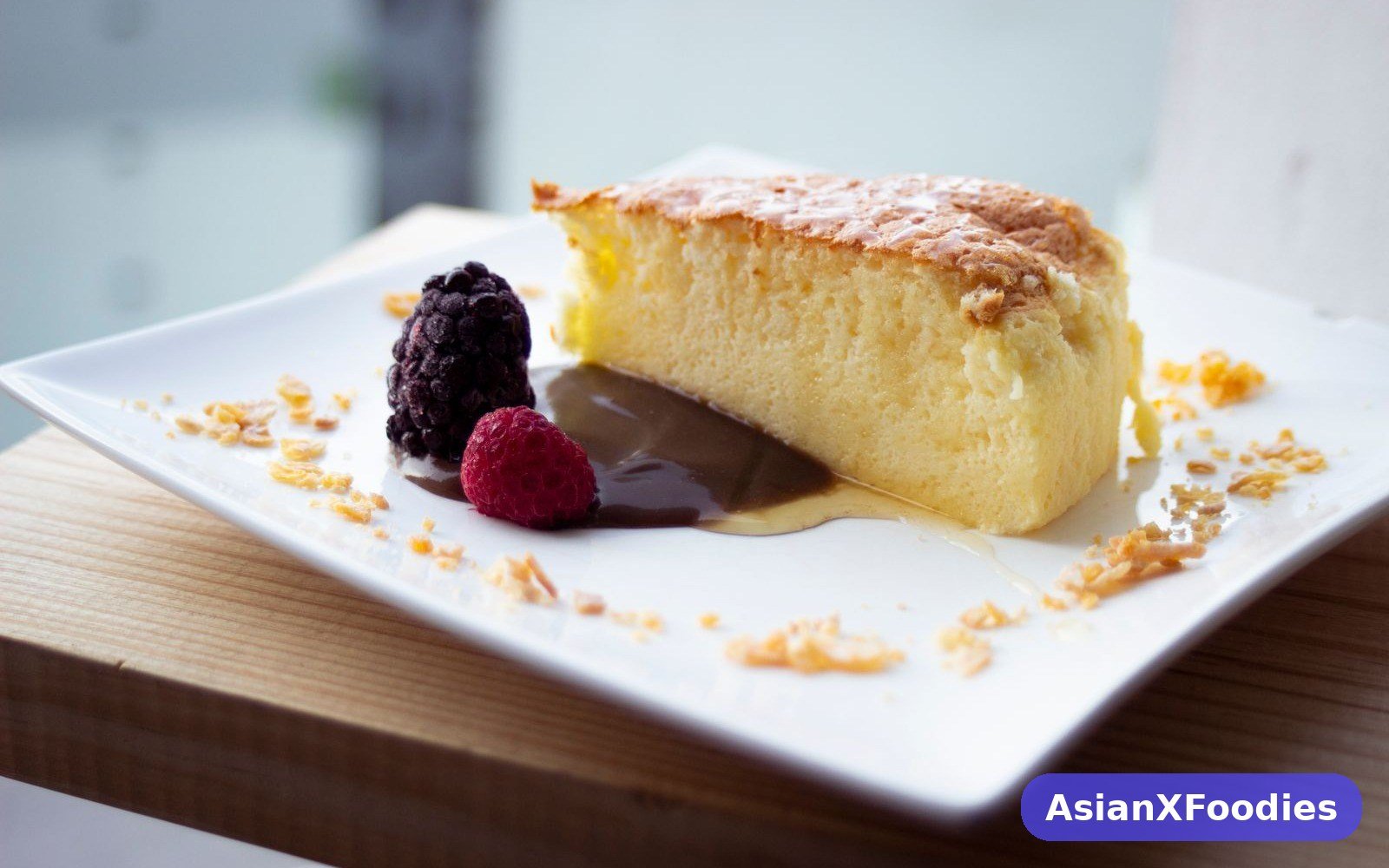
Japanese Cheesecake with Light Fluffy Texture
The first time I saw a Japanese cheesecake, it was on a video, and I did not believe it was real. The cake wobbled when the baker touched the pan, it rose so high it looked like it might float away, and when she cut into it, the inside was pale and airy, like a cloud that had been baked. I watched that video three times, and then I went into my kitchen and tried to make it, and I failed. My cake sank in the middle, it cracked across the top, and it tasted eggy, and I was so disappointed that I did not try again for months. I am telling you this because I want you to know that this cake is not a beginner’s cake, but it is also not an impossible cake, and the second time I tried it, with a few small changes, it worked, and the feeling of pulling a tall, golden, jiggly cheesecake out of the oven was one of the proudest moments I have had in my kitchen.
What makes Japanese cheesecake different from the cheesecake most of us know is the meringue. A New York cheesecake is dense and rich, and it sits in your stomach like a brick, delicious but heavy. A Japanese cheesecake is made by folding whipped egg whites into a cream cheese batter, and baking it gently in a water bath, so it rises like a souffle and stays light and airy, with a texture that is closer to a sponge cake than to a cheesecake. It is barely sweet, which means you taste the cream cheese and the lemon and the vanilla, rather than just sugar, and it is so soft that it practically melts in your mouth. I have served this to people who said they did not like cheesecake, and watched them eat two slices, because this is not the cheesecake they were thinking of, it is something else entirely, something lighter and more delicate.
I make this cake when I want a dessert that feels special, but not heavy, and when I have an afternoon to give it the attention it deserves. It is not a cake you rush, because the meringue needs care, the water bath needs patience, and the cooling needs time, but none of those steps is hard, they just need you to slow down and pay attention. The reward is a cake that looks like it came from a bakery in Osaka, and tastes like it too, and the look on people’s faces when they see it wobble is worth every minute. If you love Japanese food and want a savoury dish to serve before this, my easy Japanese teriyaki chicken without mirin is a simple, sweet-savoury main that pairs beautifully with a light dessert.
Why You’ll Love This Recipe
You will love this recipe because it produces a cake that is genuinely different from anything else you have baked, and because the lightness of it is so surprising that it feels like a trick. The first bite is soft and airy, with a gentle tang from the cream cheese and a whisper of lemon, and it dissolves on your tongue in a way that makes you want another bite immediately. It is not cloying, it is not rich, and it does not leave you feeling overfull, which means it is a dessert you can eat after a big meal, and still enjoy. I have served this after a heavy Sunday lunch, when everyone said they were too full for dessert, and watched the whole cake disappear in ten minutes, because lightness is its own kind of indulgence.
The method is also satisfying in a way that simpler cakes are not. Whipping the egg whites to glossy peaks, folding them gently into the batter, watching the cake rise in the oven, these are the moments that make baking feel like a craft rather than a chore, and they are not hard, they just need a little care. I find the process calming, because it forces me to slow down and focus, and the kitchen goes quiet while I fold the meringue, and for twenty minutes the only sound is the whisk and the oven. That is a rare kind of peace, and it is part of why I love this cake. It is also a cake that impresses people without trying too hard, because a tall, golden, jiggly cheesecake is a showstopper, and you do not need to decorate it or frost it, it is beautiful on its own.
It is also a versatile cake, which is why I make it so often. You can flavour it with matcha, or with lemon, or with vanilla, and you can serve it plain, or with berries, or with a dusting of icing sugar, and every version works. It is a wonderful cake for a birthday, because it feels celebratory without being too sweet, and it is a lovely cake for afternoon tea, because it is light enough to eat with a cup of tea and still have room for another slice. I have made it for friends who are watching their sugar, because it is less sweet than most cakes, and for children, who love the wobble, and for my mother, who is hard to please and who asked me to make it again the following week.
Ingredients You’ll Need
- 250 g full-fat cream cheese, at room temperature
- 6 large eggs, separated, at room temperature
- 100 g caster sugar, divided (60 g for the batter, 40 g for the meringue)
- 60 g unsalted butter
- 100 ml whole milk
- 60 g cake flour, sifted
- 20 g cornstarch, sifted
- 1 tablespoon lemon juice, freshly squeezed
- 1 teaspoon lemon zest, finely grated
- 1 teaspoon vanilla extract
- 1/4 teaspoon cream of tartar
- 1/4 teaspoon salt
- 2 tablespoons apricot jam, warmed, for glazing (optional)
- Icing sugar, for dusting
A word about the eggs, because they are the heart of this cake, and they need to be at room temperature. Cold eggs do not whip as well, and cold egg yolks do not mix smoothly into the cream cheese, so take them out of the fridge an hour before you start, and separate them carefully, because even a drop of yolk in the whites will stop them whipping properly. I separate each egg over a small bowl, and then tip the white into the mixing bowl, so that if one yolk breaks I have only ruined one white, not the whole batch. It is a small habit, but it has saved me more than once, and it is worth the extra minute. The cream cheese should also be at room temperature, because cold cream cheese will not melt smoothly, and you will end up with lumps in the batter that no amount of whisking will remove.
The flour matters too, and cake flour is worth buying for this recipe, because it has less protein than plain flour, and it gives the cake a finer, softer crumb. If you cannot find cake flour, you can make a substitute by replacing two tablespoons of plain flour with cornstarch for every cup, but the real thing is better, and it keeps for a long time in the cupboard. Sift the flour and the cornstarch together, because lumps of flour in the batter will show up as white spots in the finished cake, and sifting is the easiest way to prevent that. I sift mine twice, once into a bowl and once over the batter, because I am fussy about it, and because a smooth batter is the foundation of a smooth cake.
How to Make Japanese Cheesecake with Light Fluffy Texture
Start by preparing the pan and the oven, because once the batter is mixed you will want to bake it straight away, and a cake that sits waiting will lose air. Preheat the oven to 160°C, and line a 20 cm round springform pan, or a tall cake pan, with baking paper, on the bottom and around the sides, with the paper rising a couple of centimetres above the rim, because this cake rises high and it needs room. Grease the pan lightly first, so the paper sticks, and then wrap the outside of the pan tightly in two layers of foil, because the pan will sit in a water bath, and water leaking in will ruin the cake. I learned this the hard way, when my first cake came out soggy at the bottom, and now I wrap the foil carefully, pressing it smooth, and I check for gaps. Put a kettle on to boil, because you will need hot water for the bath, and set a deep roasting tray on the oven shelf, ready to hold the pan.
Now make the cream cheese batter, and do it gently, over low heat, because cream cheese that is overheated will go grainy. Put the cream cheese, butter, and milk in a heatproof bowl over a pan of simmering water, and stir until the mixture is smooth and glossy, with no lumps. Take the bowl off the heat, and let it cool for a few minutes, until it is warm but not hot, and then whisk in the egg yolks, one at a time, until they are fully incorporated. Add the vanilla, the lemon juice, and the lemon zest, and stir until the batter smells fresh and bright. Sift the cake flour and the cornstarch over the batter, and whisk gently until the mixture is smooth, and then strain it through a fine sieve into a clean bowl, because straining removes any tiny lumps and gives you a batter as smooth as silk. This step takes two minutes, and it is worth it, because a smooth batter makes a smooth cake, and a lumpy batter makes a cake with white spots. Set the batter aside while you make the meringue.
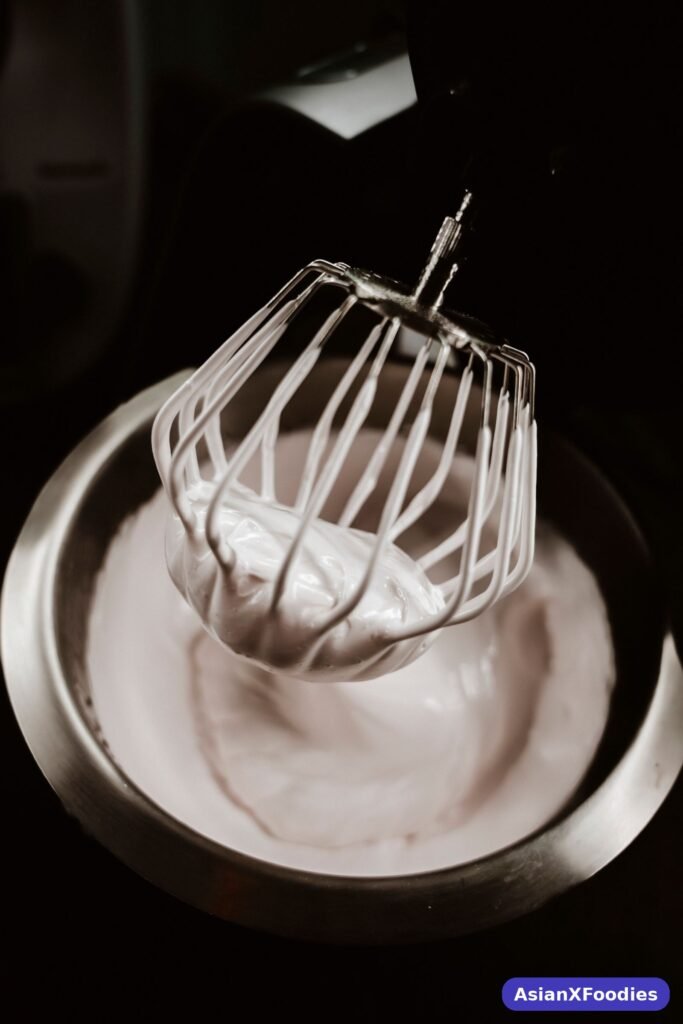
To make the meringue, put the egg whites in a large, scrupulously clean bowl, and make sure there is no grease on the bowl or the whisk, because grease will stop the whites whipping. Add the cream of tartar and the salt, and beat the whites on medium speed until they are foamy and white, and then add the sugar, a tablespoon at a time, beating well after each addition. Continue beating until the whites form soft, glossy peaks that bend over when you lift the whisk, not stiff, dry peaks, because stiff peaks are hard to fold and they will deflate the batter. The meringue should look like shaving cream, smooth and shiny, and it should hold its shape but still look soft. This is the moment that decides whether your cake will be light or dense, so take your time, and check the peaks often, because over-beaten whites are almost as bad as under-beaten ones.
Now fold the meringue into the batter, and do it in three additions, gently, with a large spatula, using a cutting motion down through the middle and up around the sides, turning the bowl as you go. Add a third of the meringue first, and stir it in fairly vigorously, because this lightens the batter and makes the rest easier to fold. Then add the second third, folding gently, and then the final third, folding until there are no white streaks left, but no longer, because every fold knocks out a little air, and air is what makes this cake rise. The batter should be pale, airy, and pourable, like a thick mousse, and it should fill the pan almost to the top. Pour it into the prepared pan, tap the pan gently on the counter to pop any large air bubbles, and set it in the roasting tray. Pour hot water into the tray until it comes halfway up the sides of the pan, and slide the tray carefully into the oven. Bake for sixty to seventy minutes, until the top is golden and the cake has risen high, and a skewer inserted into the centre comes out clean. Do not open the oven door for the first forty minutes, because the cake will sink if the temperature drops. When it is done, turn the oven off, leave the door ajar, and let the cake cool in the oven for fifteen minutes, and then take it out, remove it from the pan, and let it cool completely. Just One Cookbook’s Japanese cheesecake guide explains the water bath and the cooling step in wonderful detail, and I still reread it before I bake this cake, because it reminds me not to rush the cooling.
Tips for the Best Japanese Cheesecake
The first tip is to use room temperature ingredients, and I mean all of them, the cream cheese, the eggs, and the milk. Cold cream cheese will not melt smoothly, cold egg yolks will make the batter lumpy, and cold egg whites will not whip to their full volume, so take everything out of the fridge an hour before you start, and let it come to room temperature naturally. I set a timer when I take the eggs out, because I have forgotten them on the counter and then started baking with cold eggs, and the cake suffered for it. Room temperature ingredients mix more easily, whip more easily, and give you a smoother batter, and a smoother batter gives you a lighter cake. It is a small thing, but it is the foundation of everything else.
The second tip is to not over-beat the meringue, because stiff, dry meringue is the most common reason this cake fails. You want soft peaks, glossy and smooth, that bend over when you lift the whisk, not stiff peaks that stand up straight and look dry. Over-beaten whites are hard to fold, they leave lumps in the batter, and they deflate in the oven, so the cake sinks. I beat the whites on medium speed, not high, because high speed makes large, uneven bubbles, while medium speed makes small, even bubbles, and small bubbles give a finer texture. Check the peaks every thirty seconds once the sugar is in, because the change from perfect to over-beaten happens quickly, and it is better to stop a little early than a little late.
The third tip is to be patient with the cooling, because a cake that cools too quickly will shrink and crack. Leave the cake in the turned-off oven with the door ajar for fifteen minutes, then take it out and let it cool on a wire rack, and then chill it in the fridge for at least four hours, or overnight, before you slice it. I know it is tempting to cut into it while it is still warm, because it looks so beautiful, but a warm Japanese cheesecake is soft and fragile, and it will collapse when you cut it, while a chilled cake slices cleanly and holds its shape. The Kitchn’s Japanese cheesecake recipe gives the same advice about chilling, and it is the advice I give to everyone who asks me why their cake sank, because cooling is half the recipe.
Variations to Try
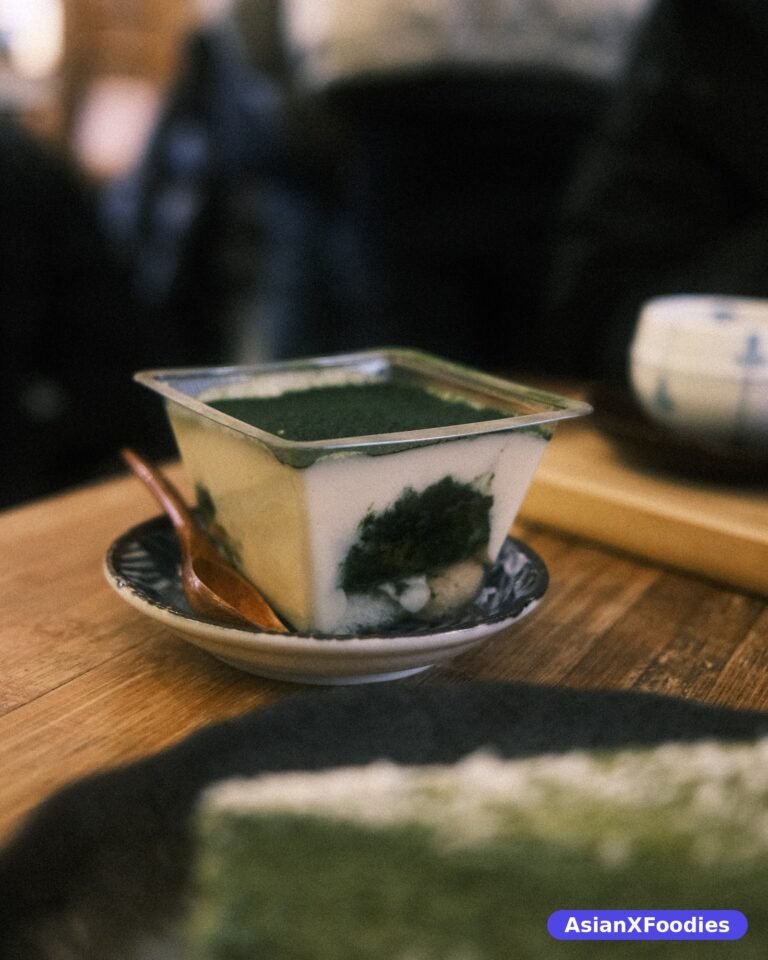
The easiest variation is to add matcha, and it is a beautiful one. Sift a tablespoon of matcha powder in with the flour, and the cake will turn a soft, pale green, with a gentle, earthy flavour that pairs wonderfully with the cream cheese. I have made a matcha version for a Japanese-themed dinner, and it was stunning, especially dusted with icing sugar and served with berries. For a chocolate version, replace a tablespoon of the flour with cocoa powder, and add a teaspoon of vanilla, and you will have a light, chocolatey cake that is still airy. For a lemon version, add an extra tablespoon of lemon juice and a teaspoon more zest, and serve it with a lemon glaze, and it will taste bright and fresh.
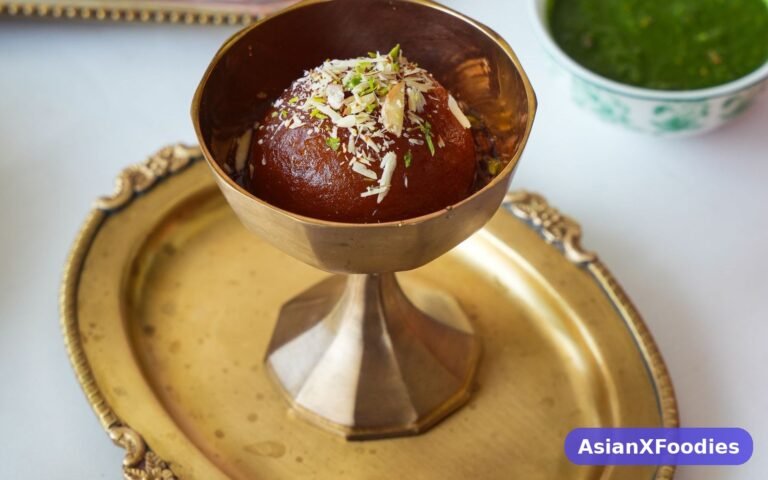
You can also change the topping, and this is where you can be creative. A dusting of icing sugar is classic and simple, and it looks beautiful against the golden top. A brush of warmed apricot jam gives the cake a glossy shine and a gentle sweetness, and it is the traditional finish. Fresh berries, especially strawberries and blueberries, are lovely, because their tartness balances the sweetness of the cake, and a spoonful of whipped cream is a wonderful partner. For a more indulgent version, serve the cake with a caramel sauce, or with a passion fruit coulis, which is tart and bright and cuts through the richness. And if you love Japanese desserts and want another one to try, my gulab jamun with cardamom syrup is a completely different kind of sweet, warm and syrupy, and the two desserts together make a lovely contrast at a dinner party.
Serving Ideas
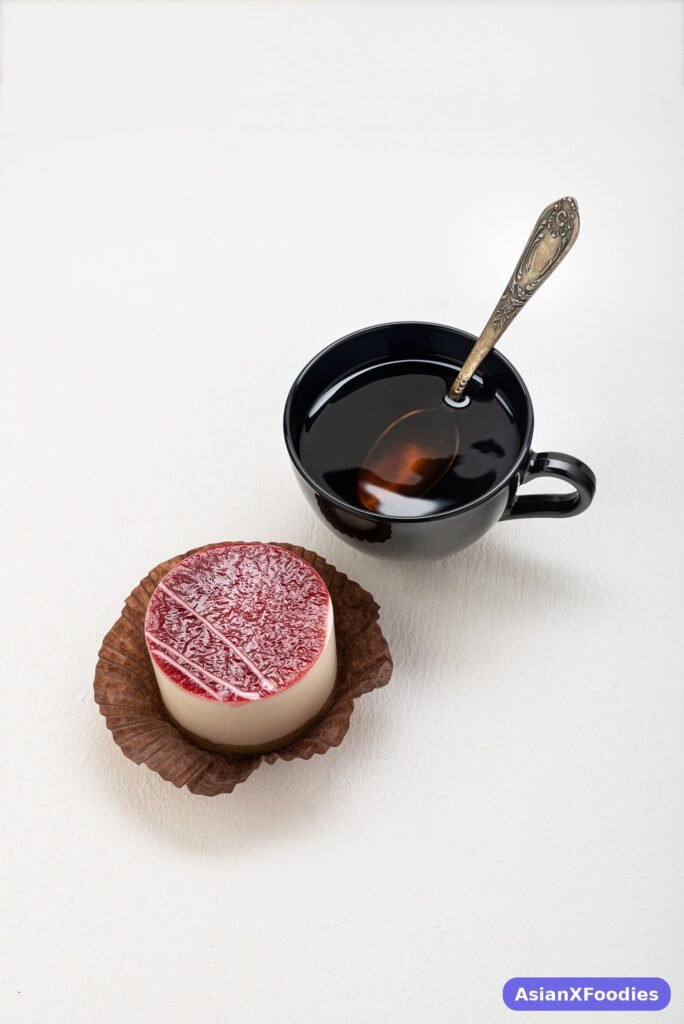
The simplest way to serve this cake is chilled, dusted with icing sugar, with a cup of green tea or jasmine tea, and that is how I serve it most often. The tea is clean and refreshing, and it does not compete with the delicate flavour of the cake, and the combination feels calm and elegant. I slice the cake with a hot, dry knife, wiping the blade between slices, because a hot knife cuts cleanly through the soft cake, and a cold knife will drag and tear it. Serve a generous slice, because this cake is so light that a small slice feels mean, and people will always want seconds.
For a more celebratory serving, add fresh berries and a spoonful of whipped cream, or a drizzle of berry coulis, and serve it on a pretty plate with a mint leaf. It looks like a bakery cake, and it tastes like one too, and it is a wonderful dessert for a birthday or a special occasion. I have also served it with a scoop of vanilla ice cream, which melts slightly against the cold cake and makes a lovely sauce, and with a cup of coffee, which is a classic pairing. If you are serving a Japanese meal, start with my easy Japanese potato salad without cucumber as a side, and my easy homemade chicken dumplings without a steamer as a main, and finish with this cheesecake, and you will have a meal that feels thoughtful and complete.
On the side, keep things light and fresh. A bowl of berries is perfect, and so is a fruit salad, or a few slices of mango. Avoid anything too heavy or too sweet, because the cake is already delicate, and you want the flavours to stay clean. A glass of sparkling wine is a lovely partner for a celebration, and a cup of Earl Grey tea is a wonderful everyday partner. Serve the cake on a cake stand if you have one, because it deserves to be shown off, and let people admire the wobble before you cut into it, because that wobble is half the fun.
Storage and Reheating
This cake keeps well in the fridge for up to three days, and it actually tastes better after a night in the fridge, because the flavours settle and the texture firms up slightly. Store it in an airtight container, or cover it tightly with cling film, because it will absorb smells from the fridge if it is left uncovered, and a cheesecake that tastes of onion is not a happy thing. I slice it before I store it, so I can take out one slice at a time, and I keep the slices in a single layer, because stacking them will squash the soft cake. Bring a slice to room temperature for fifteen minutes before you serve it, because it tastes better when it is not ice cold, though it is also lovely straight from the fridge on a hot day.
You can freeze this cake, though I would freeze it without any topping, and add the icing sugar or berries when you serve it. Wrap the whole cake, or individual slices, tightly in cling film and then in foil, and freeze for up to a month. Defrost it overnight in the fridge, and do not defrost it at room temperature, because it will go soggy. The texture after freezing is a little denser than fresh, but it is still delicious, and it is a useful way to save a cake for later. I would not reheat this cake, because it is meant to be eaten cold or at room temperature, and heating it will make it collapse. If you have leftovers, eat them cold, with a cup of tea, and enjoy the fact that you have cake for tomorrow.
Frequently Asked Questions
Why did my Japanese cheesecake sink in the middle?
It probably sank because the meringue was over-beaten or under-folded, or because the oven door was opened too early, or because the cake cooled too quickly. A cake that sinks is usually a cake that lost air, and air is what holds it up. Next time, beat the whites to soft peaks, fold gently, do not open the oven for the first forty minutes, and let the cake cool slowly in the turned-off oven. It is also possible that the cake was underbaked, so check it with a skewer, and bake it for a few minutes longer if the skewer comes out wet.
Can I make Japanese cheesecake without a water bath?
You can, but the texture will be different, and the cake is more likely to crack. The water bath provides gentle, even heat, which is what gives the cake its soft, even texture, and without it the outside will bake faster than the inside. If you do not have a roasting tray, use a deep baking dish, and if you are worried about water leaking in, wrap the pan in foil very carefully. I would not skip the water bath, because it is the single most important step for a light, crack-free cake.
How do I stop my cheesecake from cracking?
Cracks usually happen when the oven is too hot, or when the cake cools too quickly, or when the batter was overmixed. Bake at a low temperature, use a water bath, and let the cake cool slowly in the oven with the door ajar. A crack does not mean the cake is ruined, though, because you can cover it with icing sugar or berries, and it will still taste wonderful. I have served cracked cheesecakes many times, and nobody has ever complained, because the flavour is what matters.
Can I use plain flour instead of cake flour?
You can, but the texture will be a little denser and less fine. Cake flour has less protein, which gives the cake a softer crumb, and plain flour will make it slightly tougher. If you cannot find cake flour, replace two tablespoons of plain flour with cornstarch for every cup, and sift it well. The cake will still be delicious, just a touch less delicate, and for a first attempt that is perfectly fine. I would buy cake flour if you can, because it makes a noticeable difference.
How long should I chill Japanese cheesecake before serving?
At least four hours, and overnight is even better. The cake needs time to set and to firm up, and a cake that is sliced too soon will collapse and look messy. I make mine the day before I plan to serve it, and I chill it overnight, and in the morning it slices cleanly and holds its shape. If you are in a hurry, four hours is the minimum, and I would not cut it before then, no matter how tempting it is. Patience is part of the recipe.
Is Japanese cheesecake gluten-free?
Not as written, because it contains flour, but you can make a gluten-free version by replacing the cake flour with a gluten-free flour blend, and the cornstarch with more cornstarch. The texture will be slightly different, but it will still be light and delicious. Check that your cream cheese and other ingredients are gluten-free, and use a gluten-free baking paper. I have made a gluten-free version for a friend, and it worked well, though I would test it once before serving it to guests, because gluten-free flours vary.

One Comment