Chinese Mango Pudding with Coconut Milk
The first time I had proper Chinese mango pudding, I was not in a fancy restaurant. I was at a small Hong Kong cafe on a hot afternoon, the kind of place with plastic chairs and a menu taped to the wall, and I had ordered it mostly because everything else on the menu sounded too heavy for the weather. The waiter brought out a little glass dish, pale gold and trembling slightly when he set it down, with a spoonful of evaporated milk poured over the top and a few cubes of fresh mango sitting on it like they had been placed there one by one. I took one spoonful and stopped talking. It was cold, silky, and barely sweet, and it tasted more like mango than any mango dessert I had ever eaten. I finished it in about four spoonfuls and immediately wished I had ordered two.
When I got home I tried to make it, and I will be honest, my first attempt was not the same thing at all. I had used mangoes that were not quite ripe, I had guessed at the gelatine, and I had heated the mixture too much, which gave it a faint cooked taste that the cafe version did not have at all. The pudding set, but it set too firm, more like jelly than the soft, creamy wobble I remembered, and the mango flavour was thin, as if the fruit had given up halfway through. I ate it anyway, because I do not like wasting food, but I knew I would have to try again. The second time I bought the ripest mangoes I could find, the ones that smelled sweet before I even cut them, and the difference was so big that I laughed at myself for blaming the recipe the first time round. The fruit was doing most of the work all along.
That is really the whole secret of this dessert, and it is a good one to know before you start. Mango pudding is not a complicated recipe, and there is nowhere to hide a bad mango in it. There is no chocolate to cover it, no pastry to distract from it, no heavy cream to smooth over a flavour that is not there. It is mango, a little sugar, a little milk and coconut milk, and just enough gelatine to hold it together. When the mangoes are good, the pudding is wonderful with almost no effort. When they are not, no amount of fiddling with the other ingredients will save it. So if you take one thing from this recipe, let it be this: wait for ripe mangoes, or buy the sweetest ones you can find, and the rest of the recipe will look after itself.
I make this pudding now whenever the weather turns warm, or whenever I want a dessert I can put in the fridge in the morning and forget about until dinner. It takes about twenty minutes of actual work, most of which is peeling mangoes and blending them, and then the fridge does the rest. I like that about it. There is no oven to watch, no cake to worry about sinking, no icing to get right. You pour it into glasses or little bowls, slide them into the fridge, and a few hours later you have something cold and pretty to put on the table. My sister asks for it every summer now, my husband eats his straight from the glass standing at the kitchen counter, and I have learned to always make one extra, because someone always wants seconds.
Why You’ll Love This Recipe
The first reason is the texture, and once you have had it set properly, you will understand why people get particular about it. A good mango pudding is not firm like jelly and it is not runny like a sauce. It sits somewhere in between, soft enough to wobble when you shake the glass, firm enough to hold its shape on a spoon, and so smooth that it almost melts as soon as it touches your tongue. The coconut milk is what gives it that creamy softness. Without it, the pudding can taste a little sharp and thin. With it, the mango flavour rounds out, the sweetness feels gentler, and the whole thing tastes richer without being heavy. I have made it with evaporated milk on top, the way the cafes do, and I have made it with the coconut milk stirred right in, and the coconut version is the one I keep coming back to, especially on a hot day when I want something light.
The second reason is how easy it is to get right once you know the two or three things that matter. The gelatine needs to be bloomed in cold water first and then dissolved in warm liquid, never boiled, and the mango puree needs to be smooth and strained if you want that silky finish. That is honestly most of it. There is no baking, no whisking egg whites, no worrying about whether something will rise or fall. If you can peel a mango and press a button on a blender, you can make this pudding, and you can make it well. I have taught it to a friend over the phone while she was standing in her kitchen with the phone on speaker, and her first batch came out perfectly, which tells you more about the recipe than anything I could write here.
It is also a dessert that fits around real life, which matters more than people admit when they are choosing what to cook. You can make it the night before a dinner, or in the morning before work, and it will be waiting in the fridge when you need it. It travels well in little jars with lids, it looks lovely without any decorating skill, and it suits almost everyone at the table, including people who say they do not like very sweet desserts. Children love it because it is cold and fruity and fun to eat from a glass, and older relatives love it because it is light and easy on the stomach after a big meal. It is also a dessert that makes a meal feel finished without making anyone feel full. After a spicy dinner, after a plate of noodles or a rich curry, a cold mango pudding is exactly the right ending, cool and gentle and a little bit refreshing. I have served it after everything from a simple weeknight stir-fry to a big family dinner with too many dishes on the table, and it has never felt wrong. It does not compete with the main course. It just quietly clears the palate, gives everyone something sweet to end on, and leaves people smiling rather than groaning, which is why this one has earned a permanent place in my summer cooking.
Ingredients You’ll Need
- 4 large ripe mangoes, about 900g total, peeled and cut into chunks
- 1 tablespoon unflavoured gelatine powder
- 60ml cold water, for blooming the gelatine
- 200ml full-fat coconut milk, well shaken
- 120ml whole milk
- 80g caster sugar, plus extra to taste
- 1 tablespoon lime juice, freshly squeezed
- 1 teaspoon vanilla extract
- 1/4 teaspoon fine sea salt
- 1 ripe mango, peeled and cut into small cubes, for topping
- 60ml evaporated milk or extra coconut milk, to pour over before serving
- Fresh mint leaves, to serve
- 2 tablespoons desiccated coconut, lightly toasted, optional
- 6 small glasses, ramekins or dessert bowls, about 150ml each
How to Make Chinese Mango Pudding
Start by choosing and preparing your mangoes, because everything else in this recipe depends on them being ripe and sweet. A ripe mango should give slightly when you press it gently near the stem, and it should smell sweet and fragrant before you cut it open. If it smells like nothing, it will taste like nothing in the pudding, so leave it for another day or two on the counter. Peel the four large mangoes with a vegetable peeler or a sharp knife, then cut the flesh away from the flat stone in the middle, slicing down each side and trimming whatever you can from around the edges. Cut the flesh into rough chunks and put them in the blender. Do not worry about making them neat, because they are going in the blender anyway, but do pick out any stringy bits near the stone, since those will not blend smooth and will show up in the finished pudding.
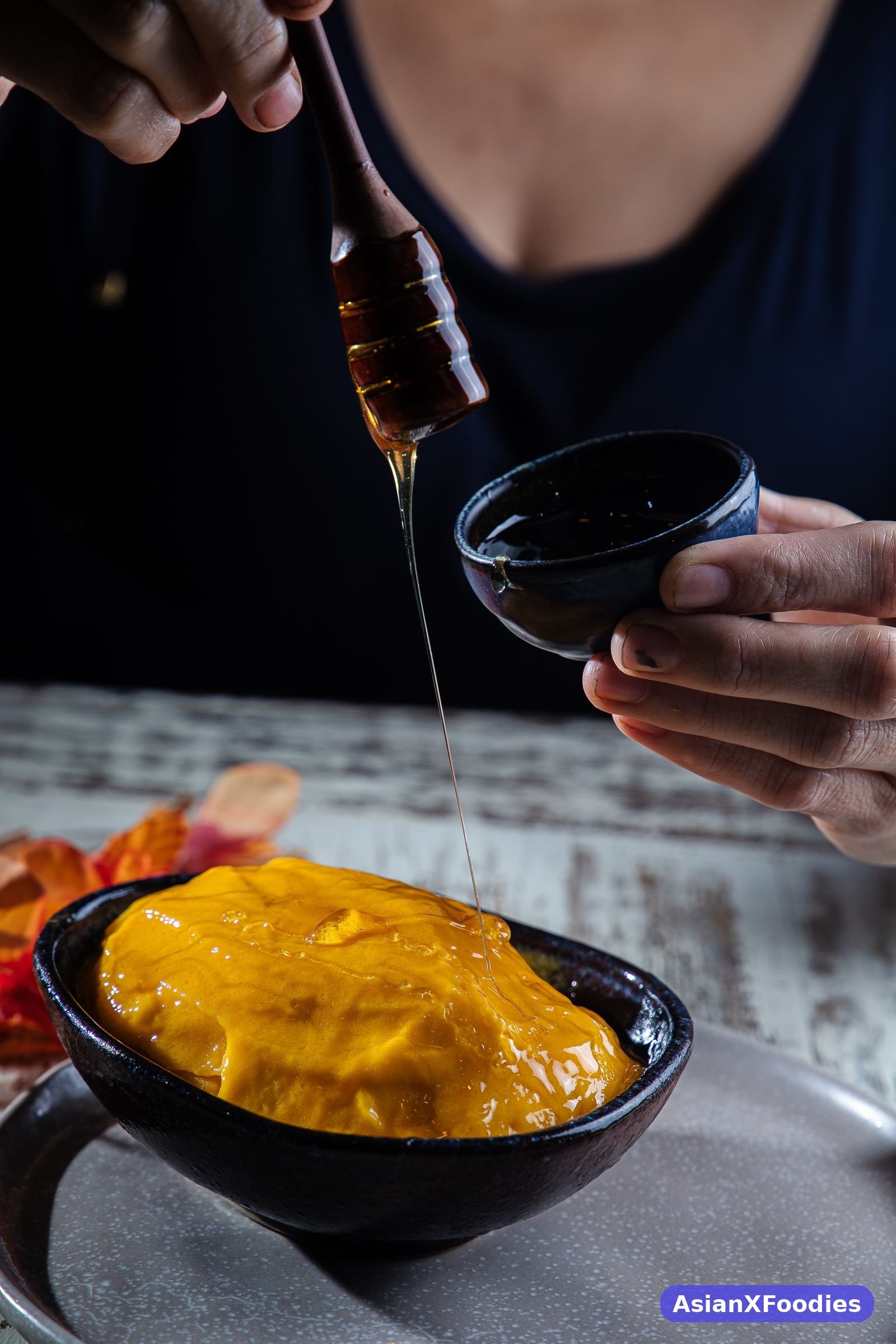
While the mangoes are waiting, bloom the gelatine, which is the step that makes the difference between a pudding that sets softly and one that sets into rubber. Sprinkle the tablespoon of gelatine evenly over the sixty millilitres of cold water in a small bowl, and leave it alone for five minutes without stirring. It will swell up and go spongy, which is exactly what you want. Meanwhile, put the coconut milk, the whole milk, and the caster sugar in a small saucepan over a low heat, and stir gently until the sugar has dissolved and the mixture is warm to the touch, but not hot. You should be able to hold your finger in it comfortably. If it starts to steam or bubble, take it off the heat straight away and let it cool for a minute. Add the bloomed gelatine to the warm milk mixture and stir until it has completely disappeared, which takes about a minute of steady stirring. There should be no grains and no lumps left at all, and the liquid should look smooth and slightly glossy.
Now put the mango chunks in the blender with the lime juice, the vanilla extract, and the pinch of salt, and blend on high speed until the puree is completely smooth, scraping down the sides once or twice so nothing hides in the corners. This usually takes about a minute, sometimes a little longer if your mangoes are very fibrous. Taste the puree. It should taste sweet and bright, with the lime just lifting the flavour rather than making it sour. If your mangoes are on the tart side, add another tablespoon of sugar and blend again. Pour the puree through a fine sieve into a large jug or bowl, pressing it through with a spoon, and throw away the stringy pulp that stays behind. This straining step is the one people most often skip, and it is the one that gives you a pudding that feels silky instead of slightly rough on the tongue, so I would not skip it, even when you are in a hurry.
Pour the warm milk and gelatine mixture into the strained mango puree, and stir slowly and gently until the two are fully combined and the colour is even all the way through. Do not whisk hard or blend it again at this stage, because you will whip air into the mixture and end up with bubbles and a foamy layer on top of the pudding. A slow stir with a spoon is all it needs. Taste it once more. It should taste like sweet mango with a soft coconut background, and it should be a little sweeter than you think it needs to be, because cold food always tastes less sweet than warm food. If it tastes just right while it is warm, it will taste slightly under-sweetened when it is cold, so add a small spoonful of sugar now if you think it needs it, and stir until it dissolves.
Divide the mixture between your six glasses or ramekins, pouring it through a small jug so you do not spill it down the sides. I like to use clear glasses for this, because the pale gold colour looks so pretty through the glass, and you can see the little cubes of mango on top later. If you want a perfectly smooth top, skim off any small bubbles with a spoon before the pudding goes in the fridge. Cover each glass loosely with cling film, or cover the whole tray with cling film if the glasses are close together, and put them in the fridge for at least four hours, though overnight is even better. The pudding needs that time to set properly, and it tastes better cold, so do not rush it. After four hours, give one glass a gentle shake. It should wobble as one piece, soft and trembling, and hold its shape when you press it lightly with a spoon.
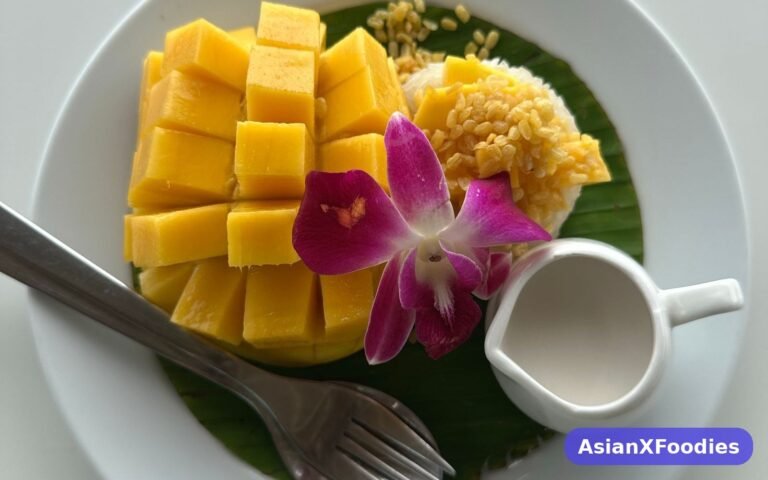
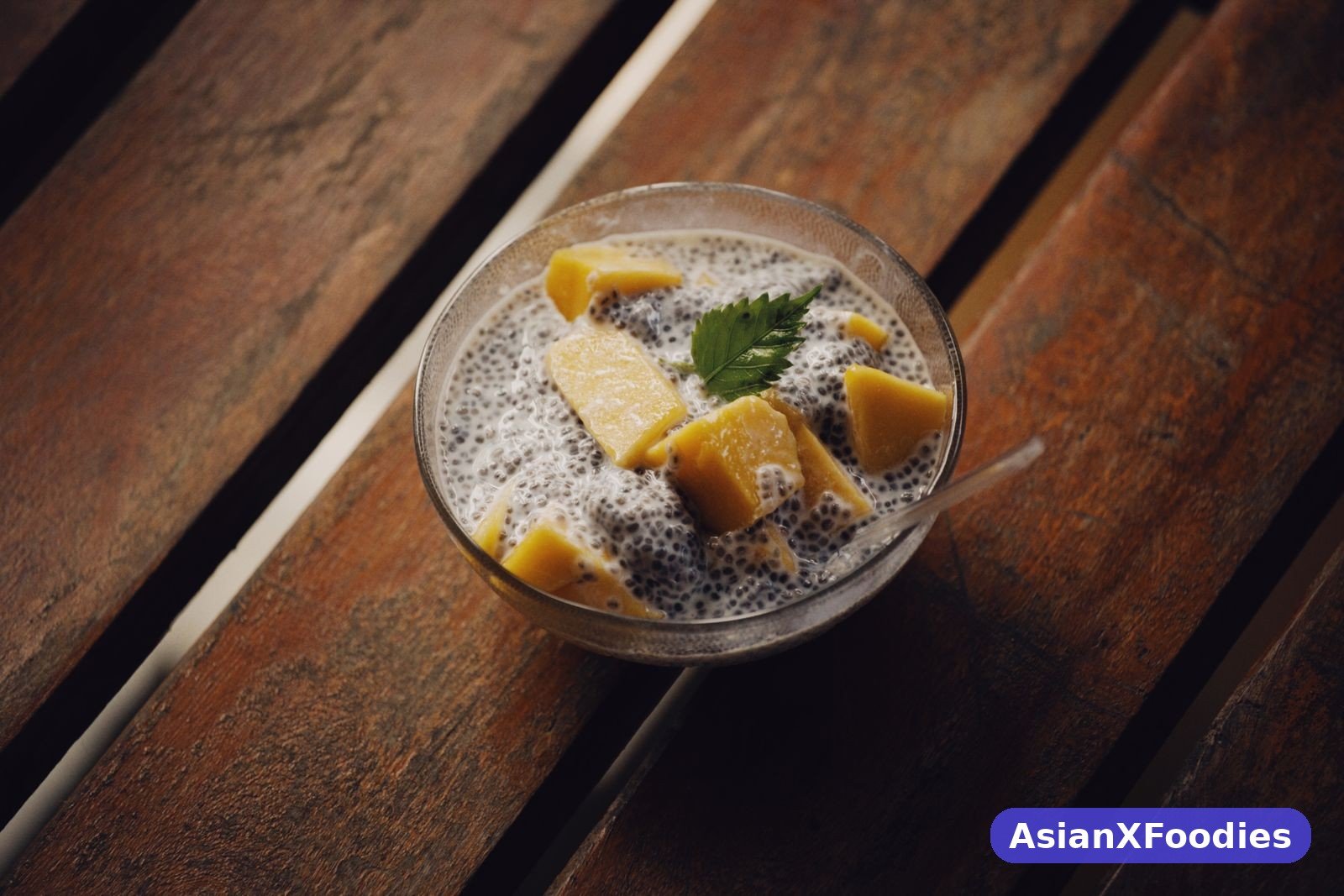
Just before serving, take the puddings out of the fridge and top each one with a spoonful of the diced mango, a little drizzle of evaporated milk or extra coconut milk, and a mint leaf if you have one. The evaporated milk is the classic cafe topping, and it adds a lovely creamy layer that pools around the mango cubes, while the extra coconut milk keeps the flavour consistent if you prefer it. A sprinkle of toasted coconut on top adds a bit of crunch and looks lovely against the gold of the pudding, though it is entirely optional. Serve the puddings cold, with small spoons, and eat them within a day or two of making them for the best texture. If you have ever had mango sticky rice with coconut cream at a Thai restaurant, you will recognise the same mango and coconut pairing here, just in a lighter, spoonable form that works beautifully after a hot meal.
Tips for the Best Mango Pudding
The single most important tip is to use properly ripe mangoes, and I cannot say it strongly enough. The best mangoes for this pudding are the ones that are soft, fragrant, and almost too ripe to eat on their own, the ones that drip juice down your chin when you bite into them. Alphonso mangoes are wonderful if you can find them, and Ataulfo or honey mangoes are also excellent, because they are sweet and smooth with very little fibre. Tommy Atkins mangoes, the big red and green ones you see everywhere, will work if they are fully ripe, but they can be stringy, so strain the puree well if you use them. If fresh mangoes are out of season or expensive, frozen mango chunks are a good second choice, thawed completely and drained, though the flavour will be slightly less bright than fresh.
Watch the temperature of the milk mixture, because gelatine is fussy about heat in both directions. If the milk is too cold, the gelatine will not dissolve properly and you will get tiny lumps in the pudding. If the milk is too hot, the gelatine loses some of its setting power and the pudding may stay soft, and the mango can pick up a faint cooked taste that is hard to place but easy to notice. Warm, not hot, is the rule. I test it by dipping a clean finger in, the way my mother taught me, and if I can hold my finger in it without pulling away, it is right. It sounds old-fashioned, but it works every time, and it is faster than finding the thermometer.
Strain the puree, even when it looks smooth already. I know it feels like an extra step, and I know the blender did a good job, but there are always a few fibres and stringy bits that survive blending, and they are exactly the things that spoil the silky texture of a good pudding. A fine sieve and a spoon take about two minutes, and the difference in the finished dessert is obvious the moment you take a spoonful. The same goes for skimming off the bubbles before the pudding goes in the fridge. A few small bubbles on top will set into a slightly foamy layer, which does not taste bad but does not look as pretty, so I take ten seconds to pop them with a spoon.
Let the pudding set for the full four hours, and do not be tempted to check it every half hour by shaking the glasses. Every time you move it, you disturb the setting, and if you try to serve it too early, it will be soft in the middle and runny around the edges. Four hours is the minimum for a pudding that holds its shape, and overnight is genuinely better, because the flavours have time to settle and the texture becomes smoother and more even. I usually make it the evening before I need it, which also means there is one less thing to think about on the day itself, and the puddings are perfectly cold when I take them out of the fridge.
Finally, taste and adjust the sweetness while the mixture is still warm, remembering that cold dulls sweetness. This is the mistake I made on my second attempt, when the pudding tasted perfect in the bowl and slightly flat once it was cold. Now I always make the warm mixture a touch sweeter than I think it should be, and I taste it again after stirring in the mango, because different mangoes need different amounts of sugar. A very sweet mango might need no extra sugar at all beyond what is in the recipe, while a tart one might need an extra tablespoon or two. Trust your tongue over the written amount, and write down what you used so you remember it next time. For a broader take on the classic version, the Mango Pudding (The Woks of Life) recipe is a useful comparison, with a slightly different milk balance that is worth reading if you like to see how other cooks approach the same dessert.
Variations to Try
If you want a richer pudding, replace the whole milk with more coconut milk, using the full tin, so the coconut flavour comes through more strongly and the texture becomes a little creamier. I do this version when I am serving the pudding on its own as the main dessert, rather than after a big meal, because it feels more substantial. If you want it lighter, use low-fat coconut milk and skimmed milk, though the texture will be slightly less silky and the flavour a little less round. Both versions set the same way, so you do not need to change the gelatine, and both are good in their own way, depending on what kind of meal you are serving it after.
For a vegan version, swap the gelatine for agar agar, using about one and a half teaspoons of agar powder, and replace the whole milk with extra coconut milk or oat milk. Agar needs to be boiled to activate, which is different from gelatine, so bring the coconut milk mixture to a gentle boil with the agar in it, simmer for two minutes, then let it cool slightly before stirring in the mango puree. The texture will be a little firmer and less creamy than the gelatine version, but it still tastes wonderful, and it sets faster, in about two hours. Make sure the mango puree is at room temperature when you add it, so the agar does not start setting in lumps the moment it touches the cold fruit.
You can also change the fruit on top to suit the season, which is one of the reasons I love this recipe. In summer I sometimes top the puddings with raspberries or sliced strawberries, which add a sharp, bright contrast to the sweet mango, and the colour looks beautiful against the gold. A version with fresh strawberries is well described in this Mango pudding with fresh strawberries idea, if you want to see how the two fruits work together on the plate. In winter, when fresh mango is expensive, I sometimes use tinned mango in light syrup, drained well, and top the pudding with passion fruit pulp, which adds a lovely tartness that wakes the whole dessert up.
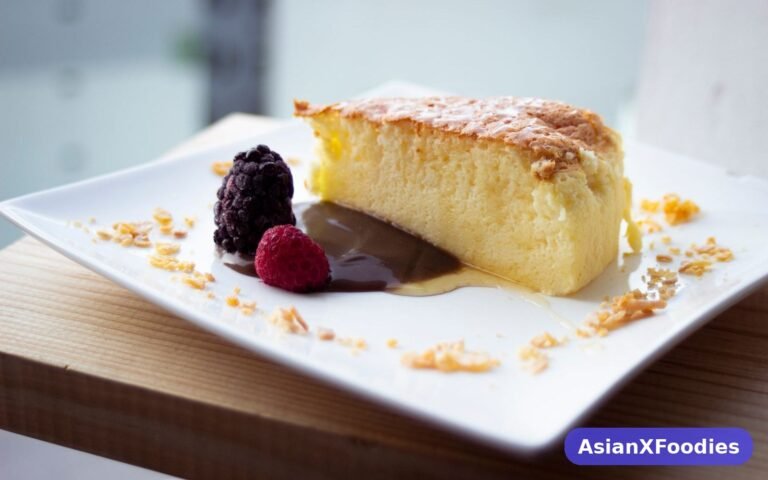
For a more grown-up version, I sometimes stir a tablespoon of rum or coconut liqueur into the warm milk mixture, which gives the pudding a gentle warmth without making it taste alcoholic. I only do this when I am serving it to adults, obviously, and I leave it out entirely when children are eating. Another variation I like is to set the pudding in one large bowl instead of individual glasses, and serve it family-style with a big spoon, letting everyone help themselves. It does not look as neat, but it feels generous and relaxed, and it is a good choice when you are feeding a crowd and do not have enough matching glasses. If you enjoy soft, delicate desserts like this one, my Japanese cheesecake with light fluffy texture is another gentle, light option that uses the same kind of careful, low-heat approach to get its soft texture.
Serving Ideas

The simplest way to serve this pudding is also the best, in my opinion, which is cold from the fridge, in a clear glass, with a spoonful of diced mango on top and a drizzle of evaporated milk. That is how the cafes serve it, and there is a reason it has stayed the same for so long. The cold pudding, the sweet mango cubes, and the creamy milk on top are all you need, and anything more can distract from the flavour. I put the glasses on small plates with a folded napkin and a teaspoon, and I let people eat them slowly, which they always do, because it is the kind of dessert you want to linger over rather than rush.
If you are serving it as part of a bigger meal, it works beautifully at the end of a Chinese or Southeast Asian dinner, especially after something spicy or rich. After a plate of noodles, a stir-fry, or a curry, the cool, gentle sweetness of the pudding feels like a reset, and it does not leave anyone feeling heavy. I have served it after a full family dinner with six or seven dishes, and it was the only dessert that did not get left half-eaten, because people could manage a small glass even when they said they were full. If you want to make a dessert table feel complete, put the mango pudding next to a plate of Chinese almond cookies with crisp edges, which give people something crunchy to nibble on alongside the soft pudding, and the two together look lovely on the table.
For a summer party or a barbecue, I make the pudding in small jam jars with lids, which means I can carry them outside without worrying about spills, and people can eat them standing up with a spoon. A few mint leaves and a little diced mango on top make them look special without any extra work, and the jars keep the pudding cold for longer than an open glass does. I have also served it in teacups for an afternoon tea, which sounds odd until you see how pretty the pale gold looks in a white cup, and children in particular seem to love eating dessert from a teacup. However you serve it, keep it cold until the last minute, because a mango pudding that has warmed up loses its refreshing quality and starts to taste flat.
Storage and Reheating
Mango pudding keeps well in the fridge for up to three days, covered with cling film or with lids on the jars, and it actually tastes better on the second day, once the flavours have had time to settle together. The texture stays smooth and soft, and the mango flavour becomes a little deeper, which is a pleasant surprise if you are used to desserts that go stale quickly. I usually make it the day before I need it for exactly this reason, and I have never had a batch go to waste. After three days, the top can start to dry out slightly and the mango cubes on top can soften, so I would not keep it much longer than that, even though it is still safe to eat.
This is a dessert that should never be reheated, and it does not freeze well either, so it is best to make only as much as you will eat within a few days. Freezing changes the texture completely, because the gelatine structure breaks down when it thaws, and the pudding turns watery and grainy instead of smooth. If you have leftover pudding, it is much better to eat it cold the next day, straight from the fridge, than to try to save it in the freezer. I have made that mistake once, hoping to keep a batch for the following weekend, and the thawed pudding was so disappointing that I ended up throwing it away, which I still feel bad about.
If you want to make it ahead for a party, the best approach is to make the puddings up to two days in advance and keep them covered in the fridge without the topping, then add the diced mango, the milk drizzle, and the mint just before serving. The topping stays fresh that way, the mango cubes do not go soft in the fridge, and the puddings look as if you made them that morning. If you have already topped them, they will still be fine for a day, but the mango on top will soften slightly and the mint may wilt, so it is worth waiting if you can. Leftover diced mango, if you have any, keeps in a small sealed container in the fridge for a day, and is lovely stirred into yoghurt the next morning.
Frequently Asked Questions
Can I use tinned mango instead of fresh mango?
Yes, you can, and it is a good option when fresh mangoes are out of season or very expensive. Use tinned mango in light syrup, drain it well, and use slightly less sugar in the recipe, because the syrup adds sweetness of its own. The flavour will not be quite as bright as fresh mango, and the puree may be a little smoother, which is actually fine for this pudding, but it will still taste lovely and set in the same way. If you can, add a squeeze of lime juice to lift the flavour, and taste the puree before you add the milk mixture so you can adjust the sugar. I have used tinned mango in winter when I wanted this dessert out of season, and nobody at the table noticed the difference until I told them.
Why is my mango pudding too firm?
This usually happens because there was too much gelatine, or because the gelatine was not measured correctly. Gelatine powder can be tricky to measure if you are using a spoon that is not level, so I always use proper measuring spoons and level the gelatine off with a knife. Another cause is using gelatine leaves instead of powder without converting the amount, since one leaf is not the same as one teaspoon of powder. If your pudding came out firm, you can still enjoy it, it will just be closer to a jelly than a creamy pudding, and you can serve it with extra evaporated milk to soften each spoonful. Next time, use a little less gelatine, or add an extra fifty millilitres of coconut milk to make the mixture softer.
Can I make mango pudding without gelatine?
Yes, you can, and the most reliable substitute is agar agar, which is made from seaweed and sets in a similar way. Use about one and a half teaspoons of agar powder for this amount of liquid, and remember that agar needs to be boiled to work, unlike gelatine, so you will need to bring the milk mixture to a gentle boil and simmer it for two minutes before adding the mango puree. The texture will be slightly firmer and less creamy than the gelatine version, but it is a good option if you do not eat gelatine. You can also try vegetarian gelatine, following the packet instructions, though the setting time and texture can vary between brands, so I would test a small batch first if you have never used it before.
How long does mango pudding need to set in the fridge?
It needs at least four hours in the fridge, and overnight is even better. Four hours is enough for the gelatine to set the pudding so it holds its shape and wobbles gently when you shake the glass. If you try to serve it after only two hours, the middle will still be soft and it may not hold its shape on a spoon. The setting time also depends on the size of your glasses, since smaller glasses set faster than one large bowl, and on how cold your fridge is. I always make it the evening before I need it, which takes the worry out of the timing entirely, and it means the pudding is perfectly cold when I serve it. If you are in a rush, you can put the glasses in the coldest part of the fridge, but do not put them in the freezer to speed it up, because the texture will suffer.
What should I serve with mango pudding?
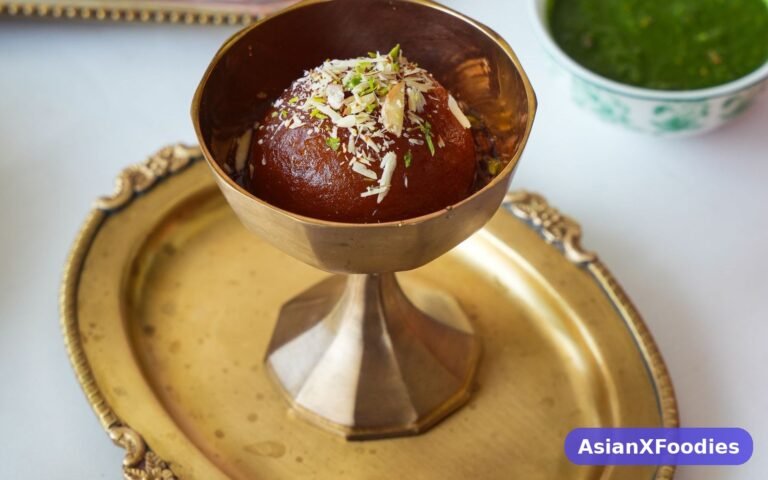
Mango pudding is lovely on its own, with just a spoonful of diced mango and a drizzle of evaporated milk or coconut milk on top, and that is how I serve it most of the time. If you want to make it part of a bigger dessert spread, it goes well with crisp biscuits, like almond cookies, or with a light sponge cake that does not compete with the mango flavour. It also works beautifully after a rich meal, because it is light and refreshing, and it pairs well with a cup of jasmine tea or a glass of iced green tea. If you are looking for another sweet ending to an Asian meal, my gulab jamun with cardamom syrup is a warmer, richer dessert that contrasts nicely with the cool lightness of this pudding, and the two together give people a choice.
Can I use frozen mango for this pudding?
Yes, frozen mango works well, and it is often riper and sweeter than the fresh mangoes you find out of season, because it is frozen at its peak. Thaw the mango chunks completely in a bowl, drain off any extra liquid, and then blend them as you would fresh mango. You may need a little less sugar, depending on how sweet the frozen mango is, so taste the puree before you add the milk mixture. The texture of the finished pudding will be just as smooth, especially if you strain the puree, and the flavour will be bright and fresh. I keep a bag of frozen mango in my freezer for exactly this reason, so I can make this pudding even in the middle of winter when good fresh mangoes are hard to find.