Japanese Matcha Tiramisu with White Chocolate
I did not grow up with matcha. In my house, dessert meant something brown — chocolate cake, custard, a bowl of kheer after dinner — and the idea of a green dessert would have made my grandmother laugh and then quietly refuse to taste it. The first time I ever ate matcha tiramisu, I was not even planning to order it. I was in a small café in Kyoto, the kind with six tables and a hand-written menu on the wall, and I had gone in for coffee. The woman behind the counter looked at my order, looked at me, and said, in the gentle way Japanese shopkeepers have of correcting you without correcting you, that I should try the matcha tiramisu instead. I said yes because it felt rude to say no, and because the square of pale green cake sitting in the glass case looked too pretty to ignore.
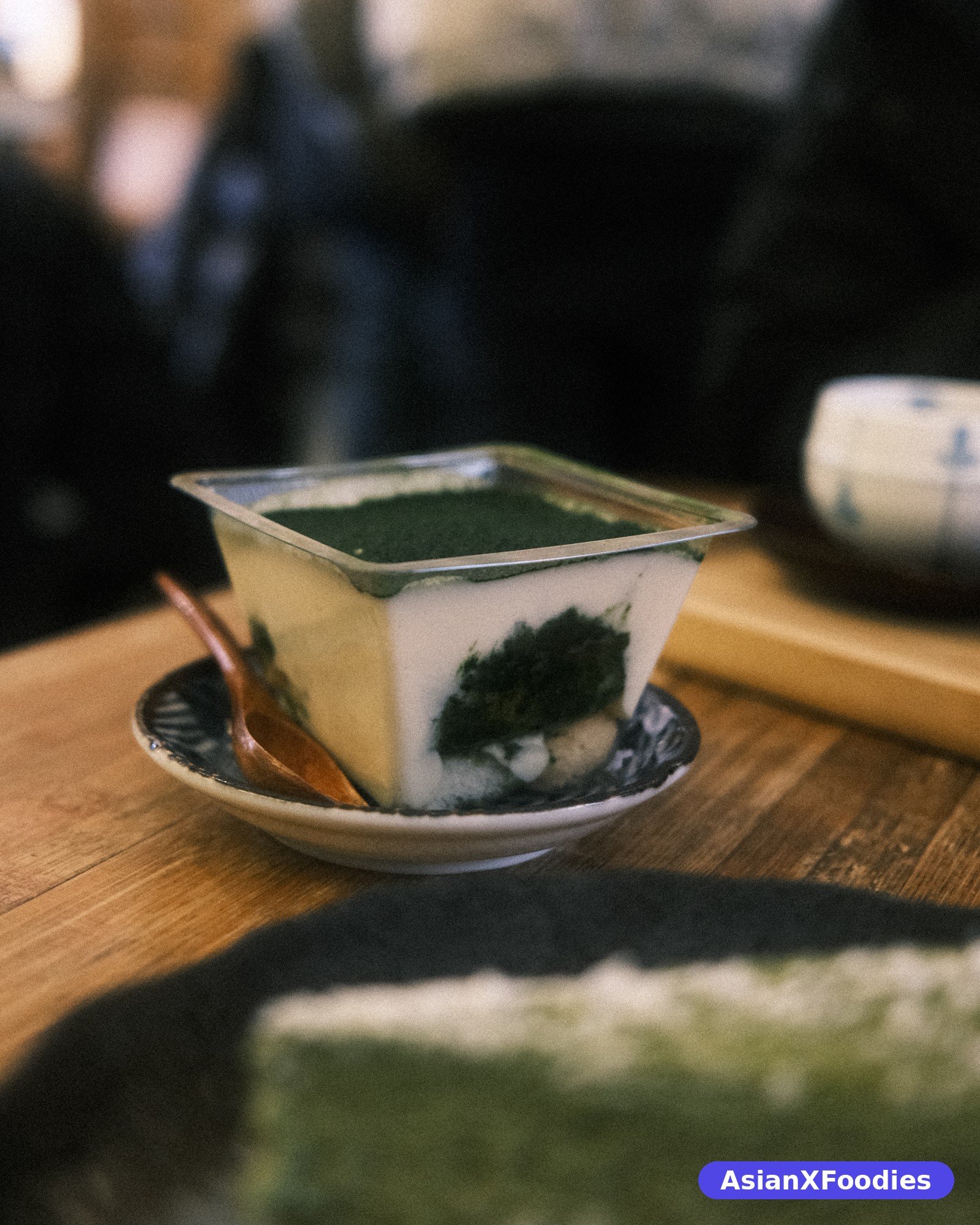
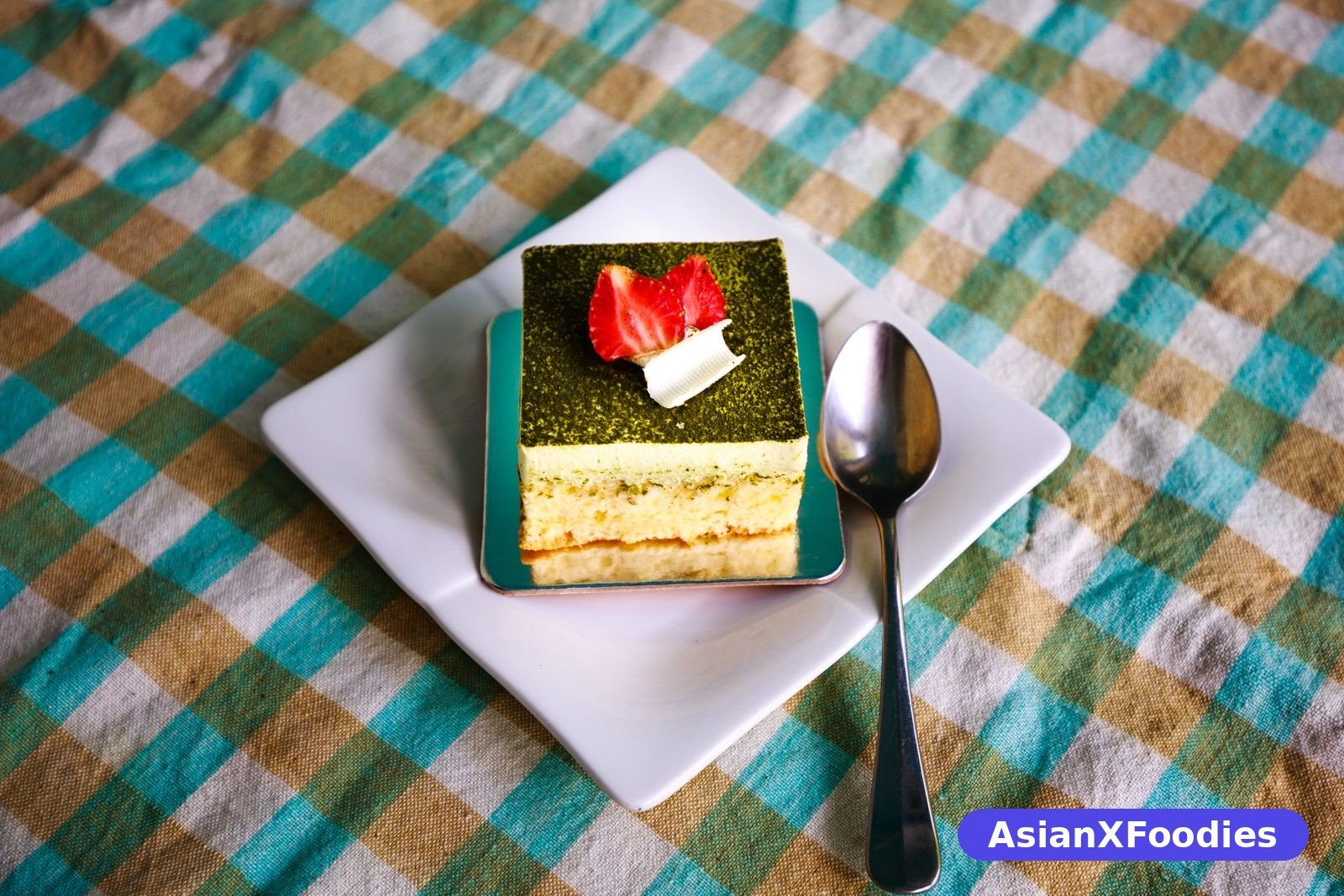
She brought it out on a plain white plate with a small spoon and a cup of hot tea, and I sat there for a minute just looking at it. It was the colour of a spring garden — a soft, dusty green top, a neat square cut, and when I pushed my spoon in, the layers showed themselves: cream, sponge, cream, sponge, all of it holding together just enough to make you slow down. The first bite was not what I expected. It was not sweet in the way tiramisu usually is, and it was not bitter either. There was a gentle earthiness from the matcha, a richness from the cream, and then this quiet sweetness that came in at the end, almost like an afterthought. I ate the whole thing in silence, which is not something I usually do, and then I ordered a second piece to take home, because I knew I would be thinking about it on the walk back to the hotel.
That was years ago, and I have been making my own version ever since, changing it a little every time. The biggest change came when I added white chocolate. The first few times I made it, the matcha was a little too serious — beautiful, but sharp around the edges, the kind of dessert that adults nod at approvingly and children push to the side of the plate. White chocolate fixed that. Melted into the mascarpone, it rounds everything off, gives the cream a soft sweetness and a silkier texture, and it makes the whole dessert taste finished, like a sentence with a proper ending. The matcha is still the star — you can taste it in every layer — but the white chocolate is what makes people ask for the recipe.
This is a no-bake dessert, which is half the reason I love it. There is no oven, no water bath, no worrying about cracks or sinking centres. You whisk matcha into milk, you dip ladyfingers, you whip cream and mascarpone, and you stack it all up in a dish. Then the fridge does the real work. It needs time — at least six hours, overnight if you can manage it — and that waiting is the hardest part of the recipe, because the tiramisu in the fridge will smell faintly of green tea and cream every time you open the door. But the wait is what turns separate layers into one dessert. The ladyfingers soften, the cream firms up, and the flavours settle into each other. If you can make it the night before a dinner party, do that. It is one of those desserts that actually gets better when you stop fussing over it and just leave it alone.
Why You’ll Love This Recipe
The flavour is the first reason, and it is a strange and lovely one. Matcha does not taste like anything else in the dessert world. It is grassy and a little bit earthy, with a soft bitterness that sits at the back of your tongue, and when you fold it into sweetened mascarpone cream, something wonderful happens — the bitterness softens, the cream picks up a faint green-tea perfume, and the whole thing tastes elegant without tasting fancy. It is the kind of flavour that makes people pause after the first spoonful and say, wait, what is this? And then take another spoonful before you have finished answering. If you have never cooked with matcha before, this is a gentle way in, because the cream and the white chocolate carry it, and you can adjust the amount up or down until it tastes like yours.
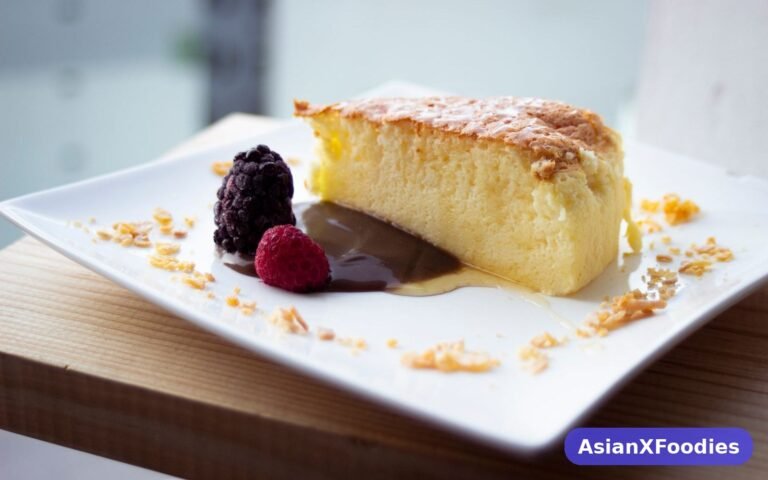
The second reason is that it looks like you spent hours on it, and you did not. A matcha tiramisu is one of the most beautiful desserts you can put on a table, and almost all of that beauty is free. The green dusting on top, the clean layers when you cut into it, the contrast of pale cream against deep green — it photographs like a magazine dessert, and it takes about thirty minutes of actual work. I have served this at a dinner party where someone asked me which bakery I had ordered it from, and I have never been prouder of a recipe that involved no baking at all. If you want another dessert that looks far harder than it is, my Japanese cheesecake with its light, fluffy texture is the same kind of trick — a soft, trembling cake that looks like it came from a patisserie and is really just eggs, cream cheese, and patience.
It is also a make-ahead dessert, which is worth more than it sounds. Most desserts punish you for making them early — cakes dry out, ice cream melts, pastry goes soggy. Tiramisu is the opposite. It wants to be made ahead. The hours in the fridge are not dead time, they are the recipe working, and the result is a dessert that is better on the second day than the first. That makes it perfect for dinner parties, for Eid gatherings, for any occasion where you want dessert to be finished and waiting before your guests arrive, instead of something you are rushing to assemble while everyone is already at the table. I make it the night before, dust it with matcha just before serving, and that is the whole job.
Finally, it is a dessert that suits almost everyone at the table. There is no coffee in it, so children can eat it and so can anyone who avoids caffeine late in the evening. There is no alcohol unless you choose to add it — the traditional splash of rum or marsala is entirely optional here, and the recipe works beautifully without it. It is rich but not heavy, sweet but not cloying, and the portion can be as small or as generous as you like. I have served it after a big biryani dinner and after a light summer lunch, and it has worked both times, because it is the kind of dessert that refreshes you instead of weighing you down.
Ingredients You’ll Need
- 24 crisp ladyfinger biscuits (savoiardi), about 200g
- 2 tablespoons ceremonial-grade matcha powder, plus 1 teaspoon extra for dusting
- 180ml hot water, just off the boil
- 2 tablespoons caster sugar, for the matcha soak
- 120g white chocolate, chopped
- 500g mascarpone cheese, at room temperature
- 300ml double cream (heavy cream), cold
- 80g icing sugar (powdered sugar)
- 1 teaspoon vanilla extract
- A pinch of salt
- 2 tablespoons milk, if needed to loosen the cream
- White chocolate curls or shavings, to decorate
- A few strawberries or edible flowers, to decorate (optional)
How to Make Japanese Matcha Tiramisu with White Chocolate
Start with the white chocolate, because it needs time to cool. Put the chopped white chocolate in a small heatproof bowl and melt it gently — either in the microwave in twenty-second bursts, stirring between each one, or over a pan of barely simmering water. White chocolate is fussier than dark chocolate. It burns quickly, and once it seizes there is no saving it, so go slowly and take it off the heat while there are still a few small lumps left. The leftover heat will melt them. Stir it until it is smooth and glossy, and then set it aside to cool for about ten minutes. It should be lukewarm when you use it, not hot. If it is too hot, it will melt the mascarpone and your cream will go runny, and you will be standing over a bowl of green soup wondering what went wrong.
While the chocolate cools, make the matcha soak. Sift the two tablespoons of matcha into a wide, shallow bowl — sifting matters, because matcha clumps the moment it meets liquid, and a clump of dry matcha in a ladyfinger is a bitter surprise nobody wants. Add the two tablespoons of caster sugar, pour in the hot water, and whisk it with a small whisk or a fork until it is smooth and frothy and there are no lumps left. It should look like a deep, vivid green tea. Let it cool for ten minutes too. The soak needs to be lukewarm, not hot, because hot liquid turns ladyfingers to mush in seconds, and you want them soft, not dissolved. I usually make the soak first and the chocolate second, so they cool at the same pace, and by the time both are ready I am ready too.
Now make the cream, which is the heart of the whole dessert. Put the mascarpone in a large bowl and beat it with a spoon or a spatula until it is smooth and soft, about thirty seconds. This step matters more than it looks — cold mascarpone straight from the fridge will not mix properly, and you will end up with lumps in your cream that no amount of whisking will fix. Pour in the cooled white chocolate and the vanilla extract, add the pinch of salt, and stir until everything is combined and the mixture is pale, glossy, and completely smooth. The salt sounds odd in a sweet cream, but it is doing the same job it does in every dessert: it makes the sweetness taste sweeter and the matcha taste greener, and you will notice if it is missing.
In a separate bowl, whip the cold double cream with the icing sugar until it holds soft peaks. Soft peaks means the cream stands up when you lift the whisk, but the tip flops over gently — it should look like a soft wave, not a stiff mountain. If you whip it too far, the cream will turn grainy and buttery, and the tiramisu will be dense instead of light, so stop early rather than late. You can always whip a little more, but you cannot un-whip cream. I do this by hand with a balloon whisk when I have the energy, because it gives me more control, but an electric whisk on medium speed works just as well — just keep your eye on it, because cream goes from perfect to over-whipped in about fifteen seconds.
Fold the whipped cream into the mascarpone mixture in two additions, using a large spoon or spatula and a slow, gentle folding motion — down the middle, around the sides, and back up again. Do not stir it, and do not beat it. Folding keeps the air in the cream, and that air is what makes the finished tiramisu feel light instead of heavy. The first addition will loosen the mascarpone and make it easier to fold, and the second will bring it all together into a thick, pale, spoonable cream. When you are done, it should look like softly whipped clouds, and it should taste faintly of white chocolate with a whisper of vanilla. Taste it now, because this is the moment to adjust — a little more icing sugar if you want it sweeter, a little more vanilla if you want it warmer.
Now comes the assembly, which is the fun part. Take a dish about 20cm by 20cm — a square glass dish is ideal, because you can see the layers from the side, but a ceramic dish works just as well. Dip a ladyfinger into the matcha soak for two seconds, no more. One side, then the other, and straight out. Two seconds sounds too short, and the first time I made tiramisu I left them in for ten, and they fell apart in my hands. The ladyfingers will keep absorbing liquid as the dessert chills, so a quick dip is all they need. Lay the dipped ladyfingers in a single layer in the bottom of the dish, breaking one or two to fill the gaps at the edges. It does not need to be perfect — nobody will see the gaps once the cream goes on.
Spread half of the mascarpone cream over the ladyfingers, and smooth it out with the back of a spoon or a small offset spatula. It does not need to be perfectly level, but try to get it even, because an even layer means every spoonful gets the same balance of cream and sponge. Then repeat — another layer of quickly-dipped ladyfingers, and then the rest of the cream on top. Smooth the top layer as neatly as you can, because this is the surface everyone will see. If you want a very neat finish, run the spatula under hot water first and dry it, and it will glide across the cream like an iron. I do this when I am serving guests. When it is just for us at home, I leave the spoon marks in, because it looks homemade, and homemade is the point.
Cover the dish with cling film and put it in the fridge for at least six hours, and overnight if you can. This is the hardest part of the recipe, and it is also the most important. While it chills, the ladyfingers soften into cake, the cream sets into something sliceable, and the matcha flavour deepens and spreads through every layer. I know six hours sounds like a long time, and the first time I made this I tried to serve it after two, and it was still good — but it was not great. It was a pile of cream and biscuits. Overnight, it becomes a dessert. If you are making it for a dinner party, make it the evening before, and you will have one less thing to think about on the day.
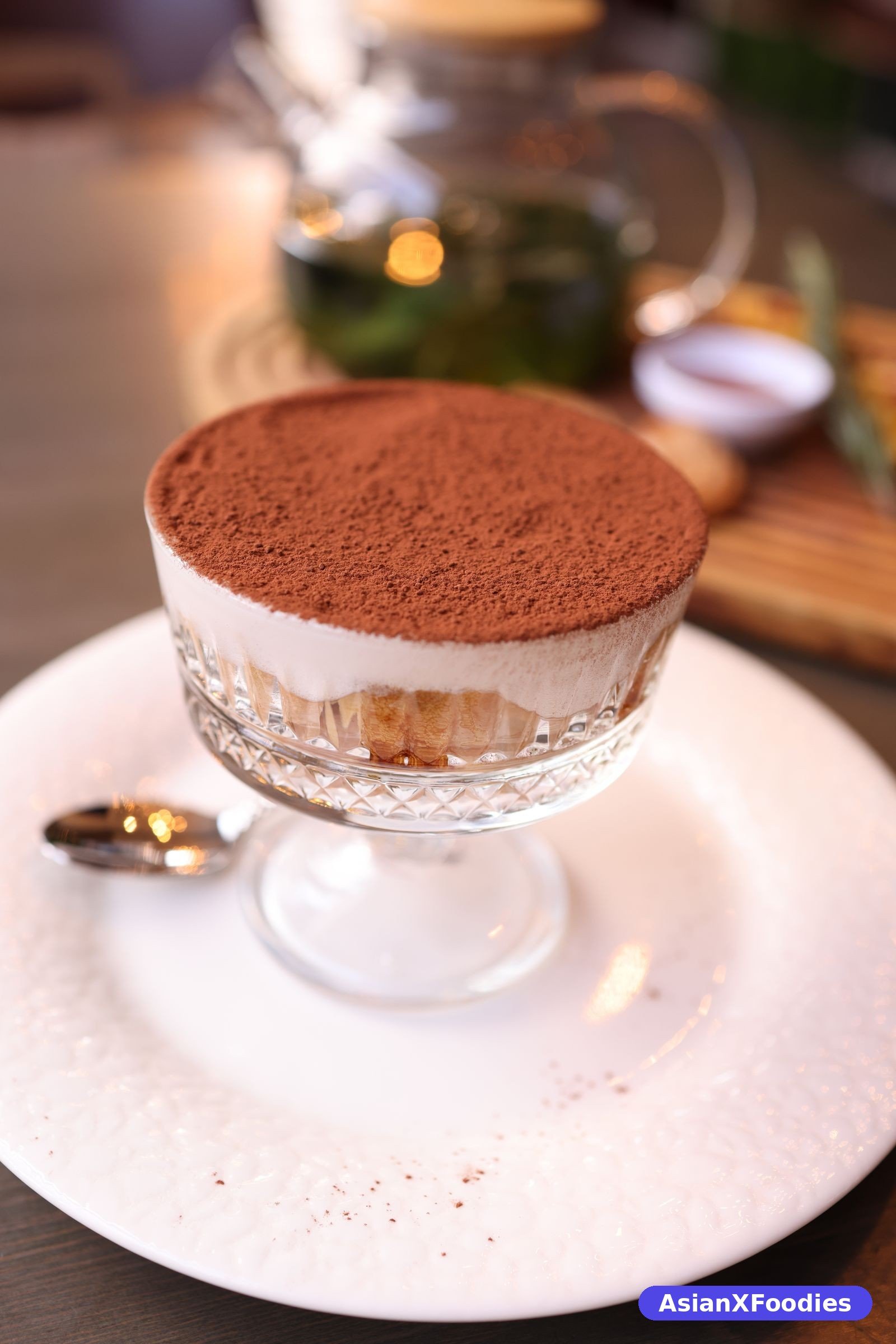
Just before serving, dust the top with matcha. Sift the extra teaspoon of matcha through a fine tea strainer or a small sieve, holding it high above the dish and tapping it gently, so the powder falls in a thin, even layer. Do this at the last minute, not before chilling, because matcha absorbs moisture from the cream and turns dark and patchy if it sits too long. The dusting should look like a soft green snowfall, even and light. Then decorate with a few white chocolate curls — I make mine by running a vegetable peeler down the side of a bar of white chocolate — and a strawberry or two if you like. The red of the strawberry against the green is beautiful, and it is the same trick as the white chocolate curl on a Chinese mango pudding with coconut milk, where a little colour on top turns a simple dessert into something that looks like it came from a café.
Tips for the Best Matcha Tiramisu
Buy the right matcha, because it makes more difference here than in almost any other recipe. Matcha comes in grades, and the difference between ceremonial grade and culinary grade is real — ceremonial grade is brighter green, smoother, and less bitter, and it is made from the youngest tea leaves. Culinary grade is cheaper and perfectly fine for baking, but it is duller in colour and sharper in taste. For a dessert where matcha is the main flavour, I use ceremonial grade, and I can taste the difference. Matcha itself has a long history, and the powder we buy today is still made the same slow way — shade-grown leaves, stone-ground into a fine powder — which is why a good tin costs more than a bag of ordinary green tea, and why it is worth it.
Do not over-soak the ladyfingers. This is the mistake I see most often, and it is the one that turns a beautiful tiramisu into a soggy mess. The ladyfingers should be dipped for two seconds — one Mississippi, two Mississippi, out. They will look too dry when they go into the dish, and that is correct. They absorb moisture from the cream and from each other as the dessert chills, and by the time you serve it they will be soft all the way through. If you soak them until they feel soft in your hand, they will be mush by dinner. If your ladyfingers are the soft, cake-like kind rather than the crisp savoiardi, dip them even faster — one second is enough, because they drink up liquid like a sponge.
Keep everything cold except the chocolate. The mascarpone should be at room temperature so it mixes smoothly, but the double cream should be cold from the fridge, and the bowl you whip it in should be cold too. Warm cream does not whip properly — it stays thin and sloppy no matter how long you whisk it — and warm cream folded into mascarpone will make the whole mixture loose. I put my mixing bowl in the fridge for ten minutes before I start, which costs nothing and makes a real difference. The white chocolate, on the other hand, needs to be lukewarm, not cold — cold white chocolate will set into little flecks in the cream instead of blending in smoothly.
Taste the cream before you assemble. This is a small habit that saves a lot of regret. Matcha varies from brand to brand — some tins are grassy and bright, others are earthy and strong — and white chocolate varies too. Taste the finished cream and ask yourself whether it is sweet enough, whether the vanilla is coming through, whether it needs a pinch more salt. You can fix the cream. You cannot fix a finished tiramisu. And if you want a deeper green colour in the cream itself, whisk half a teaspoon of matcha into the mascarpone before you fold in the whipped cream. It will tint the layers a soft, pale green, which looks lovely in a glass dish.
Serve it cold, and slice it with a hot knife. Tiramisu is at its best straight from the fridge, when the cream is firm and the layers hold their shape. If it has been sitting on the table for half an hour, it will still taste good, but it will slump when you cut it. For clean slices, dip a sharp knife in hot water, wipe it dry, and cut straight down in one confident motion. Wipe the knife and dip it again between slices. It takes an extra minute, and the difference is the difference between neat squares with visible layers and a spoonful of delicious green mush. Both taste the same, but only one of them makes people reach for their phones to take a photograph.
What to Serve With It
A pot of hot green tea is the natural partner, and it is what I serve every time. The tea echoes the matcha in the dessert without competing with it, and the warmth of the tea against the cold cream is a lovely contrast. I brew a pot of sencha or genmaicha — genmaicha, with its toasted rice, is especially good here — and I serve it plain, with no sugar, because the dessert is sweet enough on its own. If you do not drink green tea, a pot of jasmine tea works just as well, and so does a simple black tea. The point is something hot and unsweetened to cleanse the palate between spoonfuls.
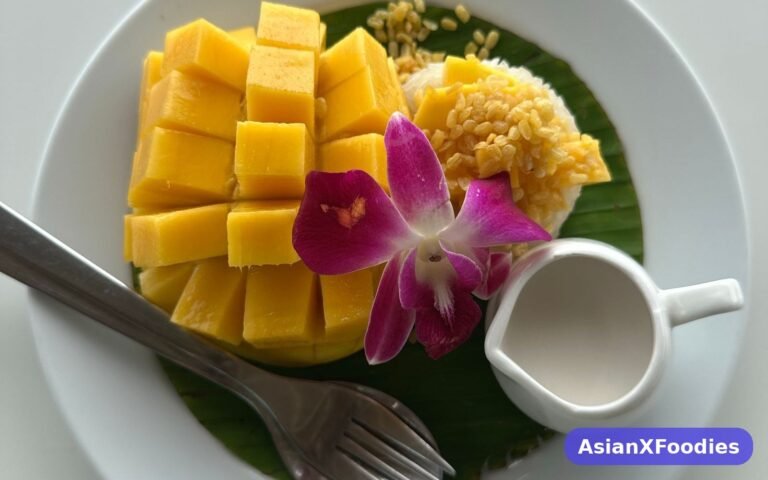
If you are serving this as part of a larger meal, think about what came before it. After a rich, savoury dinner — a curry, a hot pot, a plate of dumplings — a cold, light dessert like this is exactly what people want. It is the same reason I often serve my mango sticky rice with coconut cream after a Thai or Malaysian meal: something cool, creamy, and not too sweet is the right ending when the main course was big and bold. If the meal was light, a small square of tiramisu with a cup of tea is a complete dessert on its own, and it needs nothing else on the plate. A few fresh berries on the side never hurt, though — raspberries especially, because their tartness cuts through the cream.
For a dinner party, I serve individual portions in small glasses, and it changes the whole dessert. The same recipe, layered into six or eight small glasses instead of one big dish, looks far more elegant, and it is easier to serve — no slicing, no slumping, just a glass and a spoon for each person. The layers are visible through the glass, which is half the pleasure, and everyone gets their own perfect portion. If you go this route, reduce the chilling time slightly — four hours is usually enough in a small glass — and dust the matcha on top just before you bring them to the table.
How to Store Leftovers
Matcha tiramisu keeps beautifully in the fridge, and it is one of those rare desserts that is genuinely better on the second day. Keep it covered with cling film, pressed gently onto the surface of the cream so it does not dry out, and it will stay good for three days. After the third day the ladyfingers start to go too soft and the matcha dusting on top darkens, so three days is the limit. I always make it the day before I need it, and if there is any left after dinner, it becomes the next day’s afternoon tea, which is honestly the best part of making it.
Do not freeze it. I know it is tempting — there is always that moment when you look at half a dish of tiramisu and think about the freezer — but tiramisu does not freeze well. The mascarpone cream turns grainy when it thaws, the ladyfingers go watery, and the whole texture that makes it special is gone. If you have made too much, the answer is to share it, not to freeze it. Cut it into portions, put them in small containers, and give them to neighbours, to family, to anyone who will take them. A dessert this good should be eaten, not stored, and your neighbours will remember you kindly for it.
If you have individual glasses left over, cover each one with cling film and keep them in the fridge the same way, for up to three days. The glass portions actually keep slightly better than the big dish, because there is less exposed surface and the cream does not dry out as quickly. And if you are taking it to someone else’s house, transport it in the dish it was made in, covered, in a cool bag with an ice pack if the journey is long. Do not try to unmould it or move it to a prettier dish — tiramisu is a serving-dish dessert, and the dish it was made in is the dish it should be served from.
Frequently Asked Questions
Can I make matcha tiramisu ahead of time?
Yes, and you should. This dessert is better when it is made ahead — at least six hours in the fridge, and overnight is ideal. The chilling time is when the ladyfingers soften, the cream sets, and the flavours come together. You can make it up to two days before you plan to serve it, and it will still be perfect. The only thing to do at the last minute is the matcha dusting on top, because it darkens and goes patchy if it sits on the cream for too long. Dust it, decorate it, and serve it straight from the fridge.
What grade of matcha should I use?
Use ceremonial-grade matcha if you can. It is brighter green, smoother, and less bitter than culinary grade, and in a dessert where matcha is the main flavour, you can taste the difference. Culinary grade will still work — the dessert will be a little duller in colour and a little sharper in taste — but if you are buying matcha specially for this recipe, spend the extra on ceremonial grade. Whatever grade you buy, check that it is bright green when you open the tin. Matcha that looks yellowish or brown has gone stale, and it will make your tiramisu taste flat and muddy instead of fresh and grassy.
Is this recipe alcohol-free?
Yes. There is no alcohol in this recipe at all — the ladyfingers are soaked in sweetened matcha tea, not in coffee and marsala the way a classic tiramisu is. That makes it suitable for children, for anyone who avoids alcohol, and for gatherings where you are not sure who is eating. If you do want a little warmth from alcohol, you can add a tablespoon of rum or a splash of amaretto to the matcha soak, but it is entirely optional, and I make it without alcohol most of the time. The dessert does not miss it, and the matcha flavour is actually clearer without it.
Can I use something else instead of white chocolate?
You can, though the result will be a little different. If you leave the white chocolate out entirely, the cream will be less sweet and a little lighter, and you may want to add an extra tablespoon of icing sugar to make up for it. A few tablespoons of sweetened condensed milk will give you a similar sweetness and silkiness, and it is a good substitute if you do not have white chocolate in the cupboard. What I would not do is swap in dark or milk chocolate — they overpower the matcha, and the dessert stops tasting like matcha tiramisu and starts tasting like chocolate dessert with green tea in it. For a closer look at how the classic version comes together, Just One Cookbook’s matcha tiramisu is the recipe I learned the most from when I was working out my own version.
How long does matcha tiramisu keep in the fridge?
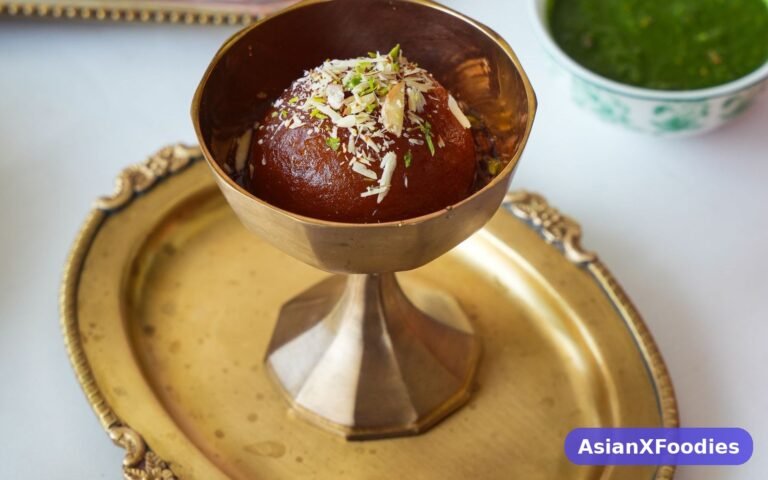
Three days, covered, in the fridge. It is at its best on the second day, when the layers have fully settled and the flavour is at its deepest, and it is still very good on the third. After that the ladyfingers get too soft and the top starts to darken, so three days is the honest limit. If you love desserts that keep well for a few days, my gulab jamun with cardamom syrup is another one that improves after a night soaking in syrup, and it is the dessert I make when I want something warm and spiced instead of cold and creamy.