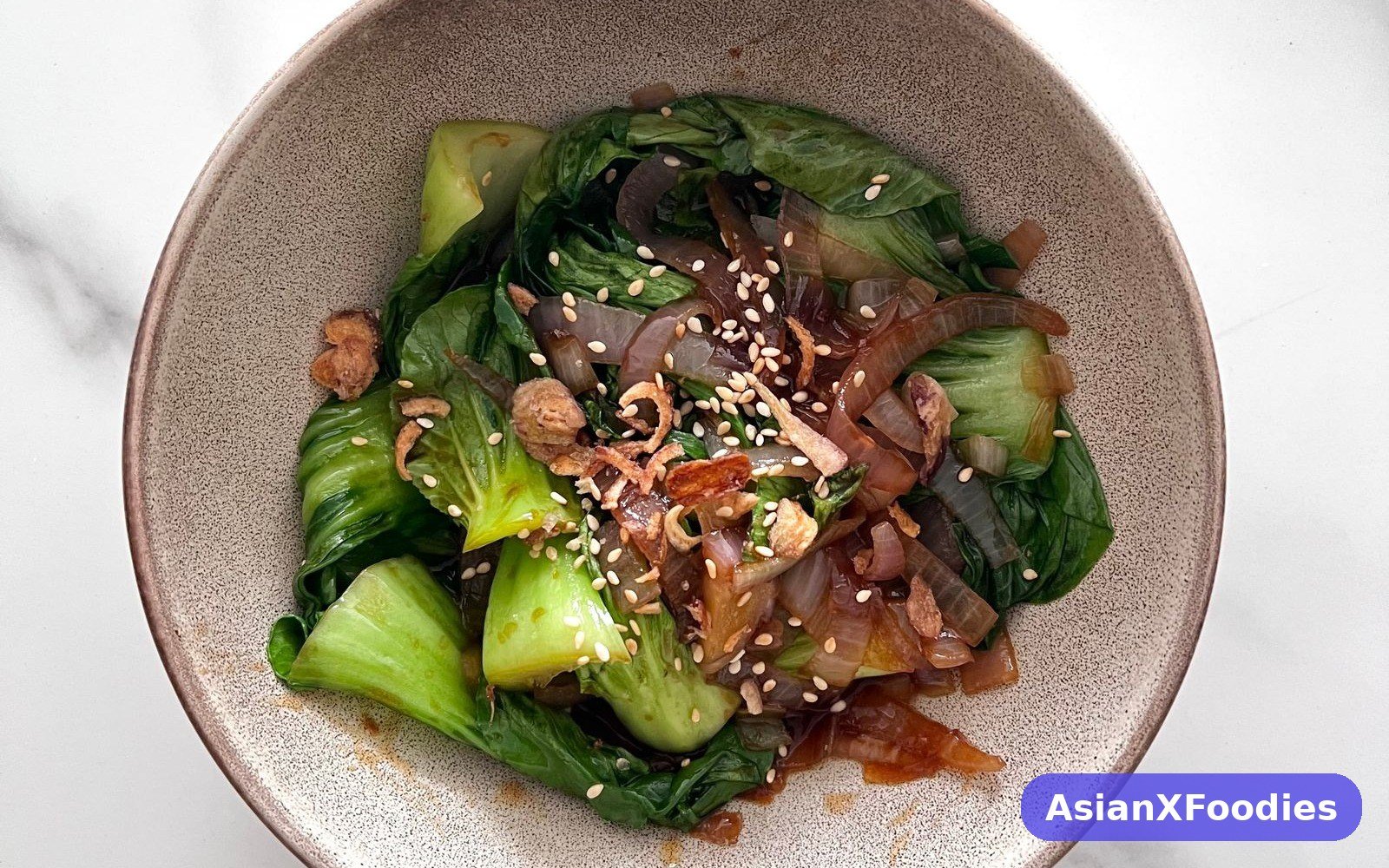
Stir-Fried Bok Choy with Garlic and Ginger
There is a small Chinese restaurant near my old flat that I used to go to on the nights when I was too tired to cook properly but too hungry for toast. I never ordered anything fancy there. I ordered the garlic greens, a plate of bok choy stir-fried with more garlic than seemed reasonable, and I ate it standing at the counter some nights, because I could not wait to get home. The leaves were bright green and just wilted, the white stems were still crisp enough to bite, and the whole plate smelled of garlic and ginger and hot oil. It cost almost nothing, and it was, without exaggeration, one of the best things I ate that year.
I went home and tried to copy it, and my first attempts were honestly embarrassing. I threw everything into a lukewarm pan at once, and the bok choy steamed itself into a sad, grey pile that tasted mostly of water. Then I overcorrected and used a pan so hot that the garlic burned before the bok choy even hit the oil, and the whole dish tasted bitter. It took me a while to understand that a stir-fry is not really about the recipe, it is about the order of things and the heat of the pan. Garlic first, briefly, until it smells amazing but before it colours. Stems next, because they need more time than the leaves. Leaves last, for barely a minute, just until they wilt and turn that vivid green. Once I understood that sequence, the dish became the easiest thing I cook.
This is now the side dish I make more than any other. It takes fifteen minutes from the moment I start washing the bok choy to the moment it is on the table, and it goes with almost everything. I serve it with rice and a piece of chicken, I pile it next to noodles, I eat it on its own with a fried egg on top when I am cooking for one. It is the dish I make when the fridge is nearly empty and I have one head of bok choy and a few cloves of garlic left, and it never lets me down. If you have ever bought bok choy and then stared at it wondering what to do with it, this is your answer.
The secret, if there is one, is to treat the stems and the leaves as two different vegetables, because in the pan, they are. The stems are thick, pale, and juicy, and they need a couple of minutes of real heat to become tender while staying crisp. The leaves are thin and delicate, and they wilt in seconds. Cook them together from the start and you will always end up with either crunchy leaves or soggy stems. Separate them, give the stems a head start, and suddenly everything works. That one habit is the whole recipe, really, and once you have it, you will never cook bok choy any other way.
Why You’ll Love This Recipe
You will love this recipe first of all because it is fast. I am not talking about the kind of fast where the recipe says fifteen minutes but actually takes forty. I mean genuinely fast: wash, chop, fry, serve. The sauce is three things whisked together in a small bowl, the garlic and ginger take thirty seconds in the pan, and the bok choy itself is done in about four minutes. On a weeknight, when you are hungry and the day has been long, that kind of speed matters, and this dish delivers it without tasting like a shortcut.
You will also love it because it is so adaptable. I have made it with baby bok choy, with the big leafy heads, with Shanghai bok choy from the Asian grocer, and with the slightly sad-looking bunch from the supermarket that was on special. All of them work. I have made it with extra chilli when I wanted heat, with a squeeze of lemon when I wanted brightness, and with a handful of toasted sesame seeds when I wanted crunch. The base recipe is a template, and once you know it, you can change it to suit whatever you have and whatever you fancy, and it will still be good.
And then there is the flavour. Garlic and ginger, fried briefly in hot oil, is one of the great smells in cooking, and it makes a simple green vegetable taste like something you would happily pay for in a restaurant. The soy sauce adds salt and depth, the sesame oil adds a nutty warmth, and the little bit of sugar in the sauce rounds everything off so it is savoury rather than sharp. I have served this to people who claimed they did not like green vegetables, and I have watched them go back for seconds. It is proof that a side dish does not have to be complicated to be the thing everyone remembers.
Ingredients You’ll Need
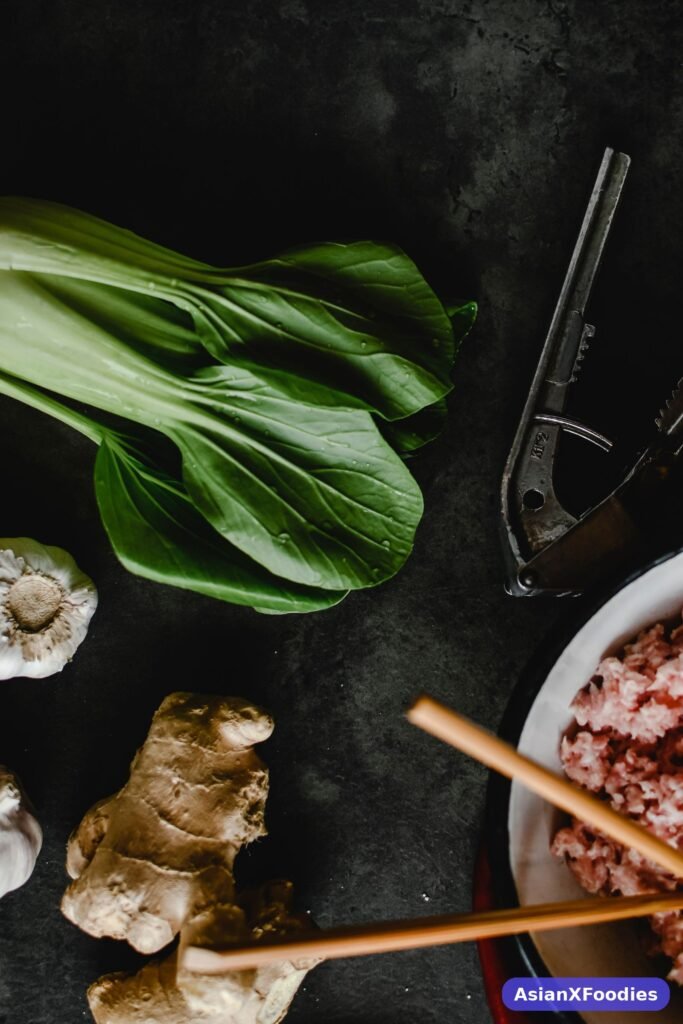
- 500 g (about 1 lb) bok choy, preferably baby bok choy
- 4 cloves garlic, thinly sliced
- 1 tablespoon fresh ginger, peeled and finely grated
- 2 tablespoons vegetable oil, or peanut oil
- 1 tablespoon soy sauce
- 1 teaspoon oyster sauce, optional
- 1 teaspoon toasted sesame oil
- 1/2 teaspoon sugar
- 1/4 teaspoon chilli flakes, optional
- 1 tablespoon water
- 1 spring onion, thinly sliced
- 1 teaspoon toasted sesame seeds, to serve
- 1/2 teaspoon rice vinegar, optional
- Salt, to taste
How to Make Stir-Fried Bok Choy with Garlic and Ginger
Start by washing the bok choy properly, and I mean properly, because bok choy hides grit in the most annoying places. Pull the leaves apart and rinse each one under cold running water, paying attention to the base of the stems where the leaves join, because that little pocket is where soil collects. I learned this the hard way, serving a beautiful plate of bok choy to a friend who crunched down on a mouthful of grit and very politely said nothing, which was somehow worse than complaining. Now I wash each leaf individually, shake off the water, and pat the bok choy dry with a clean tea towel or spin it in a salad spinner. Dry leaves matter more than you might think, because wet bok choy steams in the pan instead of frying, and steamed bok choy is exactly the grey, soggy pile I was trying to avoid.
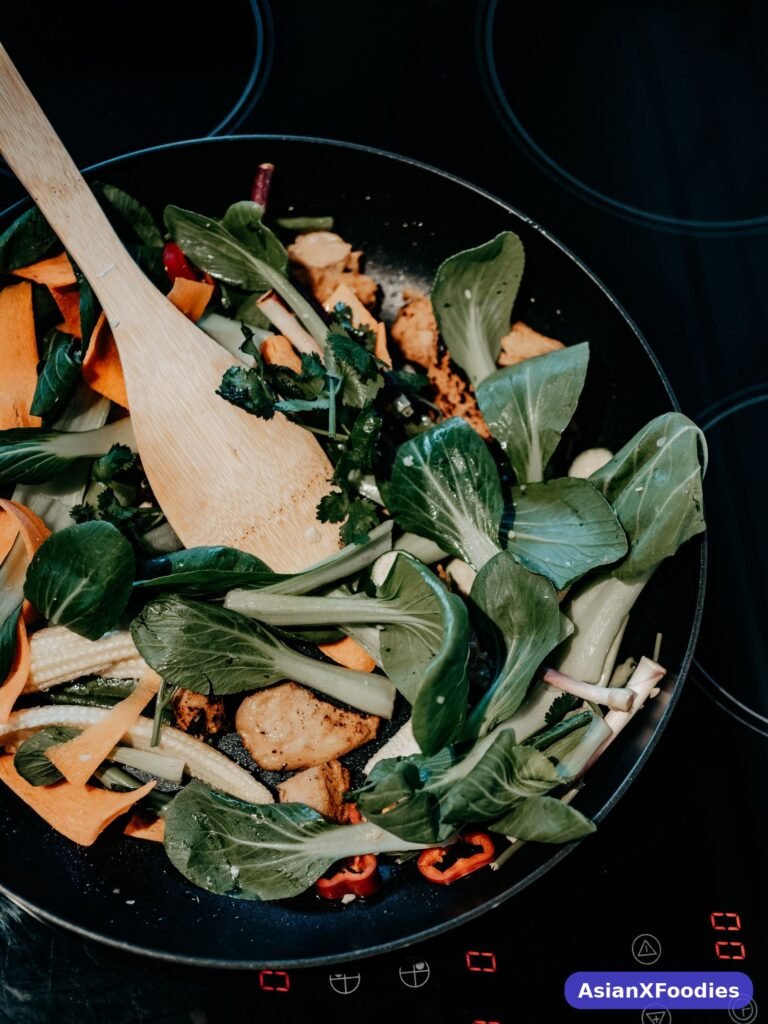
Once the bok choy is clean and dry, cut it up, and this is where the stems-and-leaves separation happens. If you are using baby bok choy, cut each head in half lengthwise, or into quarters if the heads are large. If you are using full-size bok choy, slice the white stems into pieces about two centimetres wide and keep them in one pile, then roughly chop the green leaves and keep them in a separate pile. It feels fussy the first time you do it, but it takes less than a minute, and it is the single most important step in the whole recipe. While you are at it, slice the garlic thinly, grate the ginger, slice the spring onion, and whisk the soy sauce, oyster sauce if you are using it, sesame oil, sugar, chilli flakes, and water together in a small bowl. Stir-frying moves fast once the pan is hot, so you want everything within arm’s reach before you turn the heat on. I set everything out on a plate beside the stove, like a little cooking show, and it makes the whole process feel calm instead of frantic.
Heat a large wok or a wide frying pan over a high heat until it is genuinely hot. You can tell it is ready when a drop of water flicked into the pan sizzles and evaporates almost instantly. Add the vegetable oil and swirl it around so it coats the bottom of the pan, then add the garlic and ginger all at once. They will sizzle immediately, and the smell will fill your kitchen in about ten seconds. Stir them constantly for thirty seconds, no more, because garlic goes from golden to burnt in the blink of an eye, and burnt garlic will ruin the whole dish. You want the garlic pale gold and fragrant, not brown. The moment it smells wonderful, and you will know, add the bok choy stems and toss them through the oil so every piece gets coated. Let the stems cook for about two minutes, stirring every twenty seconds or so, until they turn bright and glossy and start to soften at the edges but still feel firm when you poke one with a fork.
Now add the leaves, and this part happens quickly, so stay at the stove. Toss the leaves through the hot stems and oil, and within thirty seconds they will start to wilt and turn a vivid, almost electric green. That colour change is your signal. Give the sauce a quick stir, because the sugar will have settled at the bottom of the bowl, and pour it all over the bok choy. It will hiss and bubble, and the smell will change again, deeper and more savoury. Toss everything together for another minute, just until the sauce coats every leaf and stem and the leaves are fully wilted but the stems still have a bite to them. Taste a stem. It should be tender-crisp, not soft, not raw, with a little resistance when you bite down. If it is still too firm, give it another thirty seconds. If the leaves look done, take the pan off the heat immediately, because bok choy keeps cooking in its own heat for a minute after you stop, and that minute is often the difference between perfect and overdone.
Tip the bok choy into a serving bowl, scatter the sliced spring onion and toasted sesame seeds over the top, and add a tiny splash of rice vinegar if you like a bit of brightness. Serve it straight away, while it is still hot and the leaves are glossy. I always make this last, after the rice is cooked and the main dish is resting, because it takes four minutes and it is at its best in the first ten minutes after it leaves the pan. For a fuller picture of how the same vegetable behaves in a Japanese-style stir-fry, Just One Cookbook’s bok choy and tofu stir-fry is a wonderful companion recipe, and their tan tan udon shows how beautifully bok choy works blanched and laid over hot noodles.
Tips for the Best Stir-Fried Bok Choy
The most important tip is the one I keep coming back to: keep the pan hot and the bok choy dry. A hot pan and dry leaves give you a quick sear and that lovely glossy finish, while a lukewarm pan and wet leaves give you steamed greens. If your bok choy is still damp after washing, give it a good shake in a colander and then pat it dry. If your pan is not hot enough when the garlic goes in, the garlic will sit in warm oil and turn soft instead of crisp and fragrant, and the whole dish will taste flat. I always let my wok heat for a full minute longer than I think it needs, and I have never regretted it.
The second tip is to not crowd the pan. If you are cooking for a crowd and you have two heads of bok choy, cook them in two batches rather than piling everything in at once. A crowded pan drops in temperature, the bok choy releases water, and you end up steaming instead of frying. Two quick batches take barely longer than one crowded batch, and the result is dramatically better. I learned this cooking for six people one evening, when I piled an enormous amount of bok choy into a medium pan and ended up with a watery mess that nobody enjoyed. Now I cook in batches whenever the pan looks full, and the difference is night and day.
The third tip is about the garlic, and it is simple: watch it like a hawk. Garlic burns fast, and burnt garlic tastes bitter in a way that no amount of soy sauce can fix. If you are nervous, add the garlic and ginger to the oil, count to twenty slowly while stirring, and then add the stems. You will still get all the flavour, and you will not risk burning anything. And if you do burn the garlic, do not try to rescue it. Throw it out, wipe the pan, and start again. It takes two minutes, and it is far better than serving a bitter dish and pretending it was intentional.
Finally, taste before you serve. Bok choy varies, soy sauces vary, and sometimes the dish needs a pinch of salt or an extra drop of sesame oil to come alive. I always taste a stem and a leaf before I put the bowl on the table, and I adjust with a tiny bit more soy sauce or a squeeze of lemon if it needs it. A splash of rice vinegar at the end is my favourite finishing touch, because it lifts all the flavours and stops the dish from feeling heavy, especially if you are serving it with something rich.
Variations to Try
Once you know the basic method, this dish is endlessly changeable. The easiest variation is to add mushrooms, which is what I do most often. Slice a handful of shiitake or chestnut mushrooms, fry them in the oil for a minute before the garlic goes in, and let them get properly golden at the edges. They add an earthy, meaty depth that makes the dish feel more substantial, and they soak up the sauce beautifully. I have also added a handful of cashew nuts, tossed in at the very end so they stay crunchy, which gives the dish a lovely richness and makes it feel like something from a restaurant.
If you like heat, this recipe welcomes it. Add a finely chopped red chilli along with the garlic, or increase the chilli flakes to a full teaspoon, or finish the dish with a drizzle of chilli oil at the table. I have a bottle of chilli crisp in my fridge that I reach for whenever I make this, and a spoonful of it over the finished bok choy, with all its crunchy bits of garlic and chilli, turns a simple side into something I crave. If you prefer things milder, leave the chilli out entirely and add a little extra ginger instead, which gives warmth without heat.
For a more substantial version, add protein to the pan. Thinly sliced chicken, cooked first and set aside, then tossed back in with the leaves, turns this into a complete meal with rice. Tofu works beautifully too, especially if you fry it until it is golden and crisp before you start the bok choy. And if you are cooking for someone who does not eat soy sauce, the dish works with tamari, which is gluten-free, or with a splash of fish sauce instead, which gives a different, deeper saltiness. I have made all of these versions, and every one of them has earned a place in my regular rotation.
Serving Ideas
This bok choy is the side dish I reach for whenever I need something green and fast to go with an Asian main. It is perfect next to easy garlic soy chicken stir-fry with vegetables, where the garlicky greens echo the flavours of the chicken without competing with them. It is equally good with easy Chinese garlic noodles with vegetables, piled on top of the noodles so the sauce drips down and flavours everything underneath. I have served it with crispy Asian tofu without cornstarch for a completely vegetarian dinner that still felt generous and satisfying, and with one-pan Thai green curry with vegetables when I wanted something fresh and crisp to cut through the richness of the coconut curry.
It also works outside of Asian cooking, which surprised me the first time I tried it. I have served it with roast chicken and mashed potatoes, where the garlic and ginger gave the plate a lift that plain steamed greens never manage. I have put it in a lunchbox with rice and a fried egg, and eaten it cold at my desk, and it was still good, although it is definitely at its best hot. And on the nights when I am cooking for one and cannot be bothered with a full meal, I make a double portion of this bok choy, fry an egg, and eat the whole thing straight out of the bowl with chopsticks while standing in the kitchen. It is not elegant, but it is honest, and it is delicious.
Storage and Reheating
Stir-fried bok choy is best eaten fresh, and I will not pretend otherwise. The leaves wilt further as they sit, and the stems lose their crispness, so a plate that was perfect at dinner will be softer by lunchtime the next day. That said, leftovers are still perfectly good, and I never throw them away. Store any leftover bok choy in an airtight container in the fridge for up to two days, and eat it cold in a noodle bowl or a grain bowl, where the softer texture does not matter, or reheat it very briefly.
To reheat, warm a small amount of oil in a pan over a high heat, add the leftover bok choy, and toss it for thirty seconds, just until it is warm through. Do not microwave it for a long time, because the microwave will steam the leaves and turn them limp and grey. If you do use a microwave, heat it in fifteen-second bursts and stop as soon as it is warm. I do not recommend freezing stir-fried bok choy, because the leaves turn to mush when they thaw, and the texture is never the same again. If you have raw bok choy that you will not use in time, blanch it for one minute, cool it in cold water, and freeze that instead, then stir-fry it from frozen another day.
Frequently Asked Questions
Why did my bok choy turn out soggy?
Soggy bok choy almost always comes down to water in the pan. Either the leaves were still wet when they went in, or the pan was not hot enough, or it was too crowded. Dry the leaves thoroughly, heat the pan until it is genuinely hot, and cook in batches if you need to. You should hear a confident sizzle when the bok choy hits the oil. If you hear a gentle hiss instead, the pan is not hot enough.
Should I use baby bok choy or regular bok choy?
Both work well, and I use whichever one looks freshest at the shop. Baby bok choy is more tender, looks beautiful halved on the plate, and cooks a little faster. Full-size bok choy has thicker stems that stay wonderfully crisp, and it is usually cheaper. If you are using full-size heads, separate the stems and leaves and give the stems a good two minutes before the leaves go in. If you are using baby bok choy, the stems are thinner, so a minute is often enough.
Can I make this without oyster sauce?
Yes, absolutely. The oyster sauce adds a little depth and a touch of sweetness, but the dish is still delicious without it. Just add an extra half teaspoon of soy sauce and a tiny pinch more sugar to make up for it. If you are vegetarian, look for a mushroom-based oyster sauce, which gives a similar savoury flavour without any shellfish, and it works beautifully here.
How do I keep the garlic from burning?
Garlic burns when it sits in hot oil for too long without anything else in the pan to cool things down. Keep it moving with a spatula or tongs, and add the bok choy stems after about thirty seconds, because the stems bring the temperature down and stop the garlic from browning further. If your stove runs very hot, you can also add the garlic and ginger together with the stems, which is a gentler method and still gives you plenty of flavour.
Can I add other vegetables to this stir-fry?
Yes, and I often do. Sliced mushrooms, thinly sliced carrots, sugar snap peas, and sliced peppers all work well. Add the firmer vegetables, like carrots, with the bok choy stems, and add the quicker ones, like sugar snap peas, with the leaves. The key is to keep the total amount in the pan manageable so everything fries rather than steams. If you are adding a lot, cook in two batches.
Is bok choy healthy?
Bok choy is a wonderfully nutritious vegetable, low in calories and rich in vitamins A, C, and K, as well as calcium and folate. It is a member of the cabbage family, and like other leafy greens, it is a great addition to a balanced diet. This recipe keeps things light, with just a small amount of oil and a simple sauce, so it is a genuinely healthy side dish that also happens to taste wonderful.