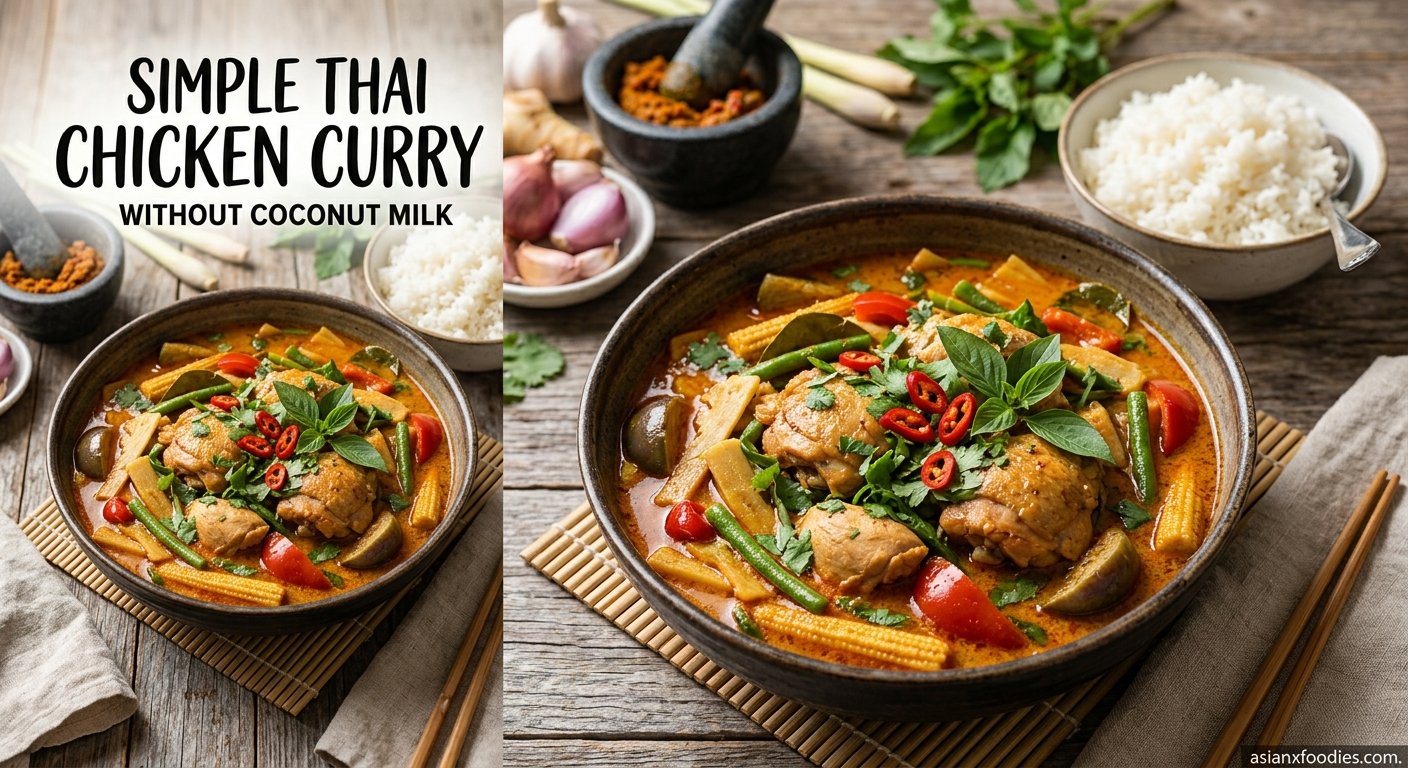
Simple Thai Chicken Curry Without Coconut Milk – Easy, Flavorful, and Homemade
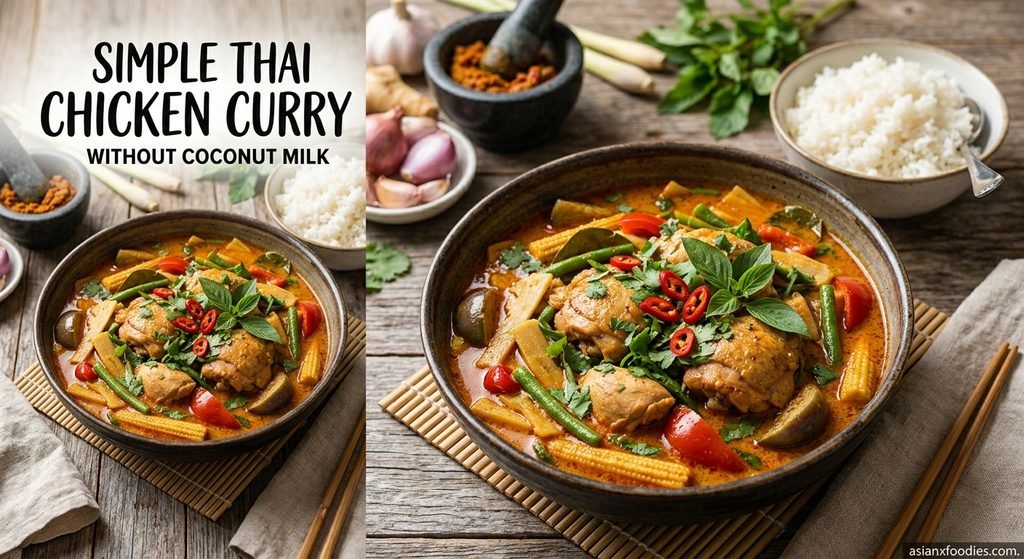
Thai chicken curry is known for its rich aroma, delicious spices, and comforting flavor. Traditionally, many Thai curry recipes use coconut milk to create a creamy texture and balance the heat of the curry paste. However, if you do not have coconut milk at home, prefer a lighter curry, or simply want to try something different, you can still make a delicious simple Thai chicken curry without coconut milk.
This easy homemade Thai chicken curry uses tender chicken, fresh vegetables, aromatic herbs, and a flavorful combination of Thai-inspired seasonings. Instead of coconut milk, a savory broth-based sauce brings all the ingredients together while allowing the spices and herbs to shine.
The best part is that you do not need complicated cooking techniques or expensive ingredients to prepare this recipe. It is perfect for busy weeknights, beginner cooks, and anyone who enjoys a warm, satisfying homemade meal. You can serve it with steamed jasmine rice, noodles, or even plain basmati rice for a complete dinner.
Whether you are looking for a quick chicken curry recipe, a lighter alternative to traditional Thai curry, or a simple way to use ingredients already in your kitchen, this recipe is worth trying.
What Is Thai Chicken Curry Without Coconut Milk?
Thai chicken curry without coconut milk is a lighter, broth-based version of traditional Thai-inspired chicken curry. It combines chicken pieces with Thai red or green curry paste, garlic, ginger, vegetables, and flavorful seasonings to create a delicious sauce without using coconut milk.
Traditional Thai curries often have a creamy consistency because of coconut milk. In this version, chicken broth creates a thinner but flavorful sauce. A small amount of cornstarch can be added if you prefer a slightly thicker consistency.
Although this recipe is inspired by Thai cooking, it is a simplified homemade variation rather than a traditional Thai curry. It is flexible, easy to prepare, and suitable for cooks who want to enjoy Thai-inspired flavors without coconut milk.
Why You Will Love This Simple Thai Chicken Curry
There are many reasons to add this easy Thai chicken curry to your regular dinner rotation.
- No coconut milk required: You can enjoy a flavorful curry without opening a can of coconut milk or looking for a substitute.
- Simple ingredients: Most of the ingredients are easy to find in regular grocery stores.
- Quick preparation: The recipe comes together in approximately 30–35 minutes, making it ideal for busy evenings.
- Full of flavor: Thai curry paste, garlic, ginger, lime juice, and fish sauce create a delicious balance of savory, spicy, and tangy flavors.
- Easy to customize: You can adjust the spice level, choose your favorite vegetables, and make the sauce thinner or thicker.
- Perfect for beginners: The cooking process is straightforward, with no complicated techniques required.
- Great for meal prep: Leftovers can be refrigerated and reheated for a convenient lunch or dinner.
Ingredients for Simple Thai Chicken Curry Without Coconut Milk
You only need a handful of everyday ingredients to make this delicious chicken curry. Each ingredient contributes to the overall taste, aroma, or texture of the dish.
Main Ingredients
- 1 pound boneless, skinless chicken breast or thighs, cut into bite-sized pieces
- 1 tablespoon vegetable oil
- 1 small onion, thinly sliced
- 3 cloves garlic, minced
- 1 tablespoon freshly grated ginger
- 2 tablespoons Thai red curry paste
- 1 red bell pepper, sliced
- 1 cup broccoli florets
- 1 ½ cups low-sodium chicken broth
- 1 tablespoon fish sauce
- 1 teaspoon soy sauce
- 1 teaspoon brown sugar
- 1 tablespoon fresh lime juice
- 1 teaspoon cornstarch (optional)
- 1 tablespoon cold water (if using cornstarch)
- Salt to taste
- Black pepper to taste
Optional Garnishes
- Fresh cilantro, chopped
- Fresh Thai basil leaves
- Sliced green onions
- Lime wedges
- Thinly sliced red chili
- Sesame seeds
You can adjust these ingredients according to your taste and what you already have available. For a milder curry, begin with one tablespoon of curry paste and add more as needed.
How to Make Simple Thai Chicken Curry Without Coconut Milk
Making Thai chicken curry at home is easier than you might think. Follow these simple steps to prepare a flavorful curry with tender chicken and a delicious broth-based sauce.
Step 1: Prepare the Chicken
Start by cutting the chicken into small, evenly sized pieces. This helps the chicken cook quickly and evenly.
Place the chicken in a bowl and season it with a little salt and black pepper. Mix gently so that the seasoning coats all the pieces.
If you are using chicken thighs, trim away any excess fat before cutting them into bite-sized pieces. Chicken thighs tend to remain juicy during cooking, while chicken breast offers a leaner option.
Set the seasoned chicken aside while you prepare the remaining ingredients.
Step 2: Heat the Oil
Place a large skillet, wok, or deep frying pan over medium heat. Add one tablespoon of vegetable oil and allow it to warm.
Once the oil is hot, add the sliced onion. Cook for approximately 3–4 minutes, stirring occasionally, until the onion softens and becomes slightly translucent.
Avoid browning the onion too much because the goal is to create a gentle, aromatic base for the curry.
Step 3: Add Garlic and Ginger
Add the minced garlic and freshly grated ginger to the skillet.
Stir continuously for about 30–60 seconds until fragrant. Garlic and ginger provide an aromatic foundation that complements the bold flavor of Thai curry paste.
Be careful not to burn the garlic, as it can become bitter and affect the taste of the entire dish.
Step 4: Cook the Thai Curry Paste
Add two tablespoons of Thai red curry paste to the skillet.
Stir the paste into the onion, garlic, and ginger mixture. Cook for approximately 1–2 minutes, stirring frequently.
Heating the curry paste briefly helps release its aroma and distribute its flavor throughout the dish.
You can use Thai green curry paste if you prefer a different flavor profile. Keep in mind that the spice level and ingredients vary between brands, so check the label and adjust the amount to your taste.
Step 5: Add the Chicken
Add the seasoned chicken pieces to the skillet. Stir well so that the curry paste coats the chicken evenly.
Cook for approximately 4–5 minutes, stirring occasionally, until the outside of the chicken is no longer pink.
The chicken does not need to be completely cooked at this stage because it will continue cooking in the broth.
Avoid overcrowding the pan. If necessary, cook the chicken in batches to help it brown lightly instead of steaming.
Step 6: Pour in the Chicken Broth
Slowly pour 1 ½ cups of chicken broth into the skillet.
Stir well, scraping the bottom of the pan to release any flavorful bits that may have stuck to it.
Add the fish sauce, soy sauce, and brown sugar. Mix everything together until the seasonings are evenly distributed.
Bring the mixture to a gentle simmer over medium heat. Avoid boiling it aggressively because a gentle simmer helps keep the chicken tender.
Step 7: Add the Vegetables
Add the sliced red bell pepper and broccoli florets to the skillet.
Stir gently to combine the vegetables with the chicken and curry sauce.
Cover the skillet partially and cook for approximately 6–8 minutes, or until the vegetables are tender but still slightly crisp and the chicken is fully cooked.
The exact cooking time depends on the size of your chicken pieces and the vegetables you use.
For food safety, cook chicken until its internal temperature reaches 165°F (74°C), measured with a food thermometer.
Step 8: Adjust the Sauce
Taste the curry and adjust the seasoning as needed.
If you want a more savory flavor, add a little extra fish sauce or soy sauce. If the curry is too spicy, add a little more broth. For extra brightness, squeeze in additional lime juice.
If you prefer a thicker sauce, mix one teaspoon of cornstarch with one tablespoon of cold water in a small bowl.
Pour the mixture into the simmering curry while stirring continuously. Cook for another 1–2 minutes until the sauce thickens slightly.
You can skip the cornstarch if you prefer a light, thin curry sauce.
Step 9: Add Fresh Lime Juice
Turn the heat to low and stir in one tablespoon of fresh lime juice.
The lime juice adds a bright, tangy flavor that balances the savory curry paste and seasonings.
Taste the curry one final time and adjust the salt, pepper, or lime juice according to your preference.
Avoid adding too much lime juice at once. A little goes a long way in creating a balanced flavor.
Step 10: Garnish and Serve
Remove the skillet from the heat.
Sprinkle fresh cilantro, Thai basil, or sliced green onions over the curry. You can also add thinly sliced red chili if you enjoy extra heat.
Serve the simple Thai chicken curry immediately while it is warm and aromatic.
For a complete meal, pair it with steamed jasmine rice, basmati rice, or noodles.
Tips for Making the Best Thai Chicken Curry Without Coconut Milk
A few simple cooking tips can make a noticeable difference in the flavor and texture of your homemade curry.
Choose the right curry paste: Thai red curry paste usually provides a warm, moderately spicy flavor, while green curry paste often has a fresher, herbaceous taste. Start with a small amount and adjust it according to your preferred spice level.
Use fresh aromatics: Fresh garlic and ginger add a wonderful fragrance to the curry. Although powdered alternatives can work in a pinch, fresh ingredients generally provide a brighter flavor.
Do not overcook the chicken: Chicken breast can become dry if cooked for too long. Cut the chicken into evenly sized pieces and simmer gently until it reaches a safe internal temperature.
Balance the flavors: Thai-inspired cooking often combines savory, spicy, sweet, and sour elements. Fish sauce adds saltiness, brown sugar balances the heat, and lime juice provides acidity. Adjust these ingredients gradually until the curry tastes balanced.
Avoid adding too much broth: Since this recipe does not contain coconut milk, too much broth can make the curry taste watery. Begin with the recommended quantity and add more only if needed.
Use fresh vegetables: Bell peppers, broccoli, carrots, zucchini, and green beans all work well in this recipe. Choose vegetables that cook in a similar amount of time or add firmer vegetables earlier.
What Can You Use Instead of Coconut Milk?
If you are preparing Thai chicken curry without coconut milk, you might wonder how to create a satisfying sauce without it.
Chicken broth is the main liquid in this recipe. It allows the curry paste and seasonings to provide most of the flavor without making the dish heavy.
Here are a few other options you can consider.
- Vegetable broth: A useful alternative if you want a lighter flavor or are making a curry with chicken and vegetables.
- Unsweetened soy milk: A small amount may provide some body, although it will change the flavor and is not a traditional Thai substitute.
- Evaporated milk: Can make the sauce creamier, but it introduces dairy and changes the overall taste.
- Cashew cream: Blended cashews and water can create a rich texture if you want a dairy-free, creamier version and have no nut allergies.
For this particular recipe, chicken broth is the simplest option because it keeps the curry light and allows the aromatic ingredients to stand out.
Best Vegetables to Add to Thai Chicken Curry
One of the best things about homemade chicken curry is that you can easily customize it with your favorite vegetables.
- Bell peppers: Add a mild sweetness, color, and a slightly crisp texture.
- Broccoli: Absorbs the flavorful sauce and provides a satisfying bite.
- Carrots: Bring natural sweetness and work particularly well with spicy curry paste.
- Zucchini: Becomes tender quickly and adds a soft texture.
- Green beans: Provide a fresh, crisp bite that contrasts nicely with the tender chicken.
- Mushrooms: Add an earthy, savory flavor that complements the curry.
- Baby spinach: Can be stirred in during the final minute of cooking for extra greens.
Avoid adding too many vegetables at once, as they can release moisture and dilute the sauce.
What to Serve with Thai Chicken Curry
This simple Thai chicken curry without coconut milk pairs well with a variety of side dishes.
Steamed jasmine rice: Jasmine rice is a classic accompaniment for Thai-inspired curries. Its delicate aroma and fluffy texture make it ideal for soaking up the savory sauce.
Basmati rice: If jasmine rice is not available, basmati rice is an excellent alternative. Its light texture complements the broth-based curry.
Rice noodles: Soft rice noodles make the curry feel like a complete noodle bowl. You can serve the curry over cooked noodles or add the noodles separately to prevent them from becoming too soft.
Stir-fried vegetables: A side of lightly stir-fried vegetables adds extra color, texture, and nutrients to your meal.
Fresh cucumber salad: A refreshing cucumber salad with lime juice can balance the warmth and spice of the curry.
For an easy weeknight dinner, simply serve the curry with steamed rice and a few lime wedges.
Variations of Simple Thai Chicken Curry
This recipe is flexible enough to accommodate different tastes, ingredients, and dietary preferences.
Spicy Thai Chicken Curry
If you enjoy spicy food, increase the amount of Thai red curry paste gradually. You can also add finely chopped fresh red chili or a pinch of chili flakes.
Keep in mind that different curry paste brands have different heat levels, so taste as you go.
Mild Thai Chicken Curry
For a milder version, begin with one tablespoon of curry paste instead of two. Add a little extra broth if the flavor feels too intense.
You can also add a small amount of brown sugar to balance the heat without making the curry overly sweet.
Thai Chicken Curry with Vegetables
For a vegetable-rich version, increase the quantity of broccoli, bell peppers, carrots, and green beans. You can reduce the amount of chicken slightly if you prefer a lighter meal.
Add vegetables according to their cooking time so that everything becomes tender without turning mushy.
Thai Chicken Curry with Chicken Thighs
Chicken thighs are a great option if you prefer juicy, tender meat. Boneless, skinless thighs work particularly well in this recipe because they remain moist during simmering.
Cut them into evenly sized pieces and cook until they reach an internal temperature of 165°F (74°C).
Creamier Thai-Inspired Chicken Curry
If you want a creamier consistency without coconut milk, stir in a small amount of unsweetened dairy or cashew cream near the end of cooking.
This is an optional variation rather than a necessary step. The original broth-based recipe is flavorful on its own.
How to Store and Reheat Leftover Chicken Curry
This Thai chicken curry is a convenient meal-prep option because leftovers can be stored and enjoyed later.
Allow the curry to cool slightly, then transfer it to an airtight container. Refrigerate it within two hours of cooking.
Refrigeration: Store the curry in the refrigerator for up to 3–4 days.
Freezing: You can freeze the curry in a freezer-safe airtight container for approximately 2–3 months for best quality. The vegetables may become softer after thawing.
Reheating on the stove: Place the curry in a saucepan over medium-low heat. Stir occasionally and add a splash of chicken broth if the sauce has thickened too much. Heat until steaming hot throughout.
Reheating in the microwave: Transfer an individual portion to a microwave-safe bowl, cover loosely, and heat in short intervals, stirring between each interval, until thoroughly hot.
When reheating leftovers, make sure the curry reaches 165°F (74°C). Avoid repeatedly cooling and reheating the same portion.
Common Mistakes to Avoid
Even a simple chicken curry can turn out less flavorful if a few basic cooking steps are overlooked.
Adding too much curry paste: Too much paste can make the curry overwhelmingly spicy or salty. Start with the recommended quantity and adjust after tasting.
Burning the garlic: Garlic cooks quickly. Add it after the onion softens and stir continuously to prevent it from burning.
Using too much broth: Excess liquid can make the sauce watery. Add broth gradually and thicken the sauce with cornstarch if needed.
Overcooking the vegetables: Vegetables such as broccoli and zucchini can become mushy if simmered for too long. Add them at the appropriate stage and check their texture regularly.
Skipping the lime juice: A small amount of lime juice brightens the curry and balances the savory ingredients. Add it toward the end of cooking for a fresher taste.
Cooking chicken at an excessively high temperature: A rapid boil can make chicken breast tough. Keep the curry at a gentle simmer and check that the chicken is fully cooked.
Frequently Asked Questions
Can I make Thai chicken curry without coconut milk?
Yes, you can make a flavorful Thai-inspired chicken curry without coconut milk. Chicken broth, curry paste, garlic, ginger, fish sauce, soy sauce, and lime juice create a delicious savory sauce. The result is lighter and thinner than a traditional coconut-milk curry.
Is Thai chicken curry without coconut milk spicy?
It depends on the curry paste you use and how much you add. Thai red and green curry pastes can range from mild to very spicy. Start with a small quantity and increase it gradually until you reach your preferred heat level.
Can I use chicken breast instead of chicken thighs?
Absolutely. Boneless, skinless chicken breast is an excellent option for this recipe. Cut it into evenly sized pieces and avoid overcooking it to help maintain a tender texture.
How do I thicken Thai chicken curry without coconut milk?
You can thicken the curry by simmering it uncovered for a few minutes to reduce the liquid. Alternatively, mix one teaspoon of cornstarch with one tablespoon of cold water and stir it into the simmering sauce. Cook until the sauce reaches your desired consistency.
Can I make this recipe ahead of time?
Yes, you can prepare the curry ahead of time and refrigerate it in an airtight container for up to 3–4 days. Reheat it thoroughly before serving. For the freshest vegetable texture, you may prefer to cook the vegetables slightly less if you know you will be reheating the curry later.
Can I make this Thai chicken curry dairy-free?
Yes. The basic recipe is naturally dairy-free as long as your curry paste and other packaged ingredients do not contain dairy. Always check product labels, especially if you have a food allergy.
What type of curry paste should I use?
Thai red curry paste is a convenient choice for this recipe because it provides a savory, aromatic, and moderately spicy flavor. Thai green curry paste is another option if you prefer a different herbal flavor. Check the ingredient list to ensure it meets your dietary requirements.
Can I use water instead of chicken broth?
Yes, water can be used if you do not have chicken broth. However, the curry may have a less rich flavor. You can compensate by carefully adjusting the curry paste, fish sauce, and other seasonings.
Is this recipe suitable for meal prep?
Yes, this recipe works well for meal prep. Divide the cooked curry into individual airtight containers and refrigerate promptly. Serve with freshly prepared rice or noodles for a convenient meal during the week.
Nutritional Information
The nutritional values below are approximate and will vary depending on the chicken cut, curry paste brand, amount of oil, and portion size.
Estimated nutrition per serving (without rice):
- Calories: 280–340
- Protein: 30–36 g
- Carbohydrates: 12–18 g
- Fat: 10–16 g
- Fiber: 3–5 g
- Sugar: 4–7 g
- Sodium: Varies depending on the broth, curry paste, and sauces used
For more accurate nutritional information, calculate the values using the exact brands and quantities of ingredients in your kitchen.
Final Thoughts
This simple Thai chicken curry without coconut milk is a delicious way to enjoy Thai-inspired flavors using straightforward ingredients and an easy cooking method. The combination of tender chicken, aromatic garlic and ginger, colorful vegetables, and flavorful curry paste creates a satisfying meal without the richness of coconut milk.
Whether you are cooking for your family, preparing a quick weeknight dinner, or looking for a lighter alternative to traditional coconut-based curry, this recipe is easy to adapt to your needs. You can make it spicy or mild, add your favorite vegetables, or adjust the sauce to your preferred consistency.
Serve it hot with jasmine rice, basmati rice, or noodles, and finish with fresh lime juice and herbs for a bright, flavorful meal.
Once you try this homemade Thai-inspired chicken curry, you may find yourself returning to it whenever you want something comforting, simple, and full of flavor.