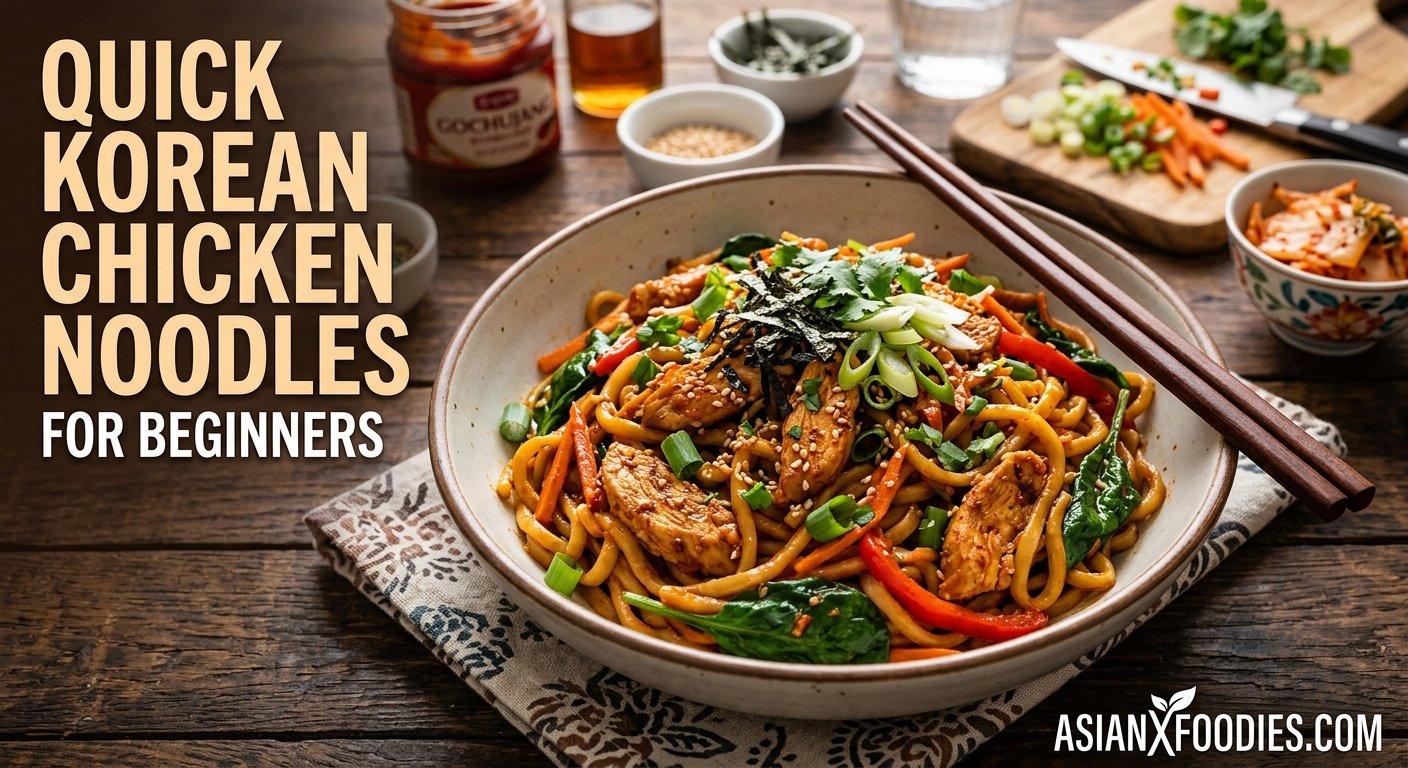
Quick Korean Chicken Noodles for Beginners – Easy, Flavorful, and Ready in 30 Minutes
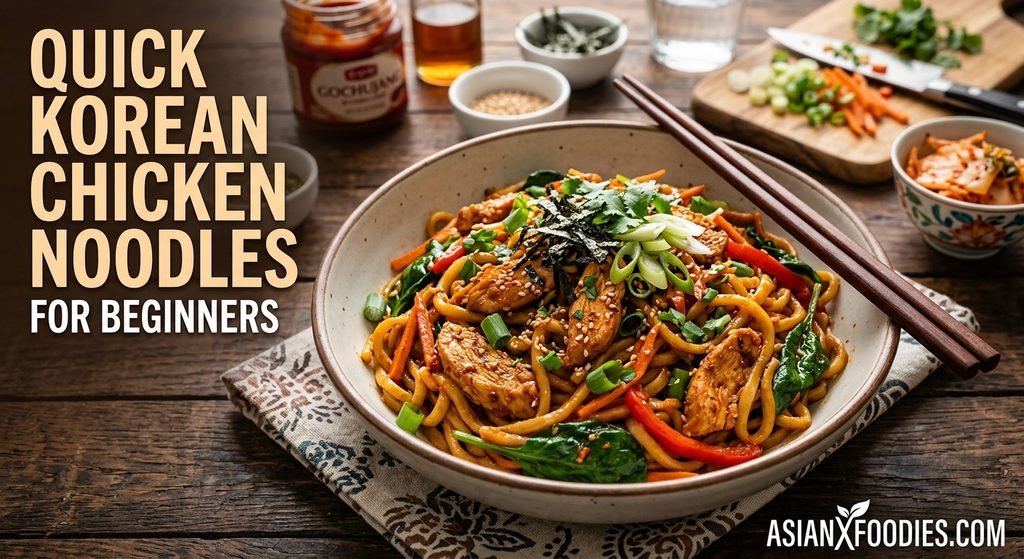
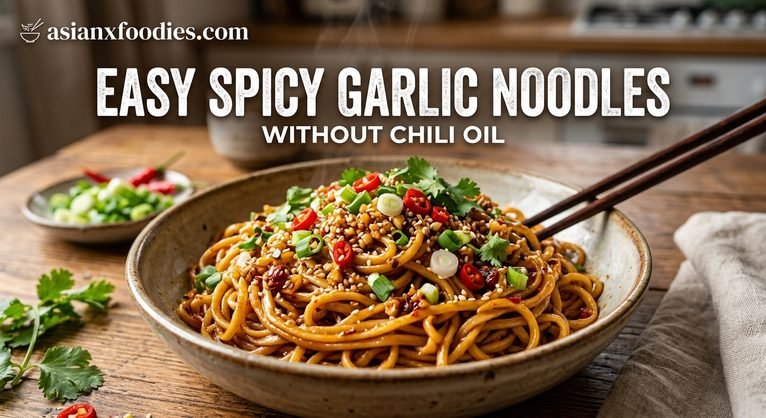
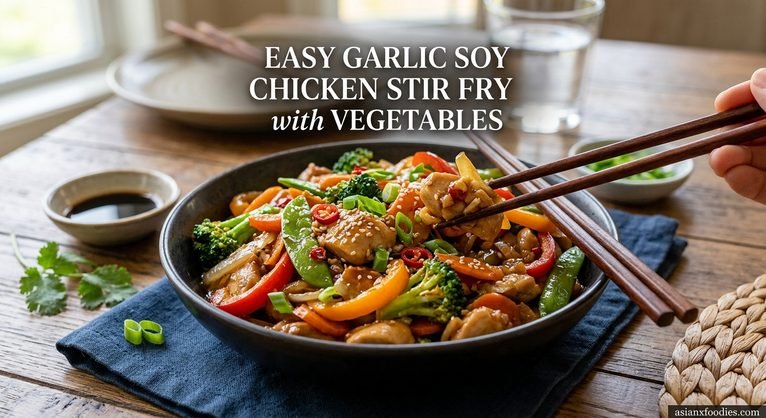
If you love Korean-inspired food but think it is difficult to prepare at home, these quick Korean chicken noodles for beginners are the perfect place to start. This simple recipe combines tender chicken, chewy noodles, fresh vegetables, garlic, and a delicious Korean-style sauce to create a satisfying meal without complicated cooking techniques or hard-to-find ingredients.
Whether you are a beginner in the kitchen, a busy student, or someone looking for a quick weeknight dinner, this easy Korean chicken noodle recipe is worth trying. It brings together sweet, savory, slightly spicy, and garlicky flavors in one pan, making every bite delicious.
The best part is that you do not need special Korean cooking equipment or professional cooking skills. With a few basic ingredients and around 30 minutes, you can make a homemade Korean-inspired noodle dish that tastes just as satisfying as takeout.
In this guide, you will learn how to make quick Korean chicken noodles step by step, which ingredients to use, how to prepare the sauce, and how to customize the recipe according to your taste.
What Are Quick Korean Chicken Noodles?
Quick Korean chicken noodles are a Korean-inspired noodle dish made with cooked chicken, noodles, vegetables, and a flavorful sauce that typically includes soy sauce, garlic, sesame oil, and a little sweetness. Depending on your preference, you can also add Korean gochujang, which is a fermented red chili paste commonly used in Korean cooking.
This beginner-friendly version focuses on simple ingredients that are easy to find in most grocery stores. It is not intended to be a traditional Korean dish but rather an easy homemade meal inspired by Korean flavors.
The combination of juicy chicken, soft noodles, crunchy vegetables, and a rich sauce makes this recipe perfect for lunch or dinner. You can easily adjust the spice level, add your favorite vegetables, or use different types of noodles based on what you already have in your kitchen.
Why You Will Love This Easy Korean Chicken Noodles Recipe
There are plenty of reasons to add this quick Korean chicken noodle recipe to your weekly meal rotation.
- Beginner-friendly: The instructions are simple, and you do not need advanced cooking skills.
- Ready in 30 minutes: This recipe is ideal for busy evenings when you want something homemade without spending hours in the kitchen.
- Full of flavor: Garlic, soy sauce, honey, and gochujang create a delicious balance of sweet, savory, and spicy flavors.
- Easy to customize: You can use your favorite vegetables, noodles, and protein alternatives.
- One-pan friendly: You can cook the chicken and vegetables in one skillet and combine everything with the noodles.
- Budget-friendly: Most ingredients are affordable pantry staples, making this an economical meal.
- Perfect for meal prep: You can prepare the ingredients in advance to make cooking even faster.
This recipe is also a great way to introduce yourself to Korean-inspired flavors without feeling overwhelmed by unfamiliar ingredients.
Preparation and Cooking Time
Prep time
10 minutes
Cook time
20 minutes
Total time
30 minutes
Servings
2–3 people
Difficulty
Easy
Cooking method
Stovetop
Ingredients for Quick Korean Chicken Noodles
One of the best things about this easy Korean chicken noodles recipe is that it uses simple ingredients. You may already have several of them in your kitchen.

Main Ingredients
- 200 grams boneless chicken breast: Cut into thin strips so it cooks quickly and absorbs the sauce.
- 200 grams noodles: Use egg noodles, ramen noodles, wheat noodles, or your favorite stir-fry noodles.
- 1 tablespoon vegetable oil: For cooking the chicken and vegetables.
- 1 medium carrot: Thinly sliced or julienned for a little sweetness and crunch.
- 1 small bell pepper: Sliced into thin strips to add color and freshness.
- 1 cup shredded cabbage: Adds texture and makes the dish more filling.
- 2 green onions: Chopped for a fresh, mildly sharp flavor.
- 3 cloves garlic: Minced to create a rich, aromatic base.
- 1 teaspoon grated ginger: Adds warmth and a classic Asian-inspired flavor.
Ingredients for Korean-Style Sauce
- 3 tablespoons soy sauce: Provides the savory foundation of the sauce.
- 1 tablespoon gochujang: Adds Korean chili flavor and a mild fermented depth. Adjust according to your spice preference.
- 1 tablespoon honey or brown sugar: Balances the saltiness and heat.
- 1 tablespoon sesame oil: Gives the noodles a nutty aroma.
- 1 tablespoon rice vinegar: Adds a pleasant tanginess.
- 2 tablespoons water: Helps thin the sauce so it coats the noodles evenly.
- ½ teaspoon black pepper: Adds mild warmth.
- ½ teaspoon red chili flakes (optional): For extra heat.
Optional Toppings
- Toasted sesame seeds
- Extra chopped green onions
- Thinly sliced red chili
- A squeeze of lime
- A fried egg
If you cannot find gochujang, you can use a little chili paste or chili sauce instead. The flavor will be different, but the dish will still be delicious.
How to Make Quick Korean Chicken Noodles for Beginners
Making Korean chicken noodles at home is easier than it may seem. Follow these straightforward steps to prepare a flavorful meal without unnecessary complications.

Step 1: Prepare the Chicken
Start by washing and preparing your vegetables, then cut the boneless chicken breast into thin, evenly sized strips. Keeping the chicken pieces similar in size helps them cook at the same rate.
Pat the chicken dry with a paper towel to remove excess moisture. This helps it brown more effectively when it reaches the hot pan.
Season the chicken lightly with black pepper and one teaspoon of soy sauce. You do not need to add too much seasoning at this stage because the Korean-style sauce will provide most of the flavor.
Set the chicken aside while you prepare the remaining ingredients.
Step 2: Cook the Noodles
Bring a large pot of water to a boil and cook the noodles according to the instructions on the package. Different noodles require different cooking times, so check them regularly.
For stir-fried noodles, it is usually best to cook them until just tender rather than overly soft. They will be heated again in the pan with the sauce, so slightly firm noodles are ideal.
Once cooked, drain the noodles and rinse briefly with cool water if the package directions recommend it or if you need to prevent them from sticking. Toss with a few drops of oil if necessary, then set aside.
Avoid overcooking the noodles, as they can become mushy when mixed with the sauce.
Step 3: Prepare the Korean-Style Sauce
In a small bowl, combine the soy sauce, gochujang, honey, sesame oil, rice vinegar, water, and red chili flakes if using.
Mix everything with a spoon or small whisk until the ingredients are well combined. The sauce should be smooth enough to pour easily over the noodles.
Taste a small amount and adjust the flavors if needed. Add more honey for sweetness, a little vinegar for tanginess, or a small amount of gochujang for extra spice.
Preparing the sauce before cooking makes the entire process easier, especially if you are new to stir-frying.
Step 4: Cook the Chicken
Heat the vegetable oil in a large skillet or wok over medium-high heat.
Add the chicken strips in a single layer, leaving a little space between the pieces. Cook for approximately 5–7 minutes, turning occasionally, until the chicken is golden and thoroughly cooked.
The exact cooking time will depend on the thickness of the chicken pieces. Make sure the thickest pieces reach an internal temperature of 165°F (74°C).
Once the chicken is fully cooked, transfer it to a clean plate and set aside. This prevents it from overcooking while you prepare the vegetables.
Step 5: Stir-Fry the Vegetables
In the same skillet, add the sliced carrots, bell pepper, and shredded cabbage. If the pan looks dry, add a small splash of oil or water.
Stir-fry the vegetables for about 3–4 minutes over medium-high heat. You want them to become slightly tender while retaining some crunch.
Add the minced garlic and grated ginger during the final minute of cooking. Stir continuously to prevent the garlic from burning.
The combination of garlic, ginger, and fresh vegetables creates a wonderful aroma that makes this dish especially appetizing.
Step 6: Combine the Chicken and Noodles
Return the cooked chicken to the skillet with the vegetables.
Add the cooked noodles and pour the prepared Korean-style sauce over everything. Using tongs or two large spoons, gently toss the ingredients until the sauce evenly coats the chicken, noodles, and vegetables.
Cook for another 2–3 minutes, stirring frequently. The sauce should begin to cling to the noodles and become slightly glossy.
If the noodles look dry, add one or two tablespoons of water to loosen the sauce. Avoid adding too much at once, as you want the noodles coated rather than watery.
Step 7: Garnish and Serve
Turn off the heat and add the chopped green onions. Toss everything one last time to distribute the fresh flavor.
Transfer the Korean chicken noodles to serving bowls and garnish with toasted sesame seeds, extra green onions, or sliced red chili if desired.
Serve immediately while the noodles are hot and the chicken is tender. You can also add a fried egg on top for a more filling meal.
Tips for Making the Best Korean Chicken Noodles
Even though this recipe is beginner-friendly, a few simple tips can help you achieve better flavor and texture.
- Do not overcook the noodles: Slightly firm noodles hold their shape better during stir-frying.
- Use a hot skillet: A properly heated pan helps brown the chicken and cook the vegetables quickly.
- Cut ingredients evenly: Thin, uniform chicken strips and similarly sized vegetables cook more consistently.
- Prepare everything in advance: Stir-frying happens quickly, so have the sauce, noodles, and vegetables ready before you begin.
- Adjust the spice level: Start with a small amount of gochujang if you are sensitive to spicy food.
- Avoid overcrowding the pan: Cook the chicken in batches if your skillet is small, so it browns instead of steaming.
- Add sauce gradually if needed: This allows you to control the flavor and avoid making the noodles too salty.
These small techniques can make a noticeable difference, even if you are preparing Korean-inspired food for the first time.
Best Noodles to Use for This Recipe
You do not need a particular type of noodle to make delicious Korean chicken noodles. Several options work well.
![유기농 국산 [ 우리밀국수 400g 건면 소면 ] 초계 비빔 잔치 멸치 여름 국수면 요리](https://images.openai.com/static-rsc-4/5YtZjBuS0nqGZLDxeRjPN4FhG1SKBRpyn-_GL6PDY5Rw65T4HQjFkhI-a7pcJT2pHJ5OE9mNfHFhn4RBqgcUuRxvc8dGoNDI-7-0S-m1QyWznqjIb0OJQpGNo8BmNEeh41B-KNpBx7y-HrDZfhc9wBbNRoC2LEa2R_XgjtL-Dog?purpose=inline)


8
- Ramen noodles: A convenient choice for beginners, with a chewy texture that works well with savory sauces. Use plain noodles rather than seasoning packets.
- Wheat noodles: These have a satisfying texture and hold up well when stir-fried.
- Egg noodles: Their slightly rich flavor pairs nicely with chicken and vegetables.
- Udon noodles: Thick and chewy, they make the dish heartier and particularly satisfying.
- Rice noodles: A useful alternative if you prefer a lighter texture, although they can be more delicate during stir-frying.
Choose the type of noodle you enjoy most. Just remember to follow its package instructions because cooking times can vary considerably.
Easy Variations of Korean Chicken Noodles
This recipe is flexible, which means you can easily change it based on your preferences or available ingredients.
Spicy Korean Chicken Noodles
If you enjoy spicy food, increase the amount of gochujang or add extra red chili flakes. You can also include fresh sliced chilies for a stronger heat.
Start with a small amount of additional chili and taste the sauce before adding more.
Korean Chicken Noodles Without Gochujang
If gochujang is unavailable, use a little chili sauce mixed with soy sauce, garlic, and honey. This will create a sweet and savory sauce with a different flavor profile.
For a milder version, simply leave out the chili ingredients and add a little extra garlic and ginger.
Korean Chicken Noodles With Vegetables
You can include mushrooms, broccoli, zucchini, spinach, or snap peas. These vegetables add variety, texture, and color.
Use whatever vegetables you already have in your refrigerator to keep the recipe budget-friendly.
Creamy Korean Chicken Noodles
For a creamy variation, stir in two or three tablespoons of cooking cream or a splash of coconut milk at the end. This softens the spicy flavor and creates a richer sauce.
Add the creamy ingredient gradually and keep the heat low to prevent the sauce from separating.
Korean Chicken Noodles With Leftover Chicken
Already have cooked chicken in your refrigerator? Slice or shred it and add it to the skillet after the vegetables are cooked.
Since the chicken is already cooked, you only need to heat it thoroughly with the sauce before adding the noodles. This is a great way to save time and reduce food waste.
What to Serve With Korean Chicken Noodles
These quick Korean chicken noodles are filling enough to serve as a complete meal. However, you can pair them with a few simple side dishes if you want to create a more substantial dinner.
- Cucumber salad: A refreshing side that balances the savory sauce.
- Kimchi: Adds a tangy, fermented flavor that complements Korean-inspired noodles.
- Steamed vegetables: Broccoli, carrots, or green beans are simple additions.
- Crispy spring rolls: Add a crunchy texture alongside the soft noodles.
- Fried egg: A runny yolk can add richness to the finished dish.
- Steamed rice: Useful if you want to stretch the meal or serve smaller noodle portions.
You do not need to prepare several side dishes. A simple cucumber salad or a fried egg is often more than enough.
Common Mistakes to Avoid
When making quick Korean chicken noodles for beginners, a few common mistakes can affect the final result.
Overcooking the chicken: Chicken breast can become dry if cooked for too long. Cut it into thin, even strips and cook until it reaches a safe internal temperature.
Using too much sauce: Adding too much soy sauce or gochujang can make the noodles overly salty or spicy. Measure the ingredients and adjust gradually.
Cooking vegetables for too long: Overcooked vegetables lose their color and crunch. Stir-fry them briefly so they remain slightly crisp.
Adding noodles that are too soft: Very soft noodles may break apart during mixing. Cook them just until tender and drain them promptly.
Burning the garlic: Garlic cooks quickly and can become bitter when exposed to high heat for too long. Add it toward the end of cooking the vegetables.
Avoiding these mistakes will help you create a more balanced, flavorful dish every time.
How to Store and Reheat Korean Chicken Noodles
If you have leftovers, allow the noodles to cool slightly and transfer them to an airtight container. Refrigerate within two hours of cooking and consume within 3–4 days.
For reheating, place the noodles in a skillet over medium-low heat with one or two tablespoons of water. Stir gently until the noodles and chicken are steaming hot throughout.
You can also reheat individual portions in the microwave in a microwave-safe container. Cover loosely and heat in short intervals, stirring between each interval to distribute the heat evenly.
Avoid reheating the same portion multiple times. For the best texture, prepare only the amount you expect to eat and refrigerate the rest promptly.
Can You Make Korean Chicken Noodles Ahead of Time?
Yes, you can prepare several parts of this recipe in advance. Slice the chicken, chop the vegetables, mince the garlic, and mix the sauce a day ahead. Store the prepared ingredients separately in covered containers in the refrigerator.
When you are ready to cook, prepare the noodles and stir-fry the ingredients as instructed. This can significantly reduce the amount of active preparation time.
If you want to meal-prep the complete dish, cook it fully and divide it into individual airtight containers. Refrigerate promptly and reheat thoroughly when needed. The noodles may soften slightly after storage, but adding a little water during reheating can help improve their texture.
Frequently Asked Questions
Are Korean chicken noodles easy for beginners?
Yes. This recipe uses simple cooking techniques such as boiling noodles, stir-frying chicken, and mixing a quick sauce. By preparing the ingredients before cooking, even someone with limited kitchen experience can make it successfully.
Can I make Korean chicken noodles without sesame oil?
Yes. You can replace sesame oil with a little vegetable oil. Sesame oil provides a distinctive nutty aroma, so the flavor will be slightly different, but the recipe will still taste delicious.
Are Korean chicken noodles spicy?
They can be, depending on the amount of gochujang and chili flakes used. For a mild version, reduce the gochujang or leave out the additional chili flakes.
Can I use instant ramen noodles?
Absolutely. Plain instant ramen noodles are a convenient option. Discard the seasoning packet and use the noodles with the homemade Korean-style sauce instead.
Can I make this recipe without vegetables?
Yes. You can make the noodles with chicken and sauce alone. However, vegetables provide additional texture, color, and variety, so adding even one or two types is recommended.
What can I use instead of chicken breast?
Boneless chicken thighs are a good alternative because they tend to remain juicy during cooking. You can also use leftover cooked chicken, sliced turkey, tofu, or shrimp, adjusting the cooking method accordingly.
Can I make Korean chicken noodles less salty?
Yes. Use reduced-sodium soy sauce, measure the sauce carefully, and avoid adding extra salt. You can also increase the amount of vegetables or add a little water to balance the overall flavor.
Are Korean chicken noodles good for meal prep?
Yes. They can be prepared ahead and stored in the refrigerator for 3–4 days. Keep them in airtight containers and reheat each portion thoroughly before eating.
Nutrition Information
The nutritional values will vary according to the noodles, chicken, vegetables, and sauce you use. The following is an approximate estimate per serving, assuming the recipe makes three servings.
| Nutrient | Approximate amount |
|---|---|
| Calories | 450–550 kcal |
| Protein | 28–35 g |
| Carbohydrates | 55–70 g |
| Fat | 12–18 g |
| Fiber | 4–6 g |
| Sugar | 6–10 g |
| Sodium | 800–1,200 mg |
These figures are estimates, not laboratory-tested values. Actual nutrition will depend on your ingredient brands, portion sizes, and any substitutions you make.
Final Thoughts
Quick Korean chicken noodles for beginners are a simple and delicious way to enjoy Korean-inspired flavors at home. With tender chicken, chewy noodles, colorful vegetables, and a flavorful sauce, this recipe turns everyday ingredients into a satisfying meal without complicated cooking steps.
It is easy to customize, suitable for busy weeknights, and flexible enough to accommodate different spice preferences and available ingredients. Whether you prefer a mild garlic sauce or a spicy gochujang-based version, you can adapt the recipe to suit your taste.
The next time you are looking for a quick homemade dinner, give these easy Korean chicken noodles a try. Once you have prepared them a few times, you may find yourself experimenting with new vegetables, sauces, and noodle varieties to create your own favorite version.
SEO Meta Title: Quick Korean Chicken Noodles for Beginners (Easy 30-Minute Recipe)
Meta Description: Make quick Korean chicken noodles for beginners in just 30 minutes! This easy recipe features tender chicken, chewy noodles, vegetables, and a flavorful Korean-style sauce.
Suggested URL Slug: quick-korean-chicken-noodles-for-beginners
Focus Keyword: Quick Korean chicken noodles for beginners
Related Keywords:
- Easy Korean chicken noodles
- Korean chicken noodles recipe
- Quick chicken noodle stir fry
- Beginner-friendly Korean recipes
- Korean spicy chicken noodles
- Easy Korean noodles at home
- 30-minute chicken noodle recipe
- Homemade Korean chicken noodles