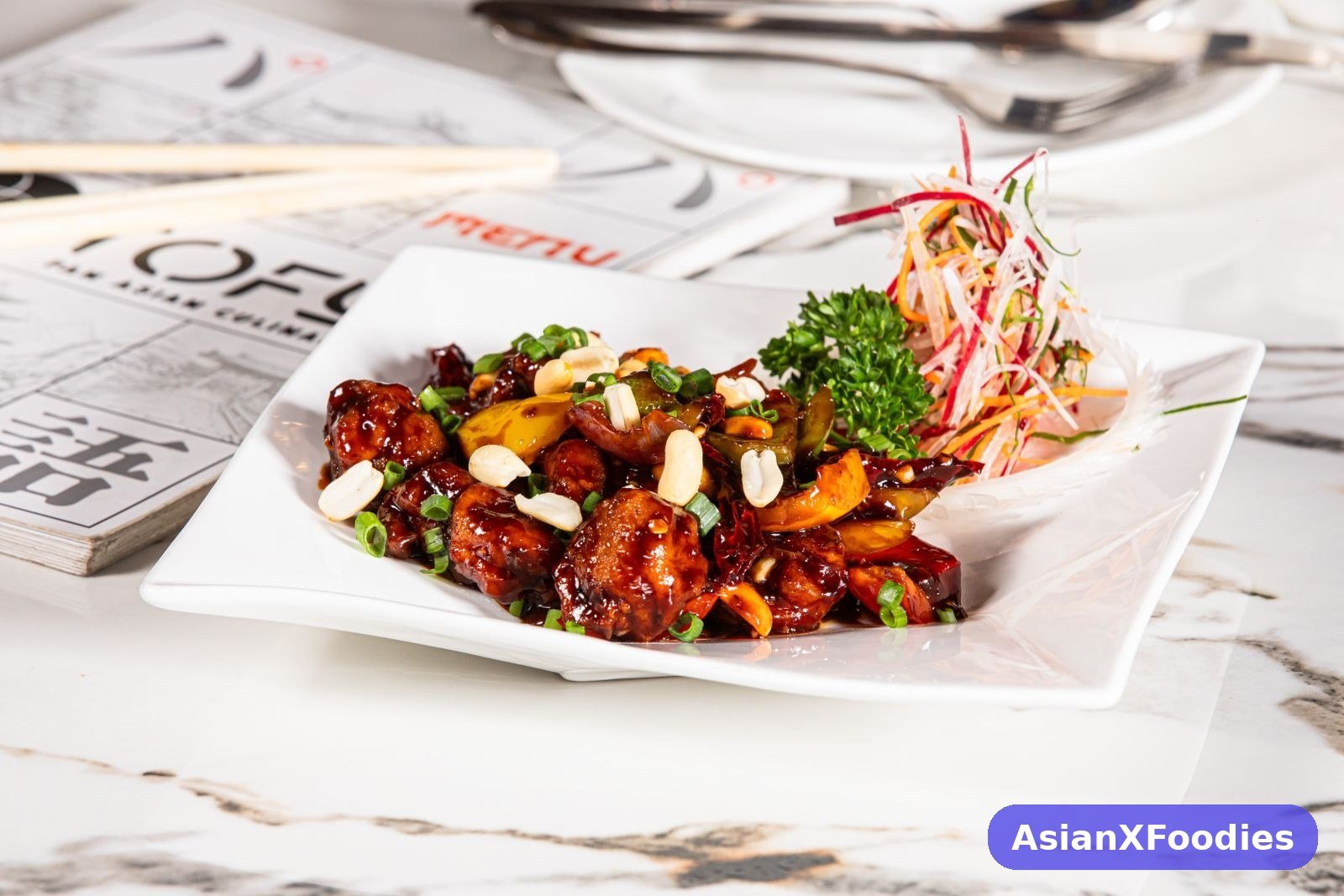
Kung Pao Chicken with Peanuts and Peppers
I first tasted proper Kung Pao chicken in a tiny restaurant in Manchester, the kind with six tables, a handwritten menu, and a chef who came out to the front to ask if the food was too spicy. It was not too spicy. It was perfect — the chicken was charred at the edges, the peanuts were still crunchy, the peppers were just soft enough, and the sauce was the thing I kept thinking about for days afterwards. It was sweet and sour and salty all at once, with a warmth that sat at the back of my throat and a tingle on my lips that I later learned was Sichuan peppercorns doing their work. I went back three times in a fortnight, ordered the same dish every time, and on the third visit I asked the waitress what made it different from the version I had been making at home. She laughed and said, “You need the peppercorns. Without them it is just sweet chicken.” She was right.
When I got home I bought a small bag of Sichuan peppercorns from the Asian grocer near my house, the one with the sacks of rice stacked by the door and the dried chillies in big clear jars. I had walked past that shop a hundred times and never gone in. That bag of peppercorns changed the way I cook this dish, and honestly it changed the way I think about stir-fries in general. The tingle is strange the first time you taste it — not hot, exactly, more like a buzzing, citrusy numbness — and then you wonder how you ever made Kung Pao without it. This recipe is the one I settled on after a lot of experimenting, including one memorable evening when I put in twice as many peppercorns as I should have and my lips felt funny for an hour. I have written the amount down carefully. Trust the amount.
Kung Pao is a stir-fry, which means it is fast. The whole dish cooks in about ten minutes once the wok is hot, and the rest of the time is prep — cutting the chicken, chopping the peppers, mixing the sauce. That is the rhythm of a good stir-fry: slow, calm preparation, then a short burst of very hot, very fast cooking. If you try to chop the peppers while the chicken is already in the pan, you will burn the garlic and the whole thing will taste bitter. I learned that on a Tuesday night when I was in a rush and thought I could multitask. I could not. Now I put everything in little bowls next to the stove before I turn the heat on, like the chefs do on television, and the cooking part is actually relaxing.
What I love about this dish is that it feels like a proper meal without being heavy. The chicken is the star, but the peanuts give it crunch, the peppers give it sweetness and colour, and the sauce ties it all together without drowning anything. It is the kind of food I make when friends come over and I want to look like I tried harder than I did. It takes thirty minutes, it uses one wok, and it always gets compliments. I have served it to people who cook far better than I do, and they have asked for the recipe. That has never happened with anything else I make.
Why You’ll Love This Recipe
The flavour is the first reason, and it is a flavour you cannot get from a jar of sauce. The sauce here is made from things you probably already have — soy sauce, vinegar, sugar, a little hoisin — but the way they come together with the Sichuan peppercorns and the dried chillies is what makes it taste like a restaurant dish rather than a home approximation. The sweetness hits first, then the vinegar gives it a sharp edge, then the heat builds, and then the peppercorns leave that gentle tingle that makes you want another bite. I have watched people eat this and go quiet for a moment, which is the best reaction a cook can hope for.
The texture is the second reason. A good Kung Pao has contrast in every mouthful — juicy chicken, crunchy peanuts, peppers that are soft on the outside and still have a bit of bite, and spring onions that stay fresh and green. Nothing is soggy. That is because everything is cooked fast and hot, and because the peanuts go in at the very end instead of at the beginning. I have eaten versions where the peanuts were cooked for ten minutes and turned soft and sad, and it ruins the whole dish. Here they stay crunchy, and the crunch matters as much as the sauce.
It is also a genuinely quick dinner. From the moment you start cutting the chicken to the moment you sit down, it is about thirty minutes, and ten of those minutes are the rice cooking on its own while you prep. I make this on weeknights when I am tired and the idea of a long recipe makes me want to order takeout. The trick is to do all the chopping first, mix the sauce, and then the cooking is over before you know it. My weeknight rule is simple: if a recipe needs more than one pan and more than thirty minutes, it waits for the weekend. This one passes the test easily.
Finally, it is easy to adjust to the people you are feeding. The heat level is up to you — more chillies if you like it hot, fewer if you do not, and the peppercorns are the one thing I would not skip, because they are what makes it Kung Pao rather than just another sweet chicken stir-fry. You can swap the peppers for whatever you have, use cashews instead of peanuts if there is an allergy in the house, and add extra vegetables if you want it to go further. I have made this with broccoli, with green beans, and once, in a fit of fridge-clearing enthusiasm, with leftover courgette. It worked every time.
Ingredients You’ll Need
- 600g boneless, skinless chicken thighs, cut into 2cm cubes
- 1 tablespoon light soy sauce
- 1 tablespoon Shaoxing wine or dry sherry
- 1 teaspoon cornstarch
- 1/2 teaspoon white pepper
- 3 tablespoons light soy sauce, for the sauce
- 2 tablespoons black rice vinegar or rice vinegar
- 1 tablespoon hoisin sauce
- 2 tablespoons sugar
- 1 teaspoon sesame oil
- 1 teaspoon cornstarch mixed with 1 tablespoon cold water
- 2 tablespoons vegetable oil
- 1 teaspoon Sichuan peppercorns, lightly crushed
- 8 dried red chillies, snipped in half
- 3 cloves garlic, thinly sliced
- 1 tablespoon fresh ginger, cut into thin matchsticks
- 1 red pepper, deseeded and cut into 2cm squares
- 1 green pepper, deseeded and cut into 2cm squares
- 100g roasted unsalted peanuts
- 4 spring onions, cut into 3cm pieces
- Steamed jasmine rice, to serve
How to Make Kung Pao Chicken with Peanuts and Peppers
Put the rice on first. I always say this, and I always mean it, because a stir-fry waits for no one and rice will not hurry. Two cups of jasmine rice, rinsed three times, one and a quarter cups of water for every cup of rice, lid on, low heat, fifteen minutes, then rest for ten without peeking. While the rice steams, cut the chicken thighs into even cubes, about two centimetres across. I use thighs because they stay juicy in a hot wok and they forgive you if you cook them thirty seconds too long, which is easy to do when everything is moving fast. Pat them dry with kitchen paper — wet chicken steams instead of searing, and searing is where the flavour comes from — then toss them in a bowl with a tablespoon of soy sauce, the Shaoxing wine, a teaspoon of cornstarch, and the white pepper. Mix it with your hands until every cube is coated, and leave it for ten minutes. The cornstarch forms a thin veil around the chicken that keeps the juices in and gives the sauce something to cling to later.
While the chicken marinates, cut the peppers into squares about the same size as the chicken, slice the garlic, cut the ginger into thin matchsticks, and snip the dried chillies in half, shaking out most of the seeds. I keep the seeds out because they are where most of the sharp heat lives, and I want warmth rather than a burn. Lightly crush the Sichuan peppercorns in a pestle and mortar, or put them in a small bag and press them with the bottom of a mug. You do not want powder — you want small broken pieces that will release their citrusy tingle into the oil. Put the garlic, ginger, chillies, and peppercorns together in one small bowl, the peppers in another, and the peanuts and spring onions in a third. This sounds like a lot of bowls, and my sink does look busy afterwards, but it is the only way to cook a stir-fry without panic.
Mix the sauce in a jug or small bowl: three tablespoons of soy sauce, the black rice vinegar, hoisin, sugar, and sesame oil. Stir until the sugar dissolves. Black rice vinegar is my preference here because it has a deeper, almost smoky tang that regular rice vinegar does not have, but if you only have the clear kind, use that — the dish will still be delicious. Taste the sauce. It should be bold and a little too strong on its own, because it is about to be spread over a whole pan of chicken and peppers. Sweet, sour, salty, in that order. If it tastes flat, add a splash more vinegar. If it tastes too sharp, a pinch more sugar. Stir the teaspoon of cornstarch with a tablespoon of cold water in a separate tiny bowl and keep it by the stove. That slurry is what turns the sauce glossy and makes it cling to the chicken instead of running to the bottom of the pan.
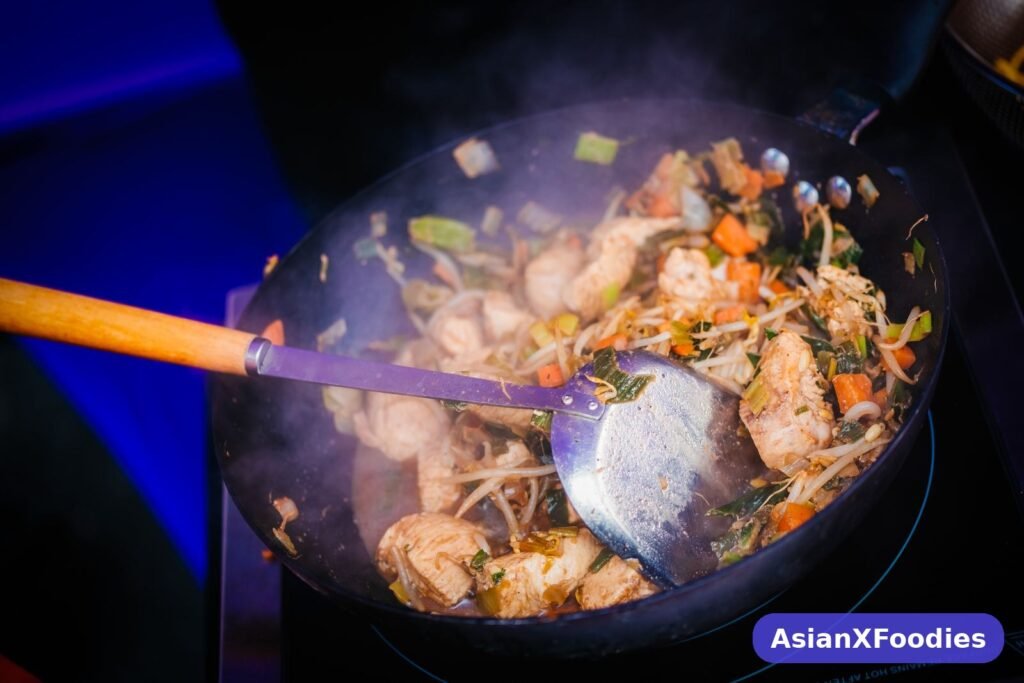
Heat the wok over the highest heat your stove can manage until it is just starting to smoke. This is the part that feels dramatic, and it is supposed to. Add the vegetable oil and swirl it around so it coats the sides of the wok. When the oil shimmers, add the chicken in a single layer, spreading the pieces out with a spatula so they are not piled on top of each other. Do not touch them for a minute. Let them sear. You will hear the sizzle, and you will see the edges turn golden. After about a minute, stir-fry the chicken for another two to three minutes, tossing it constantly, until it is golden on the outside and cooked through. Lift it out with a slotted spoon and set it aside on a plate. The wok will look empty and very hot, which is exactly right.
Turn the heat down just slightly to medium-high, and add a little more oil if the wok looks dry. Add the Sichuan peppercorns and dried chillies and stir them for about twenty seconds, until the kitchen smells warm and toasty and the peppercorns start to pop very gently. Add the garlic and ginger and stir for another thirty seconds, keeping everything moving, until the garlic is pale gold and fragrant. This is the moment to be quick — garlic burns fast in a hot wok, and burnt garlic will make the whole dish taste bitter. I have ruined a stir-fry this way, and I could taste the mistake in every bite. Add the peppers and stir-fry for two minutes, tossing them constantly, until they are bright and glossy and just starting to soften at the edges. They should still have bite. Nobody wants a floppy pepper in Kung Pao.
Pour in the sauce and let it bubble for about thirty seconds, stirring, until it darkens and starts to thicken. Give the cornstarch slurry a stir and add it, stirring as you pour, and the sauce will turn glossy and thick in seconds. Tip the chicken back into the wok, add the peanuts and spring onions, and toss everything together for a minute, until every piece is coated and the peanuts are warm but still crunchy. Take the wok off the heat immediately. Taste a piece of chicken and a peanut together. That is the bite that tells you whether it worked — sweet, sour, salty, warm, tingly, crunchy, juicy, all at once. Serve it over steamed rice, straight away, while the peppers are still bright and the peanuts are still crisp.
If you like stir-fries where the sauce does the talking, you will also enjoy my easy garlic soy chicken stir-fry with vegetables, which is simpler and milder and uses the same one-wok method. And when you want the same kind of quick, bold flavour with noodles instead of rice, the quick Korean chicken noodles for beginners are the ones I make when the rice cooker is already busy.
Tips for the Best Kung Pao Chicken
The wok needs to be properly hot before the chicken goes in. This is the single most important thing in the whole recipe, and it is the thing most home cooks get wrong, because a smoking wok feels wrong when you are used to cooking on medium heat. A hot wok sears the chicken instead of steaming it, and searing is where the flavour comes from — those golden, slightly charred edges are not an accident. If your wok is not hot enough, the chicken will release its juices, the pan will fill with liquid, and you will end up with boiled chicken in sauce. Give the wok two full minutes on high heat before you add the oil. It should be just starting to smoke.
Have everything ready before you start cooking. I cannot say this enough, because it is the difference between a calm ten minutes and a frantic ten minutes. A stir-fry does not pause while you chop a pepper. I put the marinated chicken, the sauce jug, the aromatics bowl, the peppers, and the peanuts and spring onions in a row next to the stove, in the order I will need them. It takes five minutes to set up, and it saves the dish. The first time I cooked Kung Pao properly, I did this, and I remember thinking how easy it felt — not because I was a better cook, but because I had done the work before the heat was on.
Do not skip the Sichuan peppercorns. I know they are not in every supermarket, and I know they seem like a fussy ingredient, but they are the soul of this dish. Without them, you have a nice sweet and sour chicken. With them, you have Kung Pao. You can buy them online or in any Asian grocer, and a small bag lasts for months because you only use a teaspoon at a time. Toast them lightly in a dry pan for thirty seconds before crushing if you want an even stronger citrus aroma, but do not toast them for longer or they turn bitter. Store them in a sealed jar away from light, and they will keep their tingle for a long time.
Use roasted peanuts, not raw ones, and add them at the very end. Raw peanuts need cooking, and they will go soft in the sauce. Roasted peanuts are already crunchy, and a minute in the hot sauce is enough to warm them through without softening them. If you only have raw peanuts, roast them in a dry pan over medium heat for three or four minutes, shaking the pan, until they smell nutty and a few of the skins have split, then let them cool before you use them. And if there is a peanut allergy in your house, cashews are a good swap — they are softer than peanuts, but they hold up well and they taste wonderful with the sauce.
Variations to Try
For a hotter version, keep the seeds in the dried chillies and add a teaspoon of chilli flakes with the garlic. The heat will be sharper and more direct, which some people prefer. My brother-in-law eats it this way, and he says the milder version is for children. I disagree, but I make his portion separately, scooping out mine first and then adding the extra chillies to the wok for his. It takes an extra minute and it keeps the peace.
For a milder version, use only four dried chillies, leave out the chilli flakes, and keep the Sichuan peppercorns — the peppercorns give you the tingle without the burn, which is a nice compromise for people who like flavour but not heat. My mother eats it this way, and she says the tingle is the interesting part. If you are cooking for children, you can also leave the peppercorns out of their portion and add them only to the adults’ servings, though I would encourage the kids to try a little, because the tingle is strange and fun.
You can add more vegetables to make the dish go further. Broccoli florets, cut small and added with the peppers, work well. Green beans, cut into short lengths, are another good addition — I blanch them for a minute first so they cook in time. Courgette, cut into half-moons, cooks fast and soaks up the sauce. If you want a lighter version, use chicken breast instead of thighs, cut into slightly larger cubes, and cook it for a minute less. And if you want a vegetarian version, firm tofu or paneer, pressed and cubed, works well with the same sauce, though I would fry the tofu first until golden and set it aside, the same way I do with the chicken.
For a different nut, try cashews, which are softer and sweeter than peanuts and give the dish a slightly more luxurious feel. I use cashews when I am making this for a dinner party, because they look prettier and they feel a bit special. You can also add a handful of water chestnuts, sliced, for extra crunch — they stay crisp no matter how long they cook, which is a useful quality in a stir-fry. For a fuller meal, serve it with a side of stir-fried bok choy with garlic and ginger, which is fresh and green and balances the richness of the sauce.
Serving Ideas

Steamed jasmine rice is the obvious partner, and it is the one I serve most often, because the sauce needs something to soak into and plain rice does it best. I put the rice in bowls, spoon the Kung Pao over the top, and let everyone mix it together themselves. Some people like a lot of sauce on their rice, some like a little — this way they can choose. If you want noodles instead, the dish works well spooned over plain egg noodles or rice noodles, though I would keep the noodles plain so the sauce stays the star.
For a fuller spread, I add a simple side. A cucumber salad with rice vinegar and a pinch of sugar takes two minutes and cuts through the richness. Steamed broccoli or green beans add colour and make the meal feel complete. If I am feeding a crowd, I put out a big bowl of easy spicy garlic noodles without chili oil alongside the rice, and people help themselves to both. The noodles are a good second starch because they pick up the sauce in a different way, and they make the meal feel generous without much extra work.
I serve Kung Pao family-style, in a large shallow bowl in the middle of the table, with the rice in a separate bowl and a serving spoon in each. It looks abundant, it stays hot, and people can take as much as they want. For drinks, iced green tea or cold water with lemon works well. A cold lager is good too, especially on a warm evening — the bitterness and the bubbles clean the palate between bites. I keep the table simple: bowls, chopsticks, a spoon for the rice, and a small dish of extra chilli flakes for anyone who wants more heat.
Storage and Reheating
Leftovers keep in the fridge for up to three days in a sealed container. The peppers will soften a little and the peanuts will lose some of their crunch, but the flavour actually deepens overnight — the sauce soaks into the chicken and everything tastes more settled. I often make a double batch on Sunday and eat the leftovers on Monday for lunch, and I honestly enjoy the second day almost as much as the first. If you know you will have leftovers, keep the peanuts separate and add them fresh when you reheat, so they stay crunchy.
To reheat, use a hot wok or a frying pan over medium-high heat with a splash of water, about a tablespoon, to loosen the sauce. Stir-fry for two to three minutes until everything is hot through. A microwave works too — heat in thirty-second bursts, stirring in between — but the peppers will soften more and the peanuts will not crisp up. If you are reheating in the microwave, add a small handful of fresh roasted peanuts on top after heating, which gives you back the crunch. Do not reheat it more than once.
I do not recommend freezing this dish, because the peppers go soft and watery on defrosting and the peanuts lose their texture entirely. If you need to freeze it, freeze only the cooked chicken in the sauce, without the peppers or peanuts, and add fresh peppers and peanuts when you reheat it. The chicken and sauce freeze well for up to a month. Defrost overnight in the fridge, reheat in a wok, and stir-fry a fresh pepper to add at the end. It is not quite the same as fresh, but it is a good emergency dinner.
Frequently Asked Questions
What are Sichuan peppercorns and do I really need them?
Sichuan peppercorns are the dried husks of a prickly ash berry, and they are what give Kung Pao its distinctive tingling, citrusy feeling on the lips and tongue. They are not hot like chilli — they are numbing and floral, and they make the heat from the chillies feel rounder and more interesting. You do need them for a proper Kung Pao, in the same way you need basil for a proper pesto. You can make the dish without them and it will still be tasty, but it will be a different dish. Buy them from an Asian grocer or online; a small bag is cheap and lasts for months.
Can I use chicken breast instead of thighs?
Yes, you can. Cut the breast into slightly larger cubes, about two and a half centimetres across, and cook it for a minute less, because breast dries out faster than thigh. The marinade helps — the cornstarch coating keeps the juices in — but thighs are still my first choice because they are juicier and more forgiving. If you use breast, take a piece out and cut it open to check it is cooked through but still moist. White all the way through, clear juices, and no pink is what you are looking for.
Why is my Kung Pao too sweet or too sour?
The sauce is a balance, and soy sauces and vinegars vary, so you may need to adjust it to your taste. If it is too sweet, add a teaspoon more vinegar and a splash more soy sauce. If it is too sour, add a pinch more sugar. Always taste the sauce before it goes into the wok — it should taste bold and a little too strong on its own, because it is about to be spread over a pan of chicken and peppers. I adjust mine every time I make it, because no two bottles of soy sauce are quite the same. If you want to compare approaches, RecipeTin Eats has a well-tested Kung Pao chicken recipe, and The Woks of Life has a detailed Kung Pao chicken guide that explains the Sichuan peppercorn step clearly.
Can I make Kung Pao chicken ahead of time?
You can prep everything ahead — cut the chicken and vegetables, mix the sauce, and keep it all in the fridge for up to a day — and then cook it in ten minutes when you are ready to eat. I do this on busy days, and it makes dinner feel effortless. The cooked dish is best eaten fresh, because the peppers and peanuts lose their texture as they sit, but the leftovers are still good for up to three days. If you are cooking for guests, prep ahead and cook at the last minute, so the dish arrives at the table hot and crisp.
Is Kung Pao chicken gluten-free?
Not as written, because soy sauce and hoisin usually contain wheat. To make it gluten-free, use tamari instead of light soy sauce, check that your hoisin is gluten-free, and use a gluten-free Shaoxing wine substitute or leave it out. The rest of the ingredients are naturally gluten-free. Always check the labels on your sauces, because brands vary. The flavour will be very close to the original, and the dish will still have the same sweet, sour, and tingly character.
What is the difference between Kung Pao and General Tso’s chicken?
They are both sweet, spicy chicken dishes, but they are quite different. Kung Pao is a stir-fry — the chicken is seared in a wok, the sauce is thinner and glossier, and the peanuts and Sichuan peppercorns are essential. General Tso’s is a battered, deep-fried chicken tossed in a thicker, stickier sauce, with no peanuts and no peppercorns. Kung Pao tastes brighter and fresher, with more contrast in texture. General Tso’s tastes richer and more indulgent. I love both, for different moods, and I make Kung Pao when I want something quick and General Tso’s when I want something that feels like a treat.