Vietnamese Chicken Pho with Rice Noodles
The first bowl of pho I ever had was not in Vietnam. It was in a tiny restaurant tucked between a laundromat and a phone repair shop, the kind of place with plastic stools, a menu taped to the wall, and steam fogging up the windows on a cold evening. I had gone in because I was hungry and it was the only place open, and I ordered the chicken pho mostly because I could not pronounce anything else on the menu. The woman behind the counter nodded like I had made a good choice, and about ten minutes later she set down a bowl so big I thought she had made a mistake. The broth was clear as glass, the noodles were buried under shredded chicken and sliced onion, and there was a whole plate of herbs and lime on the side that I had no idea what to do with. I squeezed the lime in, tore up some basil, and took a spoonful. I still remember that spoonful. It was hot and clean and fragrant all at once, with a warmth from the spices that sat at the back of my throat, and I finished the whole bowl without once looking at my phone.
I went back the next week, and the week after that, and somewhere along the way I started paying attention to how it was made. The broth was the whole thing, I realised. It was not a stock cube with some spices thrown in. It was a proper broth, simmered slowly with a whole chicken, charred onion and ginger, and a small handful of spices that you could smell the moment you walked in the door. The chicken was poached in that same broth until it was tender enough to shred with two forks, and the noodles were cooked separately so they never turned the broth cloudy. It sounded simple when I wrote it down, and in a way it is simple, but it takes time, and it takes a little patience, and that is exactly why it tastes the way it does. There is no shortcut to a broth that has simmered for an hour and a half. You just have to give it the time.
The first time I tried to make it at home, I got the spices wrong. I put in too much cinnamon and the whole pot smelled like a dessert, and my husband took one sip and said, very politely, that it tasted like Christmas. I laughed, but I also wrote down what had gone wrong, because that is how I cook — I make the mistake, I write it down, and I do not make it again. The second attempt was better. The third was the one I started making regularly, and this recipe is the version that has settled after maybe twenty bowls. The broth is clear and golden, the spices are there but they do not shout, the chicken is soft and juicy, and the noodles are silky rather than sticky. It is the bowl I make when someone in the house has a cold, when the weather turns grey, and when I want dinner to feel like someone is looking after me, even if that someone is me.
What I love most about this recipe is that it asks very little of you while it is cooking. Once the pot is on the stove, you are mostly just waiting, skimming the surface now and then, and keeping an eye on the chicken so it does not overcook. You can wash up while it simmers, or sit down for ten minutes, or do the school run and come back to a kitchen that smells wonderful. The active work is in the prep — charring the onion and ginger, toasting the spices, slicing the herbs — and then again at the end, when you assemble the bowls. That last part is my favourite. Everyone gets a bowl of noodles and chicken, and then they add their own herbs and lime and chilli, so nobody’s bowl is quite the same as anyone else’s. My daughter loads hers with bean sprouts. My son picks out the onion. I put in far too much basil and I have never once regretted it.
Why You’ll Love This Recipe
The first reason is the broth, and I am not going to pretend otherwise, because the broth is the reason pho exists at all. A good pho broth is clear, not cloudy, and it tastes clean and deep at the same time, which sounds like a contradiction until you have had one. The chicken gives it body, the charred onion and ginger give it a gentle sweetness and a smoky edge, and the spices — star anise, cinnamon, cloves, coriander seed — give it that warm, fragrant quality that makes the whole kitchen smell like a restaurant. When you sip it, you should taste chicken first, then the spices, then a little sweetness from the onion, and then the fish sauce at the end, salty and savoury. If any one of those things is shouting, the balance is off. This recipe keeps them in line, and it tells you how to taste and adjust as you go, because every chicken is a little different and every bottle of fish sauce is a little different too.
The second reason is that it is a proper comfort food without being heavy. There is no cream, no butter, no frying, and no big pile of cheese. It is a bowl of hot broth, soft noodles, lean chicken, and a mountain of fresh herbs, and somehow that adds up to a meal that feels substantial and satisfying. I make it when I am tired, when I have a headache, when the kids are sniffling, and when I just want something warm in my hands. It is the kind of food that makes you slow down, because you cannot rush a bowl of soup that hot. You sit, you blow on the spoon, you pick up a little noodle with your chopsticks, and for ten minutes the rest of the day can wait. That is not a small thing.
It is also a recipe that looks impressive and is much easier than it looks. People hear two hours and think it must be complicated, but most of that time is the pot simmering by itself while you do other things. There are no fiddly techniques, no special equipment, and nothing that can really go wrong in a way you cannot fix. If the broth tastes a little flat, you add fish sauce. If it tastes a little too sweet, you add lime. If it is too strong, you add water. I have made this on weeknights, for guests, and once for a friend who had just had a baby and needed a meal that would reheat well, and every single time it worked. That reliability is why it has earned a permanent place in my cooking, next to the handful of recipes I can make without even looking at the book.
Finally, it is a meal that brings people to the table in a good mood. There is something about a big pot of soup in the middle of the kitchen, and a pile of herbs and lime on the side, that makes dinner feel like an event rather than a chore. Everyone assembles their own bowl, everyone argues about how much chilli to add, and everyone goes back for a little more broth at the end, which is the highest compliment a soup can get. My mother, who is usually the first to say a dish needs more salt, has never once added salt to this. She just squeezes in more lime and says it is perfect, which from her is basically a standing ovation.
Ingredients You’ll Need
- 1 whole chicken, about 1.5kg, rinsed and patted dry
- 2 large onions, peeled and halved
- 1 large piece of fresh ginger, about 10cm, unpeeled and halved lengthways
- 3 litres cold water
- 3 star anise
- 1 cinnamon stick, about 8cm long
- 4 whole cloves
- 1 tablespoon coriander seeds
- 1 teaspoon black peppercorns
- 3 tablespoons fish sauce, plus more to taste
- 1 tablespoon rock sugar or light brown sugar
- 1 teaspoon fine sea salt, plus more to taste
- 400g flat rice noodles, about 5mm wide
- 4 spring onions, thinly sliced
- 1 large bunch fresh coriander, leaves picked
- 1 large bunch Thai basil or sweet basil, leaves picked
- 150g bean sprouts, rinsed
- 2 limes, cut into wedges
- 1 red chilli, thinly sliced, or 1 teaspoon chilli sauce, to serve
- Hoisin sauce and sriracha, to serve
How to Make Vietnamese Chicken Pho
Start by charring the onion and ginger, because this is the step that gives the broth its colour and its gentle smoky sweetness, and it is the step people are most tempted to skip. Put the halved onions, cut side down, and the halved ginger in a dry frying pan or directly over a gas flame, and let them sit over medium-high heat until the cut sides are deeply browned, almost black in places. It takes about eight to ten minutes, and your kitchen will smell a little like a bonfire, which is exactly right. Turn them once so the other side gets some colour too, then rinse them briefly under the tap to knock off any loose black flakes. Do not scrub them clean. You want the char. That char is what makes the broth golden instead of pale, and it adds a depth you cannot get from raw onion and ginger, no matter how long you simmer them.

Put the chicken in your largest pot and cover it with the three litres of cold water. Bring it up to a boil over high heat, and as soon as it boils, turn the heat down to medium and skim off the grey foam that rises to the surface. I use a small ladle for this, and I keep at it for the first ten minutes, because that foam is what makes a broth cloudy, and a cloudy pho is not a pho I want to serve. Once the foam has mostly stopped appearing, add the charred onion and ginger, the salt, and the sugar. Turn the heat down low, so the surface is barely moving — a few lazy bubbles breaking now and then, not a rolling boil — and let it simmer, uncovered, for about forty-five minutes. A rolling boil will churn the broth and make it cloudy, and it will also toughen the chicken, so low and slow is the rule here. Check on the chicken after about forty minutes. Poke the thickest part of the thigh with a skewer. The juices should run clear, and the meat should feel tender but not falling apart. If it is done, lift it out carefully with tongs, put it on a plate, and cover it loosely with foil while it cools. If it is not done, give it another ten minutes and check again.
While the chicken is poaching, toast the spices. Put the star anise, cinnamon stick, cloves, coriander seeds, and peppercorns in a dry frying pan over medium heat, and shake the pan every few seconds so they do not burn. After about two minutes they will start to smell warm and fragrant, and the coriander seeds will pop very gently. That is your cue. Tip them straight into the pot, and let them simmer with the broth for the remaining time. Toasting wakes the spices up. Raw spices in a broth taste flat and dusty, but toasted spices give you that warm, rounded fragrance that fills the house. I once forgot to toast them and the broth tasted like it was missing something I could not name, and now I never skip it. It takes two minutes and it changes everything.
Once the chicken is out, keep the broth simmering gently for another forty-five minutes to an hour, so it has a total of about an hour and a half on the stove. This second stretch is when the broth really develops. The spices settle in, the onion and ginger give up the last of their sweetness, and the flavour goes from good to the kind of good that makes people ask what is in it. Skim the surface now and then if you see any fat or foam, but do not stir it hard. You want it calm. Near the end, taste it. It should taste like chicken, with the spices sitting quietly underneath. Add the fish sauce a tablespoon at a time, tasting after each one, until it tastes seasoned and savoury but not fishy. Fish sauce is strong, and the difference between enough and too much is smaller than you would think. Then strain the broth through a fine sieve into a clean pot, and throw away the onion, ginger, and spices. Taste it again once it is strained, and add a little more fish sauce or a pinch of salt if it needs it. If it tastes too strong, add a splash of hot water. This is your broth, and it should taste right to you before the noodles go anywhere near it.
While the broth is finishing, cook the noodles. Bring a large pot of water to a boil — not the broth, a separate pot, because cooking noodles in the broth would turn it starchy and cloudy, and we have spent an hour and a half keeping it clear. Add the rice noodles and cook them according to the packet, usually about four to six minutes, until they are soft and silky but still have a little bite. Drain them well and rinse them briefly under hot water to stop them sticking together, then divide them between four large bowls. Shred the cooled chicken with two forks or your fingers, discarding the skin and bones, and pile the shredded meat on top of the noodles. I like to keep the pieces fairly generous, because a bowl of pho should have plenty of chicken in every spoonful, not just a few sad shreds on top. If you have any of the chicken fat left from skimming, a tiny spoonful over the top adds richness, but it is optional and I often leave it out.
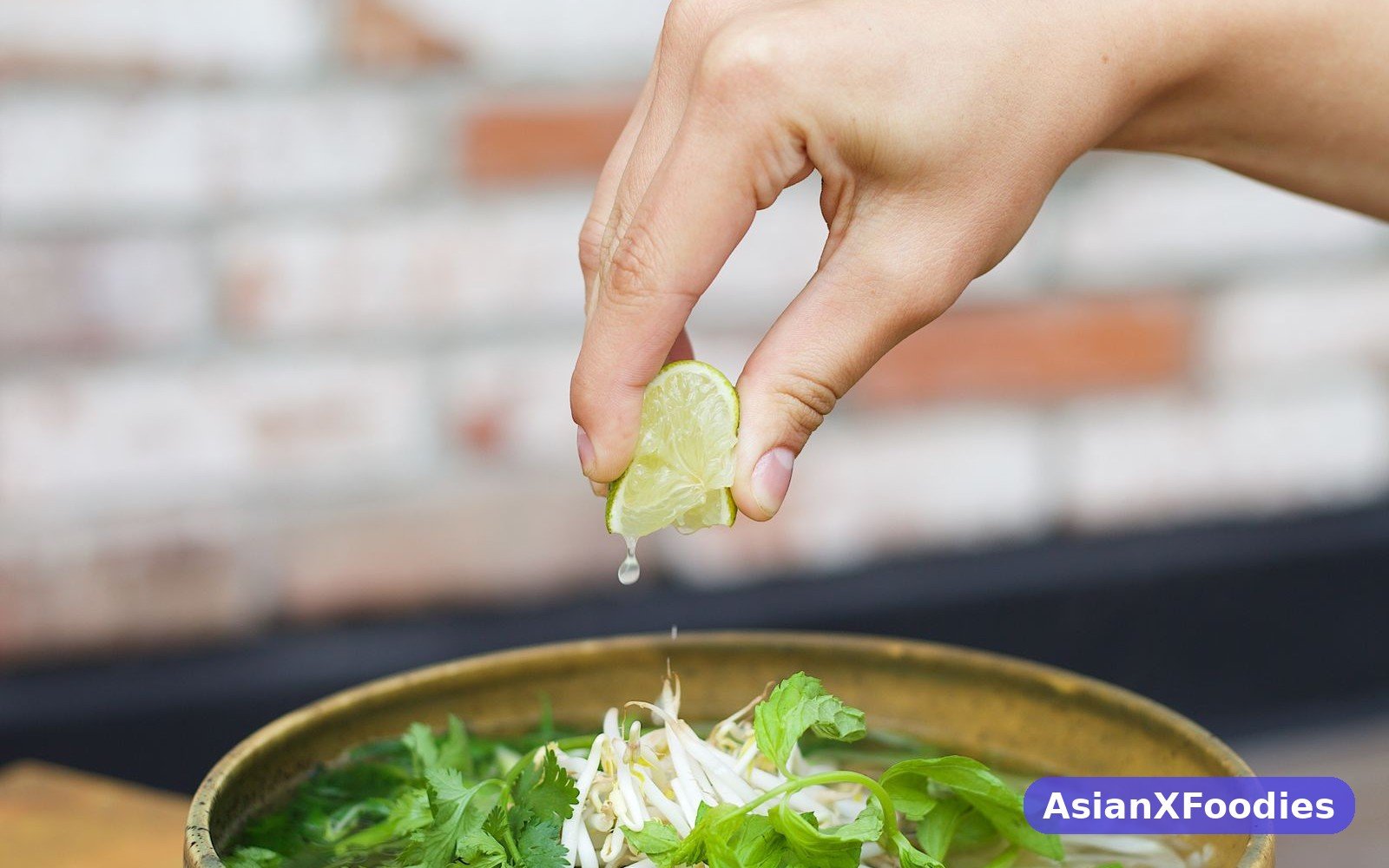
To serve, ladle the hot broth over the noodles and chicken in each bowl, making sure every bowl gets plenty of broth, because pho is a soup first and a noodle dish second. Scatter the sliced spring onion over the top, and put the coriander, basil, bean sprouts, lime wedges, and sliced chilli on a plate in the middle of the table, so everyone can add their own. Tell people to squeeze the lime in first, then tear in the herbs, then taste before adding anything else. The lime wakes the whole bowl up, and the herbs add a freshness that no amount of simmering can give you. If you want a fuller spread, a plate of Vietnamese lemongrass chicken on the side turns it into a proper Vietnamese-style dinner, and I have done exactly that when friends come over and I want the table to feel generous.
Tips for the Best Chicken Pho
The single most important tip is to keep the broth at a bare simmer, not a boil, from the moment the chicken goes in. I know it is tempting to turn the heat up to speed things along, especially when you are hungry, but a hard boil does two bad things at once: it makes the broth cloudy, and it makes the chicken tough and stringy. A gentle simmer, where the surface barely trembles, gives you a clear broth and tender chicken, and it is worth the extra twenty minutes. If you are not sure whether your stove is low enough, look at the surface. You should see a bubble break every couple of seconds, not a constant churn. If it is churning, turn it down. Your broth will thank you.
Skim the broth properly in the first ten minutes. That grey foam is mostly protein from the chicken, and if you leave it in, it will break up and cloud the whole pot. I keep a small bowl next to the stove and a ladle in my hand for those first ten minutes, and I scoop off every bit of foam I can see. After that it mostly stops, and you can relax. Some people blanch the chicken first — a quick five-minute boil, then a rinse, then fresh water — and that does give you an even clearer broth. I do it when I have the time, and I skip it when I do not, and honestly the difference is small as long as you skim well. Do whichever version fits your evening.
Taste the broth before you serve it, and season it in the pot, not in the bowl. Fish sauce is the main seasoning here, and it needs to go in while the broth is still hot so it blends in properly. Add it a tablespoon at a time and taste after each addition, because once you have put too much in you cannot take it out. The broth should taste well-seasoned on its own, a little saltier than you think it needs to be, because the plain noodles and the fresh herbs will soften it once they go in. If you serve an under-seasoned broth and expect people to fix it at the table with fish sauce, it never quite comes together. Season it properly now, and the bowls will take care of themselves.
Cook the noodles separately, and cook them just before serving. Rice noodles go from perfect to gluey in about two minutes, and there is nothing sadder than a bowl of pho with noodles that have turned into one solid lump. I always cook them at the very last minute, drain them well, and get them into the bowls straight away. If you are making pho for a crowd and you need to cook the noodles in batches, rinse each batch under hot water and toss it with a tiny drop of oil to stop it sticking. And never, ever cook the noodles in the broth. I have seen people do it to save washing a pot, and the broth goes cloudy and starchy, and all that careful simmering goes to waste for the sake of one pot.
Keep the chicken moist after you take it out of the pot. The moment it comes out, cover it loosely with foil and let it rest for ten minutes before you shred it. If you leave it sitting uncovered on the counter, the outside dries out while the inside is still hot, and the shredded meat ends up dry and stringy. If you are not serving straight away, you can put the shredded chicken back into a little of the warm broth to keep it moist — just a ladleful, enough to coat it, not enough to drown it. I do this when I am making pho ahead for guests, and the chicken stays soft and juicy right up until serving. For more on getting chicken right in a noodle soup, the Chicken Pho recipe I keep coming back to has a lovely, careful approach to poaching the bird that is well worth reading alongside this one.
Variations to Try
If you want a richer broth, add a couple of chicken wings or a chicken carcass to the pot along with the whole chicken. The extra bones give the broth more body, and it tastes noticeably deeper, almost silky, without any extra work. I do this version when I have wings in the freezer, and it is the one I make when I want the broth to feel like a proper restaurant broth. If you want it lighter, use skinless chicken breasts instead of a whole bird and simmer them for just twenty-five minutes, then lift them out and carry on with the broth on its own. It will not be as rich, but it is still a lovely, clean soup, and it is a good option if you are watching the fat.
For a spicier bowl, add a sliced fresh red chilli to the broth for the last fifteen minutes of simmering, or stir a spoonful of chilli sauce into your own bowl at the table. I prefer to keep the heat out of the pot and let people add their own, because my daughter likes her pho mild and my husband likes his hot enough to make his eyes water, and one pot cannot please both of them. If you like the gentle warmth of ginger in a noodle soup, my simple chicken ramen uses a similar idea with pantry ingredients, and it is the bowl I make when I want something cosy but I have not got two hours to spare.
You can also change the noodles. The flat rice noodles in this recipe are the classic choice, but thin rice vermicelli works well too, and it cooks in about three minutes, which is handy on a busy night. Egg noodles are not traditional for pho, but I have used them when the cupboard was bare and nobody complained. If you need a gluten-free bowl, rice noodles are naturally gluten-free, and you just need to check that your fish sauce is gluten-free too, which most of them are. For a lower-carb version, you can swap half the noodles for extra bean sprouts and shredded cabbage, which still gives you a full bowl and a satisfying crunch.
If you have leftover roast chicken, you can make a quicker version of this soup. Simmer the spices, onion, and ginger in good shop-bought chicken stock for twenty minutes, add the fish sauce and sugar, then add the shredded roast chicken just to warm it through. It will not have the depth of a broth made from scratch, and I am honest about that, but it is still a very good bowl of soup, and it is ready in about half an hour. I make this version more often than I would like to admit, usually on a Sunday evening when there is leftover chicken and nobody wants to cook. And if you love chicken soups generally, my homemade Chinese chicken soup with noodles is another gentle, comforting bowl that uses the same kind of clear broth and shredded chicken, with a different set of flavours.
Serving Ideas
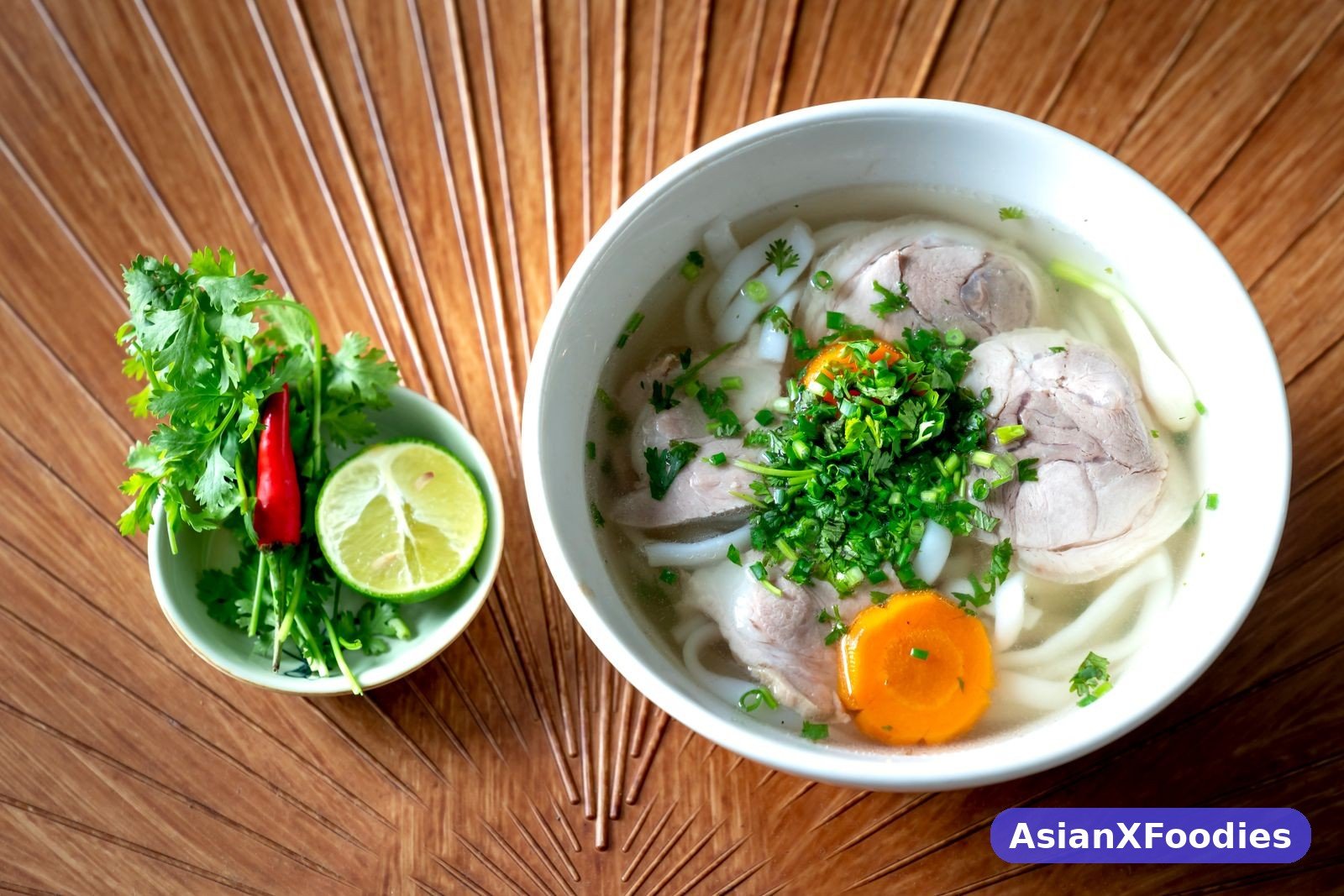
Pho is a complete meal in a bowl, so it does not need much alongside it, but there are a few things that make it feel like a proper occasion. The first is the herb plate, and I cannot stress this enough — do not skip it, and do not be stingy with it. A big pile of basil, coriander, bean sprouts, lime wedges, and sliced chilli in the middle of the table is half the experience of pho. People pick at it, they argue about how much basil is too much, and they go back for more lime. I put out far more herbs than I think we will need, and they always disappear. If you can find Thai basil, use it, because it has a peppery, almost liquorice note that sweet basil does not quite have, but sweet basil is a perfectly good substitute and it is what I use most weeks.
For drinks, I usually put a jug of iced water with lime on the table, or a pot of green tea if it is cold outside. The broth is hot and fragrant, and you do not need anything fancy to go with it. If it is a weekend and you are feeling generous, a cold lager works well, and so does a light, crisp white wine. I keep the serving simple: big bowls, chopsticks and a soup spoon for everyone, the herb plate in the middle, and the hoisin and sriracha on the table for anyone who wants them. There is no need for a starter or a pudding. Pho is the whole event, and it is enough on its own.
If you are feeding a crowd, pho is one of the best meals you can make, because most of the work is done before anyone arrives. The broth can be made a day ahead, the chicken can be shredded and kept in a little broth, and the noodles take five minutes at the last minute. I did this for eight people last winter, with the broth in a big pot on the stove and the herbs laid out like a buffet, and it was one of the easiest dinner parties I have ever hosted. Everyone served themselves, everyone went back for seconds, and I spent most of the evening sitting down instead of standing at the stove. If you want a second dish on the table for a bigger spread, my one-pan chicken biryani sits happily next to a pot of pho, and together they make a feast that feels generous without being complicated.
Storage and Reheating
Leftovers keep well, but you need to store the parts separately, and this is the one rule I would not bend. Keep the broth in one container, the shredded chicken in another, and the cooked noodles in a third, all in the fridge. The broth will keep for up to four days, the chicken for up to three days, and the noodles for up to two days, though the noodles are best eaten the same day. If you store everything together in one pot, the noodles will soak up all the broth overnight and turn into a stodgy, swollen mess, and you will be left with a bowl of porridge instead of a bowl of pho. I learned this the hard way, and I have never done it since.
To reheat, bring the broth back to a proper boil in a pot — not just warm, properly boiling — and taste it again, because cold dulls the seasoning and you may want another splash of fish sauce or a squeeze of lime. Warm the chicken gently in the hot broth for a minute, just until it is heated through, and cook a fresh batch of noodles if you can, because reheated noodles are never as good. If you must reheat the noodles, dip them in boiling water for thirty seconds, drain them well, and put them in the bowl straight away. Then assemble the bowls exactly as you did the first time, with fresh herbs if you have them, and it will taste almost as good as the day you made it.
The broth freezes beautifully, which is one of the best things about this recipe. Let it cool completely, strain it if you have not already, and freeze it in portions of about a litre, in freezer bags laid flat or in containers with a little room at the top for expansion. It will keep for up to three months. When you want pho again, defrost a portion overnight in the fridge, bring it to a boil, add freshly cooked noodles and some shredded chicken — leftover roast chicken works perfectly here — and you have dinner in about fifteen minutes. I always freeze at least a litre when I make a batch, because future me is always grateful for it on a night when cooking feels like too much.
Frequently Asked Questions
How long does chicken pho take to make?
About two hours from start to finish, and most of that is the pot simmering on its own while you do other things. The active work is about thirty minutes: charring the onion and ginger, toasting the spices, skimming the broth, shredding the chicken, and cooking the noodles. The chicken needs about forty-five minutes to poach, and the broth needs another forty-five minutes to an hour after the chicken comes out. If you are short on time, you can make a quicker version with good stock and leftover chicken in about half an hour, but the full version is worth the wait. For a detailed look at the timing and the poaching step, RecipeTin Eats has a wonderful Vietnamese Chicken Pho soup (Pho Ga) guide that walks through the whole process with clear photos.
Can I make the broth ahead of time?
Yes, and I often do, because it actually tastes better the next day. Make the broth the day before, strain it, let it cool, and keep it in the fridge overnight. The fat will rise to the top and set, and you can lift it off in the morning if you want a leaner broth, or stir it back in if you want it richer. When you are ready to serve, bring it back to a boil, taste it, and adjust the fish sauce and salt. The chicken can be shredded the day before too, and kept in a little of the broth in the fridge. On the day, all you need to do is cook the noodles and assemble the bowls, which takes about ten minutes.
What is the difference between pho ga and pho bo?
Pho ga is chicken pho, and pho bo is beef pho, and they are made in a similar way but with different broths and different toppings. Pho ga uses a whole chicken poached in the broth, and it has a lighter, cleaner flavour. Pho bo uses beef bones simmered for many hours, and it has a deeper, richer flavour, with thinly sliced raw beef that cooks in the hot broth when it is served. Both are wonderful, and both use the same spices and the same fresh herbs. If you have never had either, start with this chicken version, because it is quicker and more forgiving, and then try the beef version when you have a whole afternoon to spare.
Why is my pho broth cloudy?
A cloudy broth usually means one of three things: the pot was boiling too hard, the foam was not skimmed off at the start, or the noodles were cooked in the broth. Keep the heat low so the surface barely trembles, skim the grey foam off in the first ten minutes with a ladle, and always cook the noodles in a separate pot of water. If your broth has already gone cloudy, you can still serve it — it will taste just as good, it just will not look as clear — but for next time, remember that a gentle simmer and good skimming are what keep it glassy. Some people blanch the chicken first, which helps too, but skimming well is usually enough.
Can I use chicken breasts instead of a whole chicken?
Yes, you can, but the broth will not be as rich, because a whole chicken gives you bones and skin and all the flavour that comes with them. If you use breasts, simmer them for about twenty-five minutes until they are just cooked through, then lift them out, shred them, and carry on with the broth on its own, adding a couple of chicken wings or a stock cube if you want more depth. Bone-in, skin-on chicken thighs are a good middle ground — they give you more flavour than breasts, and they cook in about thirty minutes. Whichever cut you use, do not overcook it, because dry chicken is the one thing that can spoil a bowl of pho.
What herbs and toppings should I serve with pho?
The classic toppings are Thai basil, coriander, bean sprouts, sliced spring onion, lime wedges, and sliced red chilli, with hoisin sauce and sriracha on the side. The basil and coriander go in the bowl, the bean sprouts add crunch, the lime brightens the broth, and the chilli adds heat. You can also add sliced white onion, which softens in the hot broth, and a little chopped coriander root if you can find it. Let people add their own, because everyone likes a different amount of each. Put out more herbs than you think you need, and do not be surprised when they all disappear.